Thanksgiving Piano Practice Challenge

October, November, and December seem to be three of the four busiest months of the year (along with May here in the States because of all the end-school-year activities). But despite all that, my piano families love our annual Christmas Concert in early December and were unanimous in keeping it when I offered to do a Halloween recital instead (my thoughts were to ease up their December schedules but they shot me down LOL).

This is a small recital where my students perform only one Christmas carol and that carol is a duet or ensemble piece played alongside another student, family member, or friend.. their choice! We’ve had not only piano duets but performances with violins, drums, guitars, flutes, saxophones, and even voice! I love the creative ways my students find to involve their collaborators in sharing music and the holiday spirit with others! It is such a special evening!

We usually start learning the Christmas carol to be performed in September or October (depending on the complexity of the piece). But the weeks leading up to the concert are critical for getting the piece performance ready.

That’s where our annual “Save the Turkeys!” Practice Challenge comes in! My students LOVE this practice challenge (even my teens!) and are always so eager to meet the turkeys. They earn votes for their favorite turkey(s) by practicing, and the turkey with the most votes at the end of the challenge gets symbolically “adopted” by our studio! It’s a fun way to encourage more intentional practice while also supporting a good cause.

Let’s get into the details of the practice challenge:

  1. How to Set up the Practice Challenge
  2. How it Works
  3. My Visit to Farm Sanctuary
  4. Let’s stay in touch, join the list!
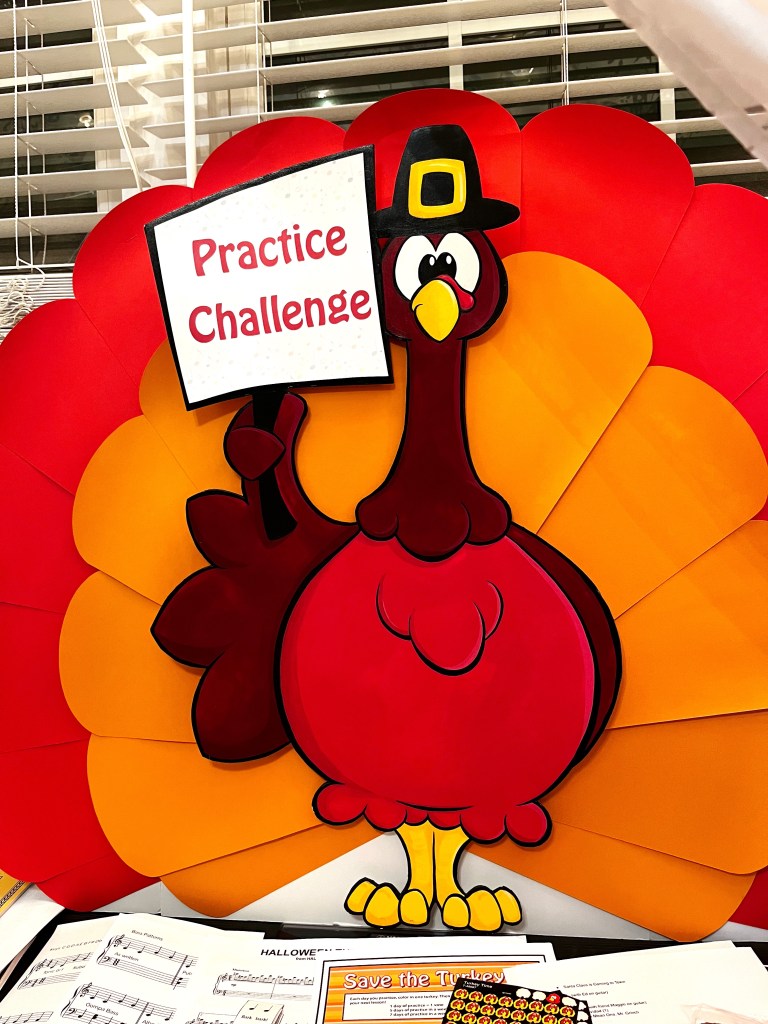
A colorful turkey decoration holding a sign that says 'Practice Challenge', set against a backdrop of layered orange and red feathers.

How to Set up the Practice Challenge

Farm Sanctuary holds an annual Adopt a Turkey Project. It is a fundraiser that helps support their mission of ending farm animal cruelty. The money goes towards supporting the everyday needs of the animals they rescue (including food, bedding, shelter, and veterinary care) as well as their efforts to build public awareness, education projects, advocacy, and the direct rescue of animals suffering abuse.

Each year, five turkeys are selected from their flock to be their ambassador turkeys for the fundraiser. On the Adopt a Turkey Project website they provide each turkey’s backstory along with their personality traits (I never tell the kids their backstories… they are heartbreaking… We only concentrate on their cute personalities!).

I print out a photo of each turkey along with their personality traits and favorite pastimes then cut them out.
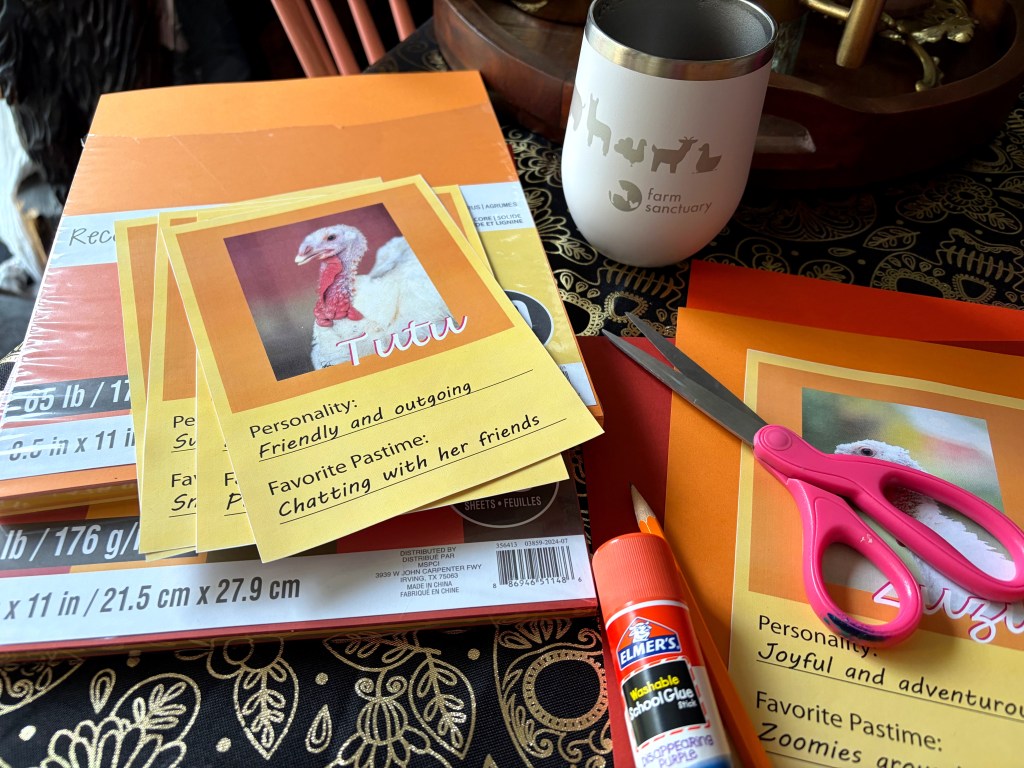
Colorful craft materials including orange cardstock, scissors, and glue, with printed cards featuring a turkey named Tutu showcasing personality traits and pastimes.

Using orange cardstock, I cut out fifteen feather-like shapes (three feathers for each turkey). I glue the turkeys to a feather and then glue two feathers below it. These feathers are where the kids will place their votes.

Then I hang the feathers in my teaching studio.
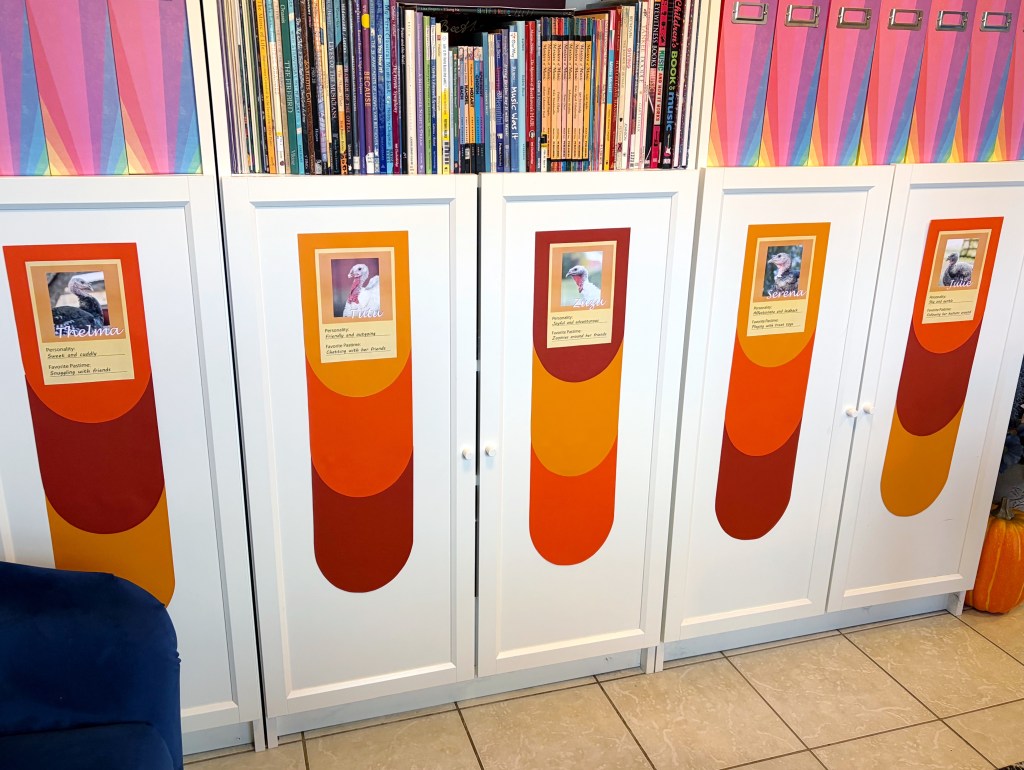
Cabinets decorated with orange and red paper feathers, each featuring a framed photo of a turkey and information about its personality and favorite activities.

Next, I then print out my “Save the Turkeys” practice tracker, one per student. Because I don’t want to overlap Halloween and Thanksgiving too much, the practice challenge runs for just three weeks.

If you would like to do your own “Save the Turkeys” practice challenge, you can download the free practice tracker in the Toucan Piano shop!

Four printed practice tracker sheets with a 'Save the Turkeys!' design, featuring boxes for coloring to track practice days across three weeks.

I always send out an email to my piano families the week the students will be receiving their practice charts. In the email I explain the practice challenge, give them a quick background on Farm Sanctuary’s mission, and a link to an additional fun activity: the Who’s your Turkey Twin? quiz.

Each year Farm Sanctuary provides this short and endearing quiz on their website (this year one of the questions was “What is your dream job?” And one of the possible answers was music teacher!!).

The kids who decide to take the quiz always want to know who my turkey twin is. This year my turkey twin is Serena:

“Like Serena, you are quite affectionate. You have uttered the phrase, “I’m a hugger!” on more than one occasion, and people love you for your warmth! You are known to others as laidback, charming, and fun to be around.” (Source: Farm Sanctuary)

How it Works

At our first lesson of the practice challenge, we meet the turkeys and I explain the challenge to them. I also make a point of saying that all the turkeys are safe and happy no matter which one wins (one year a student thought that the others would be eaten, so I always make sure to add that they are all safe no matter what before any questions pop up!).

Each student then receives a “Save the Turkeys” practice tracker.

For each day they practice, they color or check off a turkey on the practice tracker.

At our next lesson, we tally up the number of days they practiced that week to determine how many votes they will be casting for the turkeys:

  • 1 day of practice = 1 vote
  • 5 days of practice in a week = 5 votes plus 2 bonus votes (7 votes total)
  • 7 days of practice in a week = 7 votes plus 4 bonus votes (11 votes total)

The bonus votes are extra incentive to keep the practicing going!

A young child is placing a sticker on the turkey they chose to vote for. The turkey is a printout on a colorful feather frame, taped to a white cabinet in a music studio.

Once we tally up the votes for the week, the student then receives Turkey Stickers representing their votes (for example, 4 votes equals 4 turkey stickers).

The student can then place the stickers on the feather of their chosen turkey (or turkeys! My students usually have multiple favorites and want to distribute their votes).
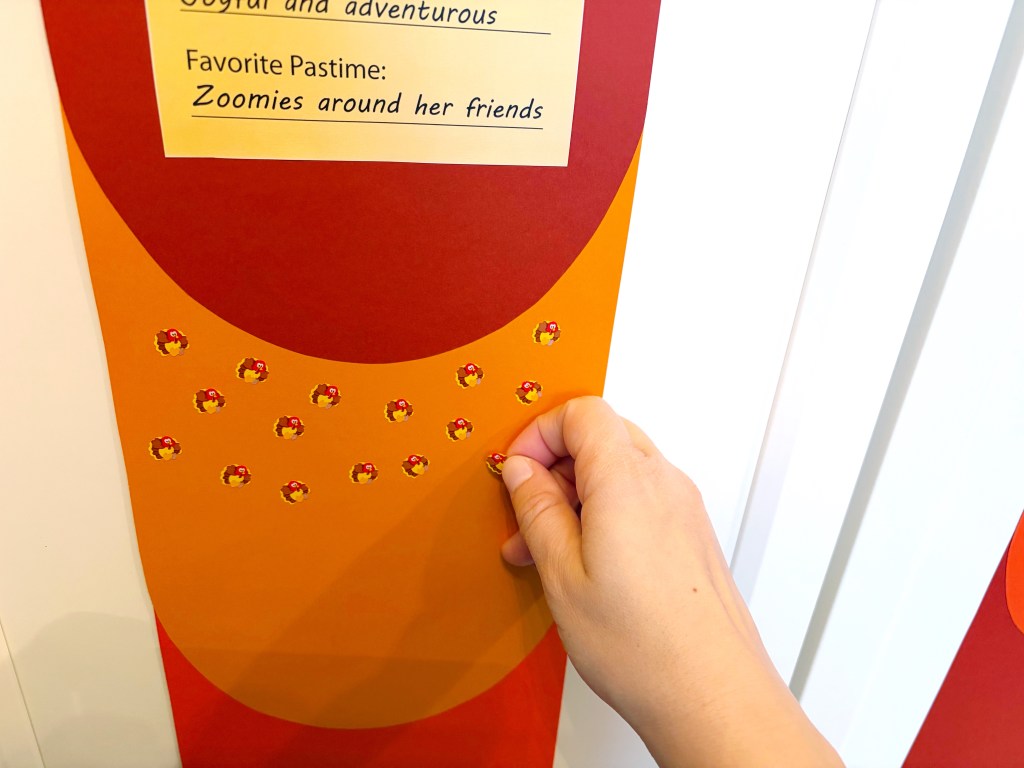
A person placing a sticker on an orange and red display board decorated with turkey illustrations, alongside information about the turkey's personality.

At the end of the three weeks and after all the votes have been cast, I count all the stickers for each turkey. The turkeys with the most stickers/votes is our winner!

(Side note: I usually keep a spreadsheet and write down how many stickers each turkey is getting along the way. It’s SO much easier than counting the stickers at the end.)
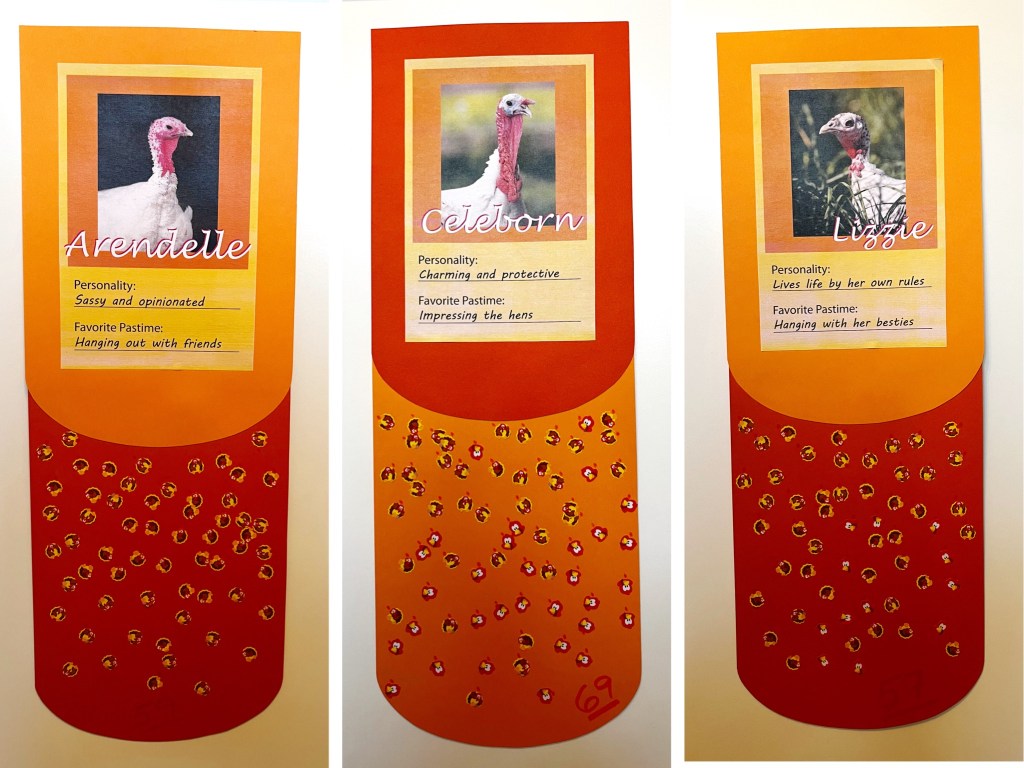
Three decorative cards featuring turkeys named Arendelle, Celeborn, and Lizzie. Each card includes a photo, personality traits, and favorite pastimes, set against a colorful orange and red background. Stickers representing votes are placed below the pictures of the turkeys.

Before Thanksgiving, I visit the Adopt a Turkey project website and symbolically adopt the turkey with the most votes (i.e., make a donation in that turkey’s name).

Farm Sanctuary then sends me a digital adoption certificate, which I print out and place in a gold frame on my book case in my teaching studio. The winning turkey is our studio mascot for the year and watches over us as we learn.
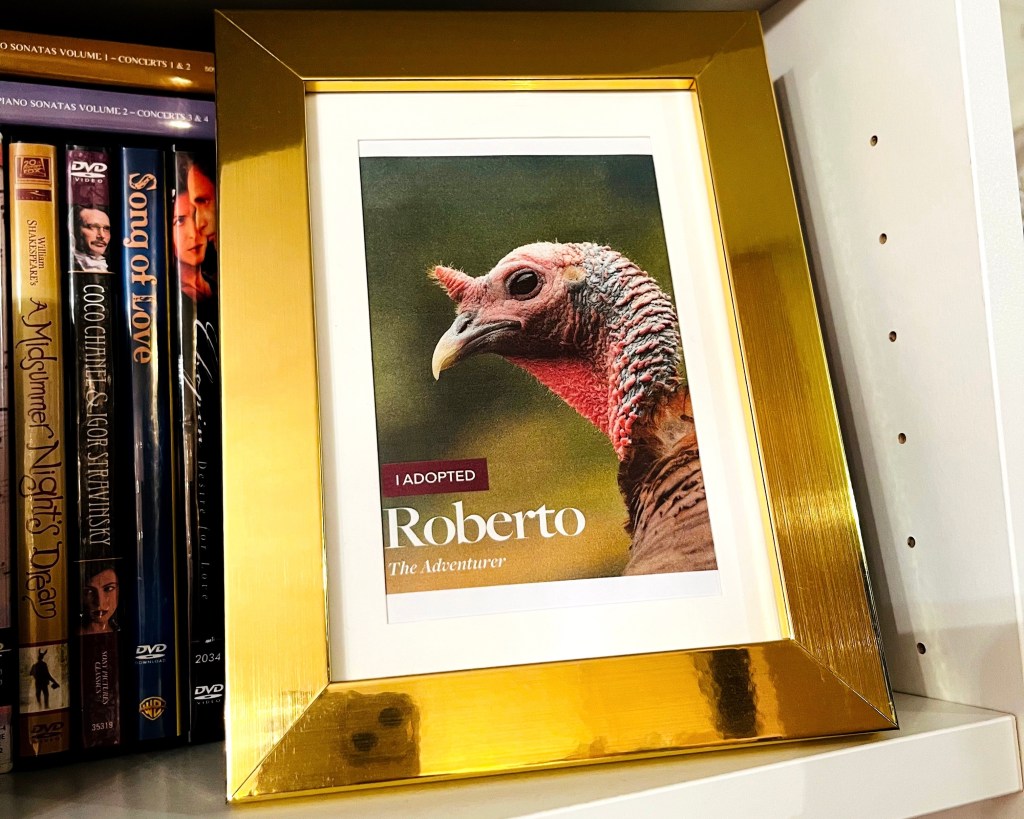
A framed adoption certificate for a turkey named Roberto, displayed on a shelf with DVDs in the background.

The “Save the Turkeys” practice challenge has become a fun, annual tradition at my studio and the kids are always so excited to meet the new turkeys each year.

My Visit to Farm Sanctuary

I started this practice challenge back in 2018 and it is by far my students’ favorite practice challenge. They would often ask me if I had ever met the turkeys…

This past summer I had the enormous pleasure of visiting Farm Sanctuary’s Watkins Glen location in New York State!

Exterior view of the Visitor Barn at Farm Sanctuary in Watkins Glen, featuring a sign indicating guest parking and a large sign with the Farm Sanctuary logo.

Serendipity is such a wonderful thing! We were in Watkins Glen to visit the Watkins Glen State Park and its beautiful waterfalls (it did not disappoint! What a unique and gorgeous place!).

We were looking for more things to do in the area (we already had the Corning Museum of Glass on our list but we still had a morning to fill). I asked ChatGPT for some suggestions of activities in the Watkins Glen area and Farm Sanctuary popped up on the list.
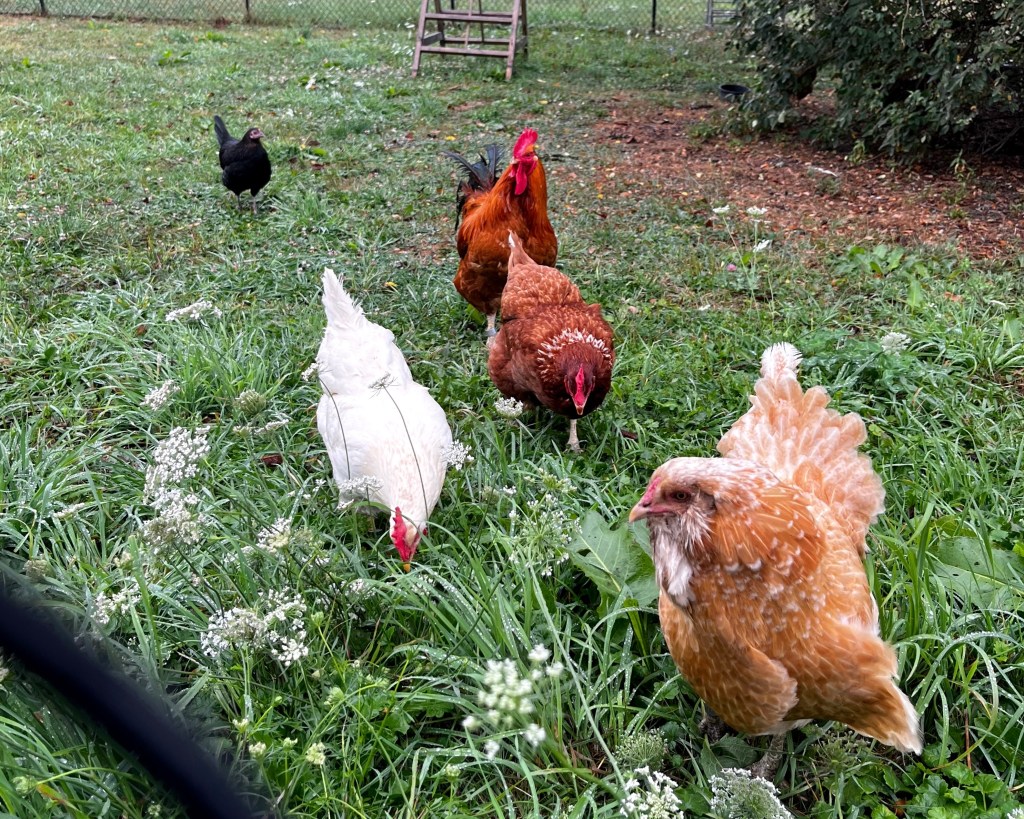
A group of chickens foraging in a grassy area at Farm Sanctuary.

I literally did a facepalm… How did I not put 2 and 2 together?! I immediately reserved a tour and it was the perfect way to finish up our vacation!

Two people in white protective clothing gently pet a large pig lying on straw in a barn.

It was a rainy morning but the rain stopped during our hour-long tour. And we lucked out; we were the only ones in our group tour and we basically got a private tour!

As we walked the grounds, we learned about the history of Farm Sanctuary and visited Hilda the sheep’s grave (Farm Sanctuary’s first rescue).
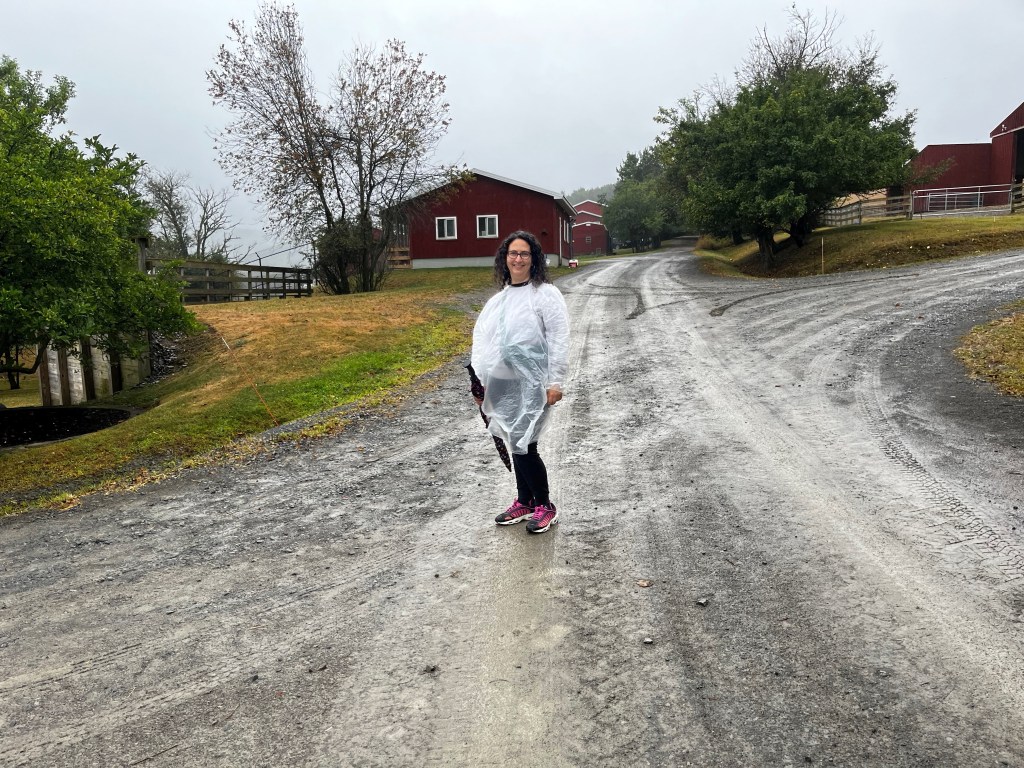
A person wearing a clear rain poncho stands on a gravel road on a rainy day, with red barns and trees in the background at Farm Sanctuary.

We got to meet and pet cows, sheep, goats, and pigs. We saw the turkeys (!!!), chickens, geese, and ducks. We learned about their backstories and how they are thriving and living their best lives on the farm.

I had always wanted to visit the farm and it was such a dream come true! They even had a turkey tote that I snatched up in the gift shop! It had the names of past turkeys from their Adopt a Turkey project, including my all-time favorite turkey, Roberto! (I don’t know, there is just something so endearing and funny about a turkey named Roberto. And his personality was just so cute!).

A person stands outside a red barn, holding a tote bag featuring the turkeys of Farm Sanctuary.

I highly recommend a visit to Farm Sanctuary if you are in the Watkins Glen area or their Southern California location.

We got a little laugh upon leaving the farm when we saw this street sign for “Unexpected Road”. It was a dirt road that was best not to go down because of all the mud from the rain. But it got me thinking about how compassion and acts of kindness (like the founder’s impulse decision to rescue a sheep left for dead) can completely change the course of our lives and lead us to a new purpose.
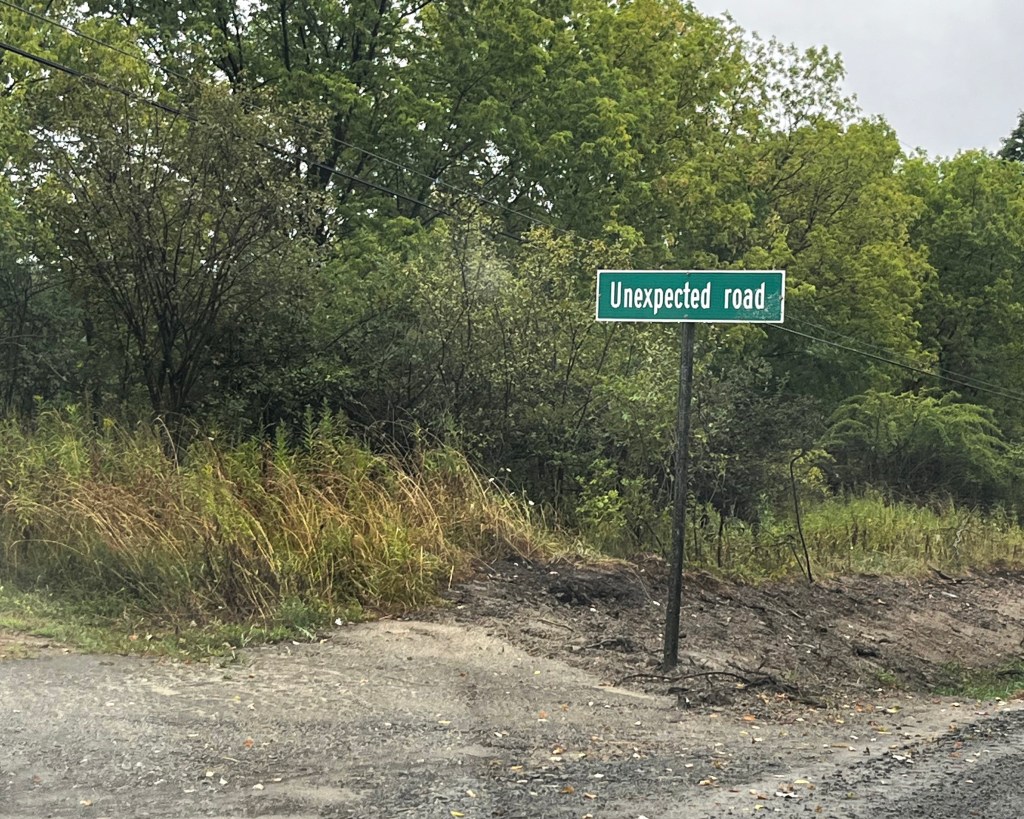
A green sign reads 'Unexpected road' beside an overgrown path surrounded by trees and tall grass.

I am deeply thankful for the unexpected twists that led me to teaching piano. I am enormously grateful for my wonderful students and families and I look forward to keeping our “Save the Turkeys” practice challenge tradition going strong for years to come!

Happy Thanksgiving!!!

Explore more creative teaching ideas
  • 25 Piano Gifts for Young Musicians
    Looking for a gift to inspire your child to pick up their instrument and practice more in the new year? The list is a mixture of useful and fun stuff that kids can use for their practicing or to show off their piano pride!
  • Slurs & Ladders: The Recital Prep Game
    If there is one game my students beg to play year after year (and sometimes when we don’t even have a recital anytime soon!) is this recital prep game. It’s a great de-stressor and it shows students how prepared they are to perform while also injecting some fun and joy back into those recital pieces that may be sounding a little tired.
  • Positive Notes: Recital Encouragement
    Spread some positivity and encouragement to your students this recital season with these adorable Positive Notes! They will help remind them of how hard they work and how much you believe in them.
  • Snowball Rhythm Game
    Who will be able to make the longest rhythm train before the dreaded “Busted!” stick is revealed?! Kids will practice their rhythms while also practicing their aim in this fun toss game.
  • Chord Snowblast
    Build chords and collect points while trying to avoid the snow blast! Kids will test their knowledge of building chords AND they will actually be hoping to get all the chords with sharps and flats!!

Let’s stay in touch, join the list!

As a “toucan” of our appreciation download a free set of note flashcards (link in our Welcome email)!

Processing…
Success! You're on the list.

We are a participant in the Amazon Services LLC Associates Program, an affiliate advertising program designed to provide a means for sites to earn advertising fees by advertising and linking to Amazon.com. As an Amazon Associate we earn from qualifying purchases.

Performance Practice – Part 1: External Distractions

Recital season is upon us and a topic that comes up a lot is performance anxiety. As children get older and become more self-conscious, performance anxiety can start to creep in… It affects everyone (there are countless stories of professional musicians who suffer from performance anxiety) but it doesn’t always affect everyone in the same way or even negatively. It can be harnessed as an agent of good to enhance their performance. 

A student in braids plays the grand piano at a recital.

As pianists we do not always have the luxury of numbers (like other instruments playing in orchestras or bands) and it can feel overwhelming to sit in front of an audience to perform (even if it’s a wonderfully friendly audience made up of family and friends). This is an extremely important topic to work on with students but oftentimes gets overlooked because of the more “pressing” matter of working out the technical difficulties of the performance pieces (and I’ve been guilty of this too!).

In this four part series, I’m going to talk about how students can practice for performance.

But isn’t practicing for a performance just playing the piece from beginning to end like one would on the day of the recital? As we will see, the answer is a resounding no.

A piano student practices the piano.

The type of practice most students are familiar with is used to learn the piece. Through this type of practice, the student works out the technical difficulties, gains consistency and ease in playing it, increases accuracy and expression. Then when they are “done learning”, they are able play the piece. But this is not enough to perform the piece with confidence in a high-stakes setting like a recital or audition.

Performance practice requires a different set of practice strategies. The suggested strategies in this series are based on research but obviously not everything works for everyone. Students should experiment with all the different strategies to find the best ones that work for them. But, all of these strategies take time and consistent effort to make them useful… They require practice.

As teachers we want our students to approach the piano at the recital feeling confident and ready to share their music with the audience. The performance practice strategies will help prepare students for things that may happen on the day of the recital… intrusive thoughts, performance anxiety, and unexpected and unwelcome distractions. When students have a sense of control over the “unexpected” and are equipped with tools to handle them, they are free to play in the moment with confidence. They have practiced for performance and they know what to do!

  1. References
  2. What are External Distractions?
  3. Types of External Distractions and Management Methods
    1. Distraction no. 1 – Electronics
    2. Distraction no. 2 – People
    3. Distraction no. 3 – Practice Space
    4. Distraction no. 4 – Noise
  4. Spot the Distractions: What’s Stealing your Focus?
  5. Coming up next!
  6. Let’s stay in touch, join the list!

References

I used many sources for my research and I wanted to take a moment to highlight a few that you may find helpful if you want to dive deeper into the subject:

  • The Bulletproof Musician – This website is a treasure trove of information about performance anxiety! Noa Kageyama, a performance psychologist and faculty member of The Julliard School and Cleveland Insitute of Music, offers weekly posts, courses, and a myriad of free resources to help musicians with performance anxiety.
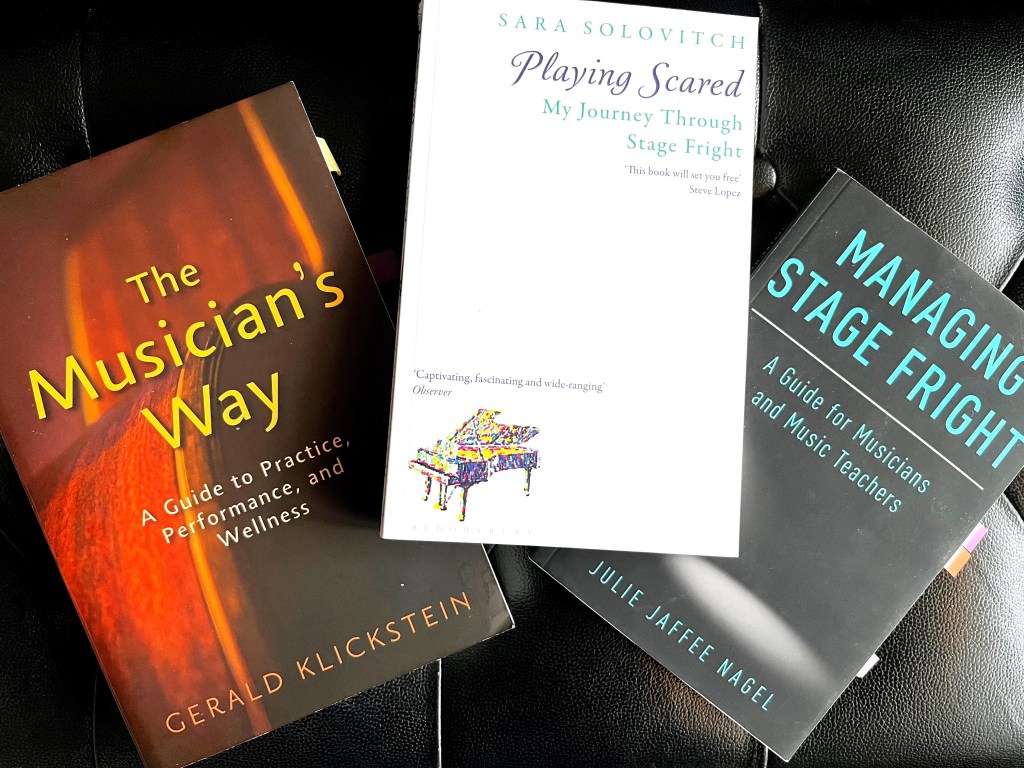
  • Managing Stage Fright – A Guide for Musicians and Music Teachers by Julie Jaffee Nagel: This book is filled with practical strategies for managing performance anxiety. The book is directed at teachers, making it unique in the literature. As teachers, we have to navigate the intense emotions students feel when it comes to performing and the author, a pianist and psychoanalyst, conveys her research and strategies in a wonderfully empathetic manner.
  • Playing Scared – My Journey through Stage Fright by Sara Solovitch: This is the personal account of the author in achieving her goal of giving a formal recital the day before her 60th birthday. She does research along the way and describes the journeys of famous musicians, actors, athletes, and even a reverend in managing their own stage fright.
  • The Musician’s Way – A Guide to Practice, Performance, and Wellness by Gerald Klickstein: This book covers a wide variety of topics. Part II of the book on performance is very informative and provides great practical strategies for musicians to try implementing in their performance practice.
Three books lay on a piano bench: The Musician's Way, Playing Scared, and Managing Stage Fright.

What are External Distractions?

As students prepare for their recital performance, they may be facing lots of external distractions when they sit down to practice (or maybe even ones that prevent them from practicing altogether!).

An external distraction is something that comes from the outside (not from within you) that takes your attention away from what you are doing.

Everyone is surrounded by external distractions… devices, pets, siblings, children, parents, friends and SO much more! It can often feel like the world around us is constantly trying to distract us from what we really need to do. Our students face the same challenges.

Learning a new piece and preparing it for performance takes a lot of focused work. Winning the battle against external distractions may seem challenging but it’s well worth the effort!

It all starts by removing the distractions students can control AND coming up with a plan to handle the distractions they can’t control.

Examples of external distractions include pets, conversations, smartphones, videogames, siblings playing, sirens, and storms.

Although it is important for students to be able to play through the occasional unintended noise during a performance (we’ll talk about that in a later post), for the hard work of learning their recital pieces, students should work in a space where external distractions are minimal.

By learning to protect their focus from everyday distractions, students set themselves up for productive practice sessions while also strengthening their ability to stay focused in any setting.

Types of External Distractions and Management Methods

Let’s talk about four of the most common external distractions that students may run into and different strategies for students to handle them.

Distraction no. 1 – Electronics

I think this is the one most students struggle with… The brain LOVES electronics because they stimulate the brain without the brain having to do any real work. They are instant gratification suppliers and the brain eats it up! Children and teens are particularly susceptible to their siren call. Some of the most common culprits are smartphones, smartwatches, tablets, videogames, computers, and the television.

A piano student plays on her smartphone instead of practicing the piano.

Here are five suggestions to protect practice time from electronics:

  • Put the device in another room.
  • Put the device in Airplane mode.
  • Turn off notifications.
  • Turn off the device.
  • Use these distractions as rewards for practicing.

With electronics, the easiest method is distance. Students may think about their electronics during practice, but if the device is out of reach, they’ll be less tempted to stop.

Distraction no. 2 – People

Our friends and family mean well, but sometimes they can unintentionally distract us from our practicing. Most of the time parents will be so delighted that their child is practicing that they will not interrupt them (unless there is a real reason). The true culprits are usually siblings and friends.

In order to handle these distractions, a student could:

  • Let everyone in the house know that they are practicing and don’t want to be disturbed.
  • Practice when siblings are not home (for example, their sister is at a dance class).
  • Ask siblings to do their activities in a different room of the house (this may require parental intervention).
  • Set aside a specific time to answer texts or FaceTime friends (a student could even go so far as to let friends know that they are practicing and will only be available at after a specified time).

Usually a conversation is enough to get these external distractions under control.

Distraction no. 3 – Practice Space

A student’s practice space should have everything they need for a successful practice session, which could include but is not limited to their instrument, their instrument’s accessories, proper lighting, comfortable ambient temperature, metronome, and a pencil.

A piano and its bench are covered in books, a blanket and stuffed animals.

To set themselves up for success a student could:

  • Make sure their instrument is always ready for practicing (tuned, not convered in clutter, etc.).
  • Keep everything they need at their instrument (sheet music, metronome, pencil, timer, etc.).
  • Make sure their space is well-lit, whether with natural or artificial light.
  • Make sure they are comfortable (wear clothing that is season appropriate so they are not too hot or too cold, ensure that their outfit is not restrictive and allows them to move freely while wearing it, etc.).

If the practice space is ready to go without the need to tidy up or move things around, it’s easier to just slip into practice mode. Taking a few minutes at the end of practice to reset the space makes the next session easier to start.

Distraction no. 4 – Noise

As musicians our sense of hearing is extremely important! Our ears need to focus on the music we are practicing. Students in particular are still developing their listening ear so external noise is even more problematic.

Noise can come from every source imaginable… pets, siblings, background house noise, conversations, neighborhood noise, devices, etc.

A black labrador dog lays its head on a piano student's lap as she tries to practice the piano.

In order to keep focused and not be distracted by external noise sources, students can:

  • Use headphones while practicing (if they are using a digital piano).
  • Put pets in a different room.
  • Ask family members to use their devices in a different room.
  • Turn off machines that generate a lot of noise (dishwashers, fans, robot vacuums, etc.).

Spot the Distractions: What’s Stealing your Focus?

Last year, when my students and I worked through this four part performance practice series, they occasionally had a little extra homework beyond the performance practice strategies. Since external distractions are something students can easily recognize, the following activity empowers them to take control of their practice environment by identifying and addressing the specific distractions that interfere with their focus.

We drew a table and labeled the columns:

  • External distraction – If the student identified an external distraction, they would describe it here.
  • How did you manage the distraction? – The student would then explain what they did to eliminate/minimize the distraction or refocus on practicing (if the external distraction was beyond their control).
  • Did it work? – A simple yes or no answer.
Table of external distractions, a strategy to manage them, and whether or not the strategy worked.

It was very interesting to see the variety of distractions my students were facing (every home is different!) and the creative solutions they came up with to handle them. I was very proud of them!

Coming up next!

In the next post we will be talking about internal distractions – thoughts that pop into our heads – and strategies to calm the inner chatter and refocus our minds.

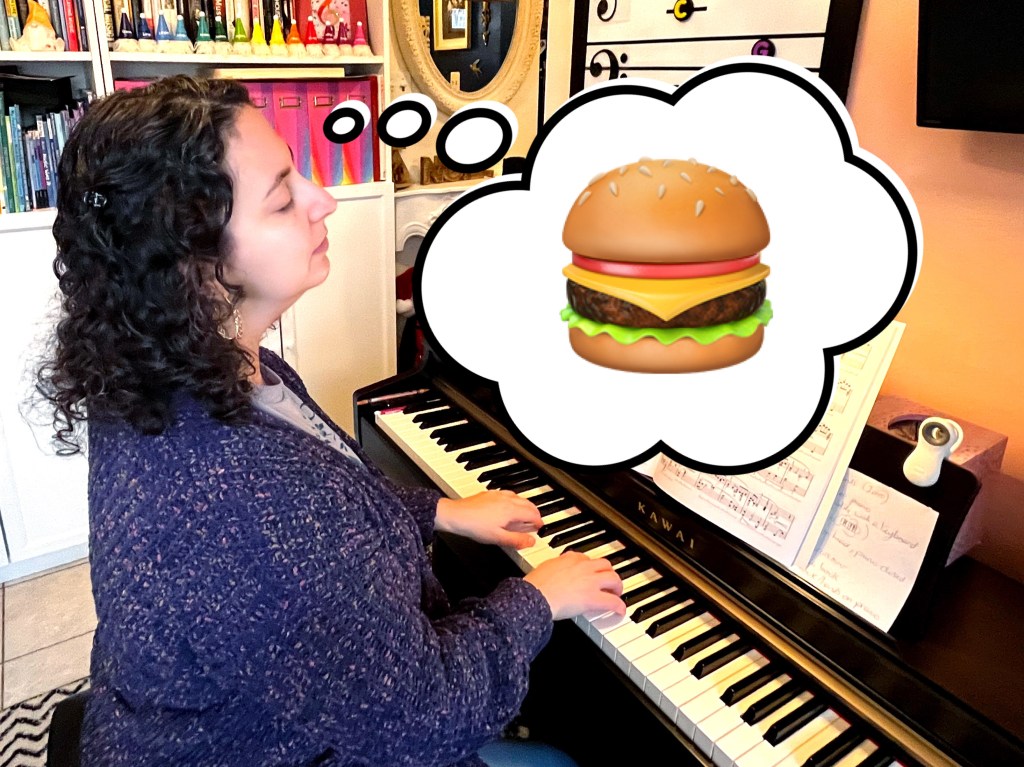
A piano student thinks about a cheeseburger while practicing the piano.

Explore more creative teaching ideas
  • Slurs & Ladders: The Recital Prep Game
    If there is one game my students beg to play year after year (and sometimes when we don’t even have a recital anytime soon!) is this recital prep game. It’s a great de-stressor and it shows students how prepared they are to perform while also injecting some fun and joy back into those recital pieces that may be sounding a little tired.
  • How to Bow at a Piano Recital
    You’ve just finished playing your piano recital pieces and now the audience is clapping, what do you do now??! It’s time to take a bow and enjoy the adulation for all the hard work you put into learning your pieces. Here’s the step-by-step on nailing the perfect piano recital bow!
  • Positive Notes: Recital Encouragement
    Spread some positivity and encouragement to your students this recital season with these adorable Positive Notes! They will help remind them of how hard they work and how much you believe in them.

Let’s stay in touch, join the list!

As a “toucan” of our appreciation download a free set of note flashcards (link in our Welcome email)!

Processing…
Success! You're on the list.

We are a participant in the Amazon Services LLC Associates Program, an affiliate advertising program designed to provide a means for sites to earn advertising fees by advertising and linking to Amazon.com. As an Amazon Associate we earn from qualifying purchases.
Nailing Piano Technique: The Fingernail Dilemma

If you mention fingernails to any piano teacher, you will be greeted by exasperated sighs, rolling eyes, and a myriad of strong emotions. This is because piano teachers across the board share a very complicated relationship with this seemingly innocent part of the hand…

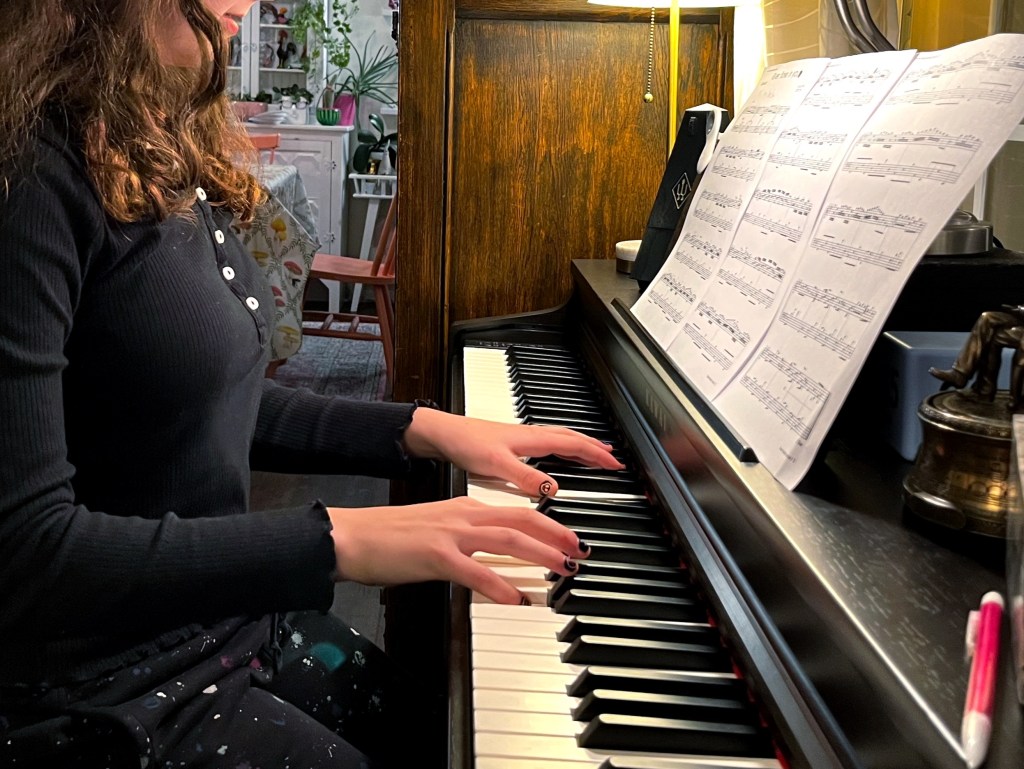
Piano student holds out hands to display their beautiful, Christmas-themed fake nails.

You may hear stories about teachers keeping fingernail clippers on their piano to clip their students’ fingernails if they are too long. Or of a piano teacher who sends students home because of their nails.

It’s a pet peeve… and it’s not unfounded! Long fingernails are a real problem for learning to play the piano.

My hope is that this post will help guide conversations between teachers and parents about this important topic. Any conversation of this nature, in my opinion, should be approached with compassion and understanding.

On the one side, fingernails can represent more than mere vanity; they can serve as a form of cultural expression, personal identity, or even a reflection of one’s creative or professional journey.

For the piano teacher, on the other hand, long fingernails can be an impediment to their job of teaching a student to play the piano with proper technique. Teachers are professionals who know the challenges of the instrument and the path to achieve mastery; their opinions and advice on the subject have weight and value.

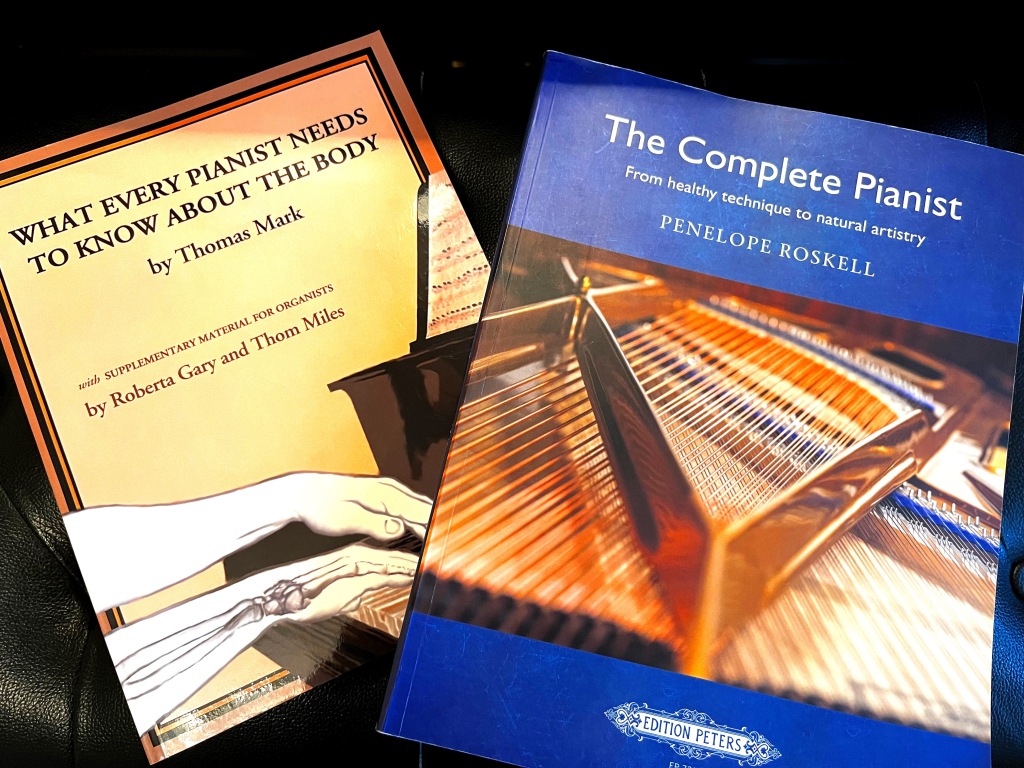
All the discussions in this post provide a high-level overview. For a deeper dive into body mechanics and proper technique I recommend the following books:

Two books about body mechanics and piano playing sit on top of a piano bench.
  1. Why are Long Fingernails so Bad?!
    1. Nail Clicking
    2. Hand Posture
    3. Movement
    4. Injury
  2. How Long should Fingernails Be?
  3. What if a Student wants to Keep their Long Nails?

Why are Long Fingernails so Bad?!

Long fingernails are not inherently bad. On the contrary, as I mentioned, they can be a powerful and beautiful form of self-expression and can even boost self-confidence. However, for piano students, this beauty and artistry come with a hidden cost.

The truth is that long fingernails inhibit the development of proper piano technique, which limits what a student is capable of playing and could eventually lead to injury.

But let’s break it down:

Nail Clicking

When fingernails are long enough they will make a tapping or clicking sound on the keys as the fingers strike the keys. And they don’t have to be very long for this to happen; in the video above I measured my nails to be about 1 mm long, which is very, very short by most people’s standards.

In a world where fingernail tapping is all over social media, it really has no place in creating music at the piano. A student should be developing their ear and listening intentionally and deeply to their playing. The constant clicking gets in the way of that and is just a big distraction.

Hand Posture

Proper hand posture at the piano resembles a hand at rest: fingers gently curled inwards towards the palm of the hand, thumb slightly bent. If one were to freeze their hand in this position and place it on the piano, the fingers would touch the keys on the padding close to the fingertips, but not the actual fingertips (if this happens, the fingers are too curled).

Student demonstrating proper hand posture plays the piano.

When fingernails are too long, the fingers sit on the keys in a more stretched-out position. The point of contact with the keys is now the full pad of the finger, encroaching on the 2nd joint of the finger (the distal inter-phalangeal joint, DIP joint, to be more precise), if the nails are long enough.

The knuckles also flatten out, which causes the natural bridge of the hand to collapse. As we will see next, this is going to have serious consequences on how the student will be able to navigate the piano.

Movement

Long fingernails will restrict the range of movement the hand can execute at the piano.

Outstretched fingers will cause the student to lift the fingers from the knuckle, putting unnecessary strain on the tendons of the hand. This up-down motion of the fingers will cause tension in the thumb, which could start to curve outwards.

Long fingernails also collapse the knuckles which ends up restricting the movement of the wrist. The importance of the wrist in piano playing cannot be overstated. The wrist allows for fluidity, control, and expressiveness. Compromising the wrist’s freedom is like putting casts on the legs of a runner and asking them to run a marathon… a student’s playing will be stiff, limited, and their movements will be inefficient.

With all these restrictions on its natural movements, the body will then try to adapt and find ways to play the notes the brain wants it to. This is when the hand starts twisting in odd ways and the elbow juts out away from the body (something I like to call “Chicken wing”).

The result of these awkward movements can be heard in the music in the form of unevenness, limited speed, unintentional accented notes, uneven articulations, and the list goes on and on…

Injury

And all of the above could ultimately lead to injury… Practicing the piano is a task based in part on repetition. And a lot of it! Students will often have to practice passages over and over again to eventually work out all the problems and difficulties.

When movements are unnatural to the body and cause the body strain, sooner or later pain starts to creep in. Oftentimes students will power through the pain, choosing to abide by the “no pain, no gain” mentality.

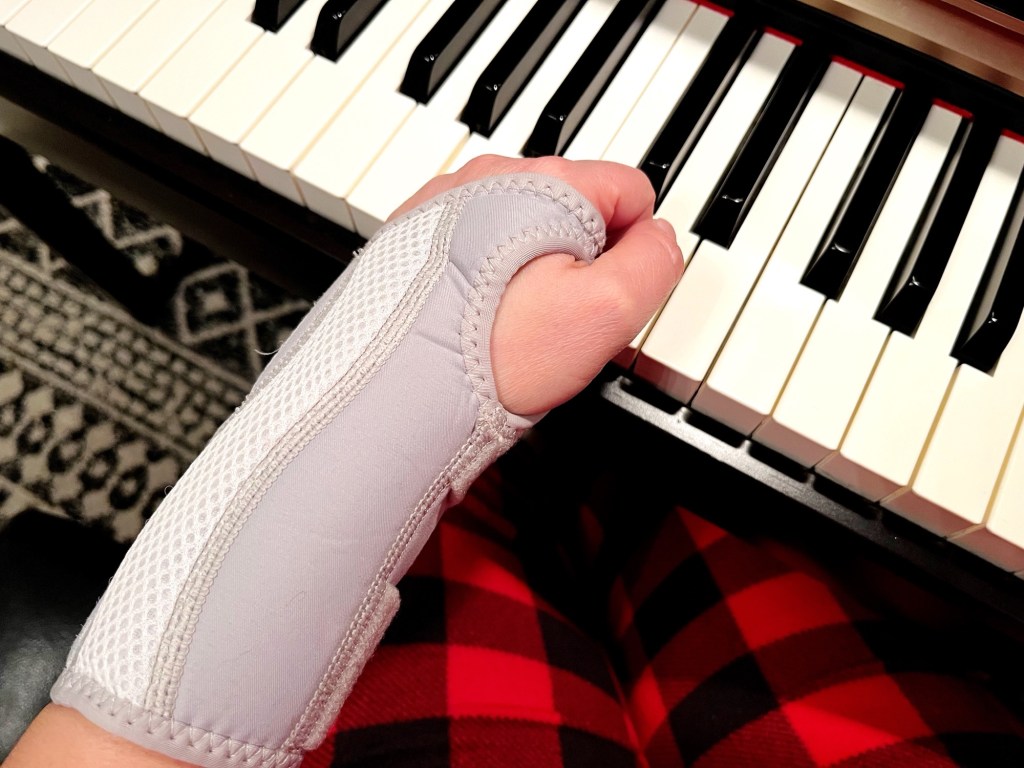
A hand in a wrist brace sits on the keys of a piano

But pain is a sign that something is wrong and needs to be addressed. If left unchecked, a student could end up with: carpal tunnel syndrome, tendinitis, muscle strain, repetitive strain injury (RSI), neck and back pain, among others.

Another potential injury that can occur is when the fingernail gets caught between the keys of the piano. Because it happens so quickly, we usually do not realize that the nail is trapped until the finger tries to follow through with the motion it started. The trapped nail could end up breaking or pull at the at the hyponychium (the point where the nail meets the fingertip) and potentially causing a tear and bleeding. Although not as serious as other injuries, it is definitely annoying and can be quite painful in the moment.

How Long should Fingernails Be?

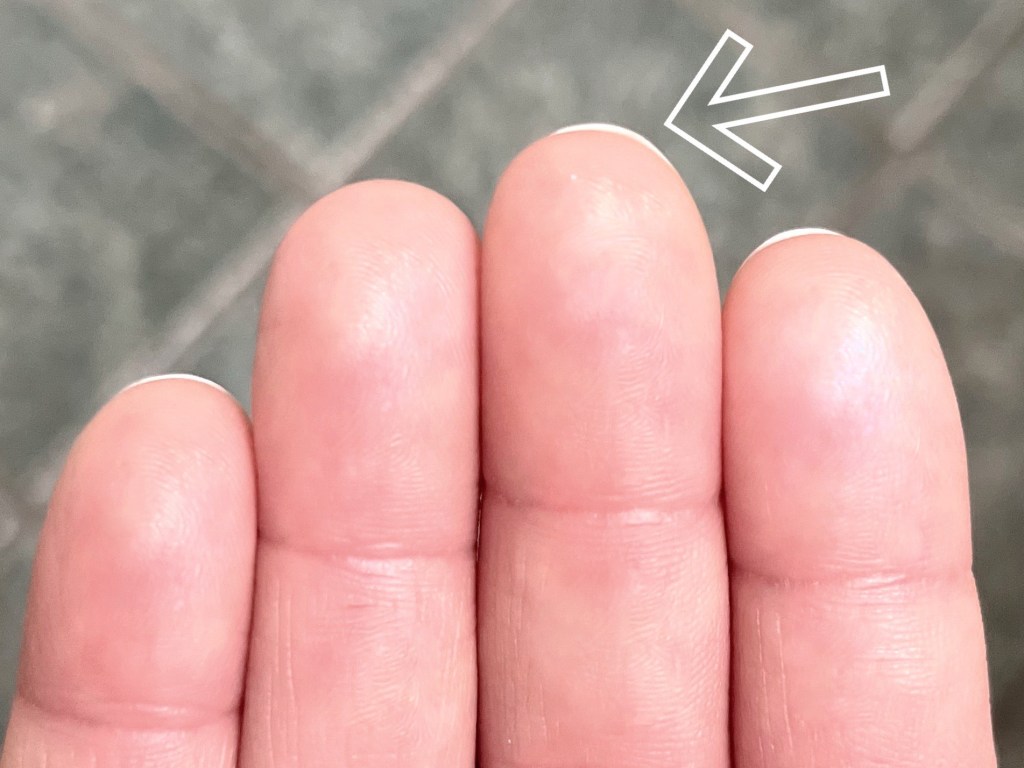
I have lived by the advice of one of my favorite piano teachers growing up: if the nail is peeking over the fingertip, it is time to cut it.

Arrow points to fingernails growing beyond the top of a finger.

A student can also pay attention to their playing and ask themselves if anything feels off or if they are hearing a clicking sound.

What if a Student wants to Keep their Long Nails?

Like most things in life, choices are compromises. We gain one thing but also have to come to terms with the reality that we may be giving up other things.

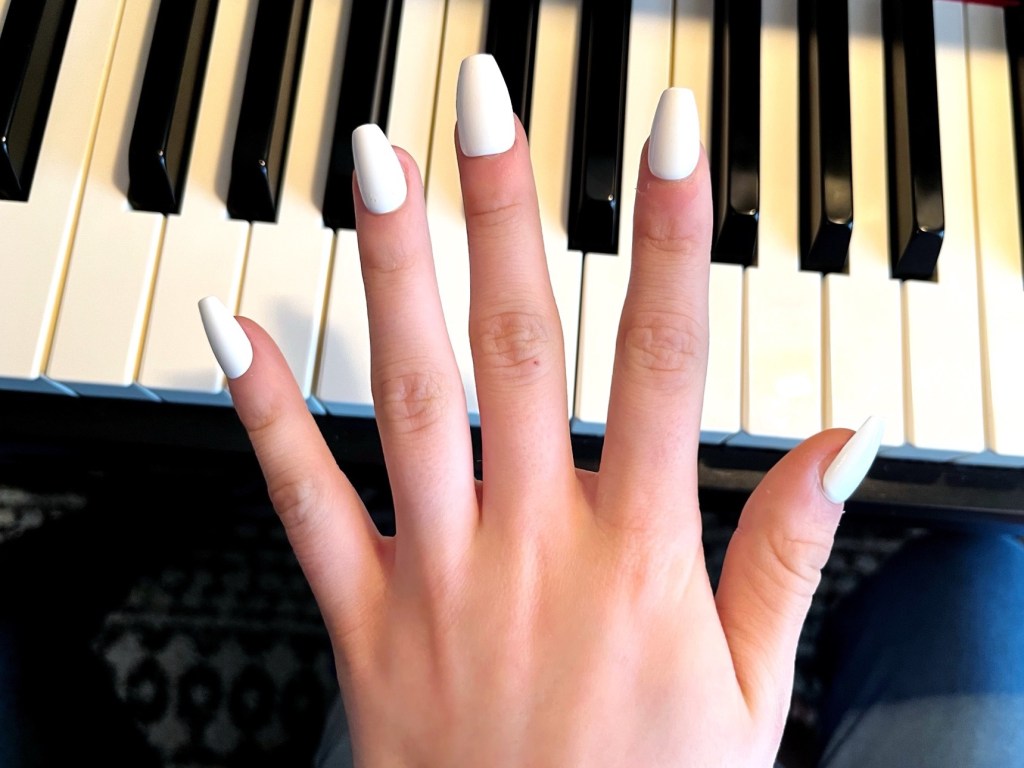
The reality here is that choosing longer fingernails will limit what a student will be able to play.

The vast majority of piano students will be hobby pianists. Very few will make music their profession and even fewer will have concert careers.

A hand with white fake press on nails is outstretched over the keys of a piano

My advice is for teachers, students, and parents to talk about long fingernails and their drawbacks.

I always reiterate my thoughts on fingernails around recital time. I want my students to be able to perform with confidence and having long nails will affect their playing.

Ultimately, though, it is their choice. My job as a piano teacher is to educate. My hope is that, by providing them with all the information, they will be able to make a decision they are comfortable and happy with.

And this can take many forms… some students have chosen to get a manicure after a recital as a reward, others opted for shorter manicures (but still a bit long for my personal liking for the piano), while others go short, not wanting to tempt the fates at the recital.

For serious students, this tends to be a one-and-done conversation. They are committed to the piano and learning to play well is the priority.

For all the others, it will most likely come down to personal preferences and sometimes special events (like dance competitions, weddings, or graduations). And at the end of the day, everyone is entitled to their choices in life and we must respect that. And that respect should be extended both ways as a teacher may choose not to teach students with long nails.

As mentioned previously, for more information on proper piano technique and body mechanics, check out these books:

Explore more creative teaching ideas
  • Top Practice Tools Every Piano Student should Have: Curiosity
    Curiosity is the catalyst that gets students to start learning the piano in the first place and can be exactly what’s needed to keep them going for the long haul. Why is it so important and how do we keep it going? What if I don’t play an instrument, but want to encourage my child in their practicing? Check out all the answers plus download a free printable for parents!
  • Positive Notes: Recital Encouragement
    Spread some positivity and encouragement to your students this recital season with these adorable Positive Notes! They will help remind them of how hard they work and how much you believe in them.
  • Slurs & Ladders: The Recital Prep Game
    If there is one game my students beg to play year after year (and sometimes when we don’t even have a recital anytime soon!) is this recital prep game. It’s a great de-stressor and it shows students how prepared they are to perform while also injecting some fun and joy back into those recital pieces that may be sounding a little tired.

Let’s stay in touch, join the list!

As a “toucan” of our appreciation download a free set of note flashcards (link in our Welcome email)!

Processing…
Success! You're on the list.

We are a participant in the Amazon Services LLC Associates Program, an affiliate advertising program designed to provide a means for sites to earn advertising fees by advertising and linking to Amazon.com. As an Amazon Associate we earn from qualifying purchases.
Prac-Tris: The Videogame-Inspired Practice Challenge

As recital season barrels towards us, music teachers everywhere know it’s time for students to step up their practicing game. So why not turn it into an actual game? And not just any game, but a videogame-inspired practice game?

Prac-Tris will have your students stacking practice days as they work their way to the top… of the board and their musical mastery!

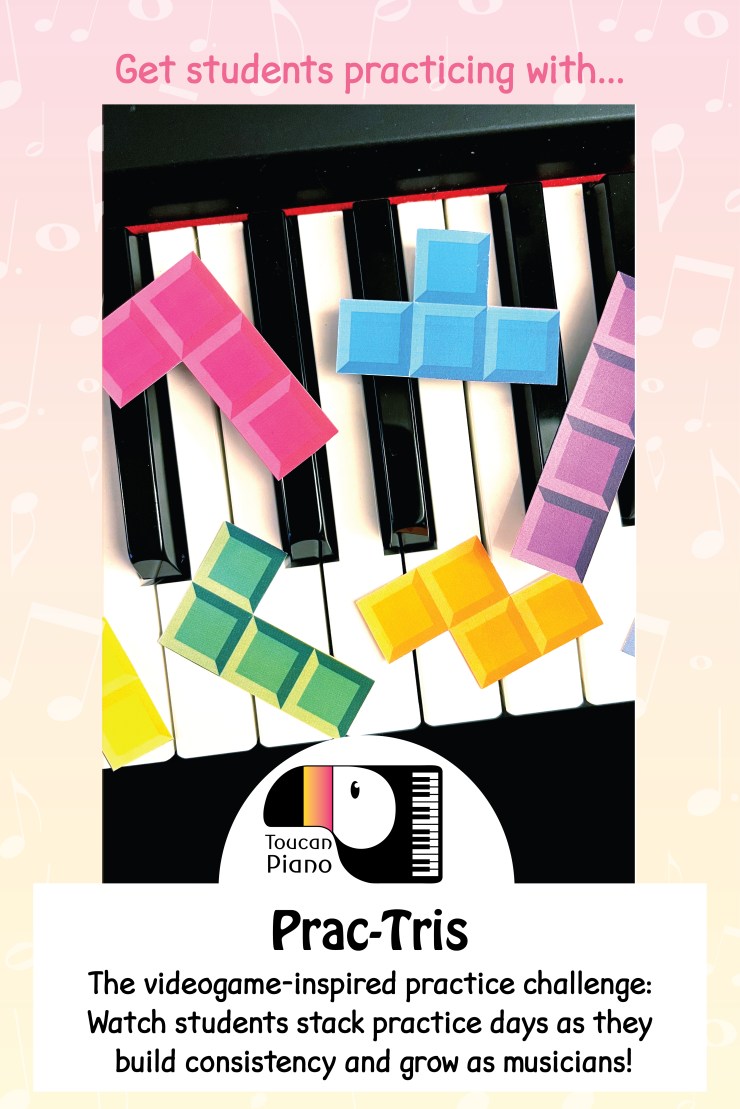
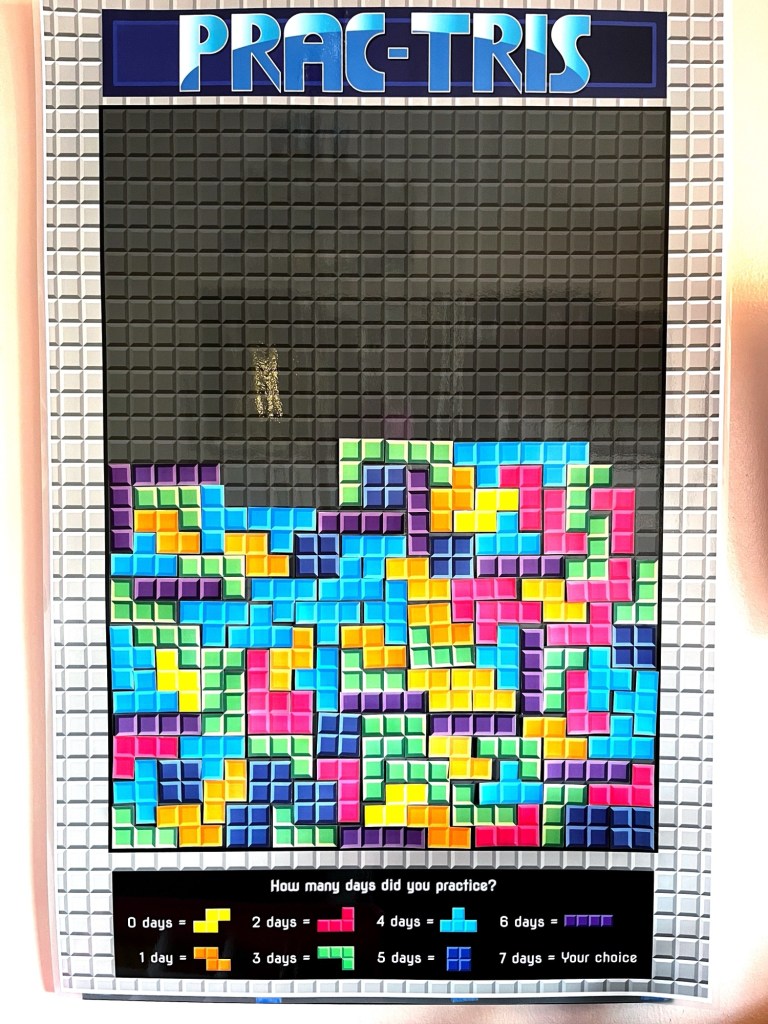
Giant colorful game blocks sit on top of a Prac-Tris poster.

Prac-Tris is available as a free digital download in the Toucan Piano shop.

You can use Prac-Tris as an individual practice challenge with the Prac-Tris printables or as a studio-wide challenge with the Prac-Tris poster and Prac-Tris logs… OR combine them both, like we did, for a true challenge!

Prac-Tris: Individual Practice Challenge

This version of Prac-Tris has students working on completing their own Prac-Tris printable board. For students who enjoy the thrill of a competition, Prac-Tris can be turned into a race to see which student will complete their board first (up to the point where no additional blocks can be placed on the board).

I was surprised to see some students putting in extra practice minutes in order to earn a specific block they needed!

Each student receives a blank Prac-Tris printable board. Each day they practice, they should log the duration of their practice session. When they have finished practicing, they should draw in the block that corresponds to the number of minutes they practiced.

Piano student fills in their Prac-Tris gameboard.

If a student practiced multiple times in a day, they should add up their total practice minutes for the day and draw the corresponding block on their board.

There are two versions of the Prac-Tris printable board in the digital download: the first one has suggested practice minutes and the second one is blank for the teacher to fill in (so the teacher can personalize practice expectations for students of different ages and skill levels).

Prac-Tris: Studio-Wide Challenge

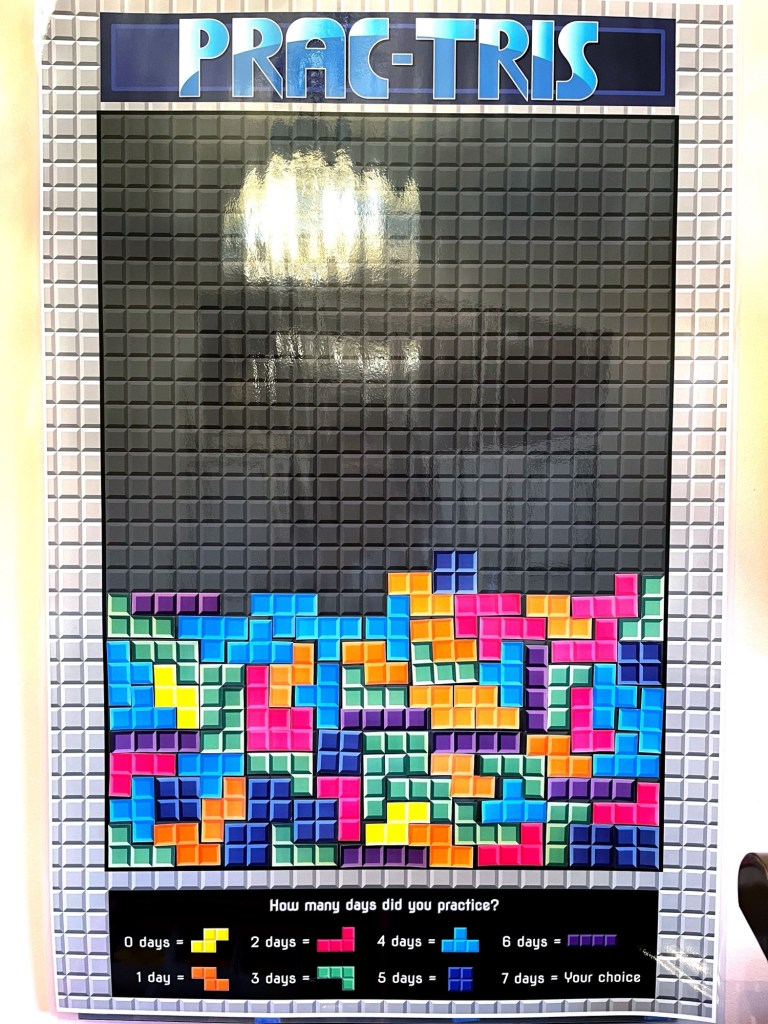
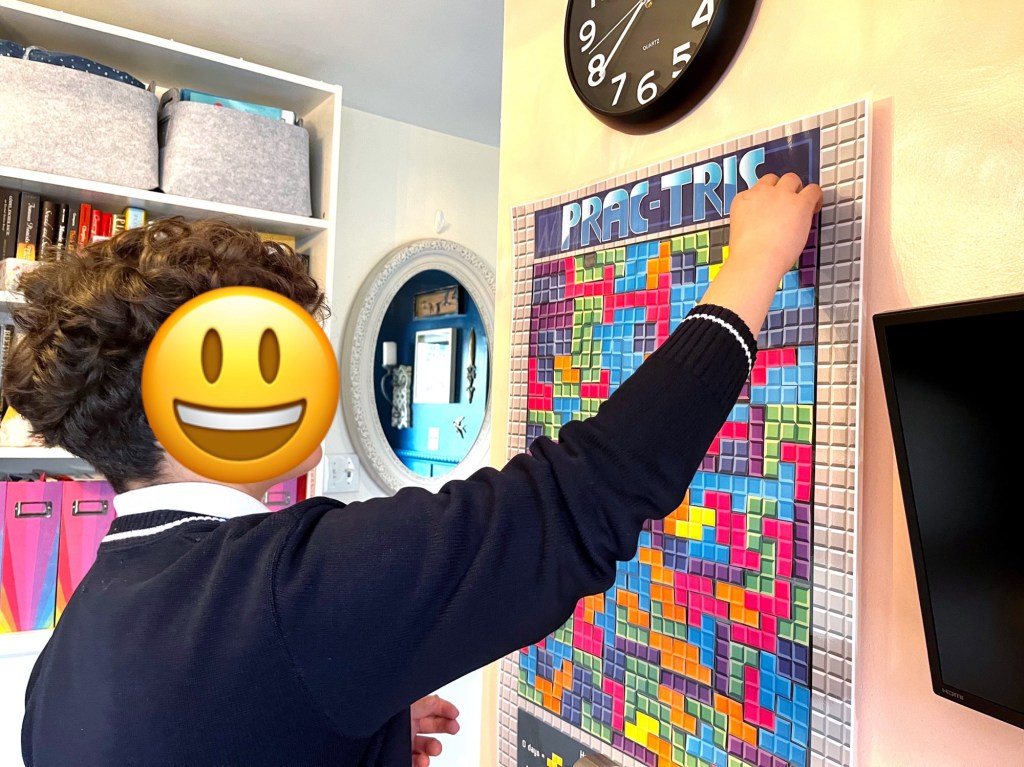
This version of Prac-Tris has students working together to fill the Prac-Tris poster. Each block corresponds to the number of days practiced in a week. Students receive a Prac-Tris log to keep track of their practice days. When they come in for their lesson, they can place their block on the poster. My students were always so excited to see how much the block pile had grown from week to week!

Progress picture 1 of the Prac-Tris poster being filled up by students' practicing.
Progress picture 2 of the Prac-Tris poster being filled up by students' practicing.
Progress picture 3 of the Prac-Tris poster being filled up by students' practicing.
Progress picture 4 of the Prac-Tris poster being filled up by students' practicing.

As an extra incentive, you can reward the students who complete a line on the poster (with, for example, a piece of candy or a favorite activity). This will encourage them to work towards earning a better block or even being able to pick the block they place on the board (instead of leaving it to fate).

I gave any student who practiced 7 days a gold star sticker on their block. Students always wanted to know who had practiced 7 days (and who had practiced zero!).

Piano student places a Prac-Tris game block on the Prac-Tris poster.

If you have a smaller studio, you can block off part of the poster or divide it into milestones. This way students stay engaged for the long haul!

If you have a large studio or a multi-teacher studio, you can divide students into teams and each team can have their own poster. Which team will complete their poster first?!

The digital download includes a 24”x36” printable Prac-Tris poster (I had mine printed and laminated at my local office supply store), printable Prac-Tris logs, and printable blocks. I had my students use a small piece of tape to attach their blocks to the poster.

I had 25 of my students participate in Prac-Tris and it took us about 2 months to complete the poster. And looking back, it was one of my most successful practice challenges to date! My students still talk about it.

Explore more creative teaching ideas
  • Slurs & Ladders: The Recital Prep Game
    If there is one game my students beg to play year after year (and sometimes when we don’t even have a recital anytime soon!) is this recital prep game. It’s a great de-stressor and it shows students how prepared they are to perform while also injecting some fun and joy back into those recital pieces that may be sounding a little tired.
  • Top Practice Tools Every Piano Student should Have: Curiosity
    Curiosity is the catalyst that gets students to start learning the piano in the first place and can be exactly what’s needed to keep them going for the long haul. Why is it so important and how do we keep it going? What if I don’t play an instrument, but want to encourage my child in their practicing? Check out all the answers plus download a free printable for parents!
  • How to Bow at a Piano Recital
    You’ve just finished playing your piano recital pieces and now the audience is clapping, what do you do now??! It’s time to take a bow and enjoy the adulation for all the hard work you put into learning your pieces. Here’s the step-by-step on nailing the perfect piano recital bow!

Let’s stay in touch, join the list!

As a “toucan” of our appreciation download a free set of note flashcards (link in our Welcome email)!

Processing…
Success! You're on the list.

We are a participant in the Amazon Services LLC Associates Program, an affiliate advertising program designed to provide a means for sites to earn advertising fees by advertising and linking to Amazon.com. As an Amazon Associate we earn from qualifying purchases.

Chord Flashcards – How to Use them with your Students

I’m going to just come out and say it… I love flashcards!

Fingers making the shape of a heart hover over chord flashcards.

Flashcards are often stereotyped as being boring, repetitive, and only useful for basic memorization or geared towards younger kids. Some argue that they don’t suit creative learners or that digital tools have made them outdated. However, flashcards are extremely effective for active recall and the long-term retention of concepts.

And the best part? They have SO many uses! From interactive games and hands-on activities to group challenges, the possibilities are endless!

Sending flashcards home for students to drill (the Toucan Piano double-sided chord cards are a great option for home study!) is a fantastic way to reinforce their learning between lessons. But flashcards aren’t just for independent review — there are countless creative and engaging ways to use them during lesson time, helping students see just how much creative thinking can come from this simple tool!

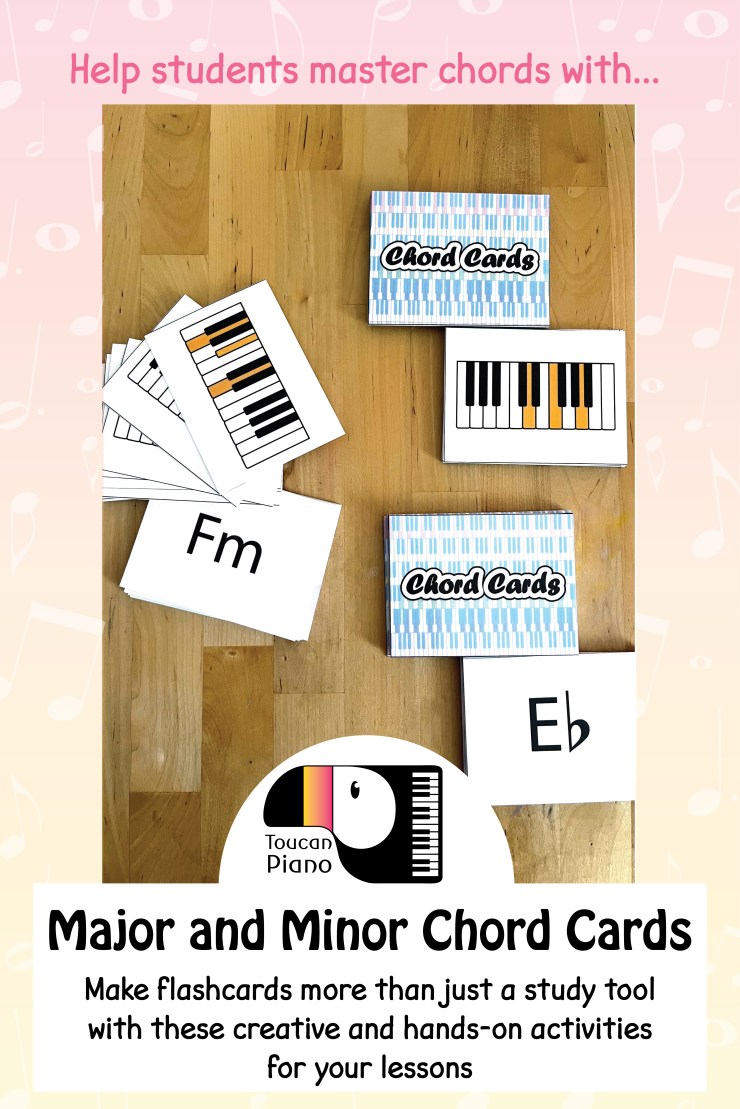
The Toucan Piano major and minor chord flashcards are available as a free download in the shop here.

  1. Chord Activities
    1. Name that Chord
    2. Build a Chord
    3. Part of the Family
    4. Progressions
    5. Inversions
  2. Chord Games
    1. Chord Match/Memory
    2. Speed Chords
    3. Chord Relay
  3. Let’s stay in touch, join the list!

Chord Activities

Hands-on activities during lessons are a fantastic way to engage students in learning about chords. Taking just a few minutes during a lesson to review chords can reap enormous benefits over time… Students will gain confidence in playing chords, recognizing them in their music, and using them in their own improvisations and compositions.

Name that Chord

Students starting out with chords initially work on feeling the shape of chords, using the correct fingering, and identifying the difference in the sound produced by a major or minor chord.

Using the keyboard chord cards, draw a card from the deck. Have the student find the keys on the piano that match the card (start with either the right hand or the left hand). Have the student play the chord and then try to name it.

Taking it one step further, can the student then transform that chord into its major or minor version?

Chord cards sit on the piano while a piano students play a B minor chord.

Build a Chord

Another beginner activity, this has students trying to build the chord from its symbol.

Using the chord symbol cards, draw a card from the deck and have the student place mini-erasers or gems on the keys that constitute that chord.

Chord cards sit on the piano while a piano students uses gems to mark the keys that make up the chord of E flat major.

Part of the Family

Understanding which chords belong to a particular key family is an essential skill for coming up with chord progressions, improvising, and recognizing the harmonic progression in a piece.

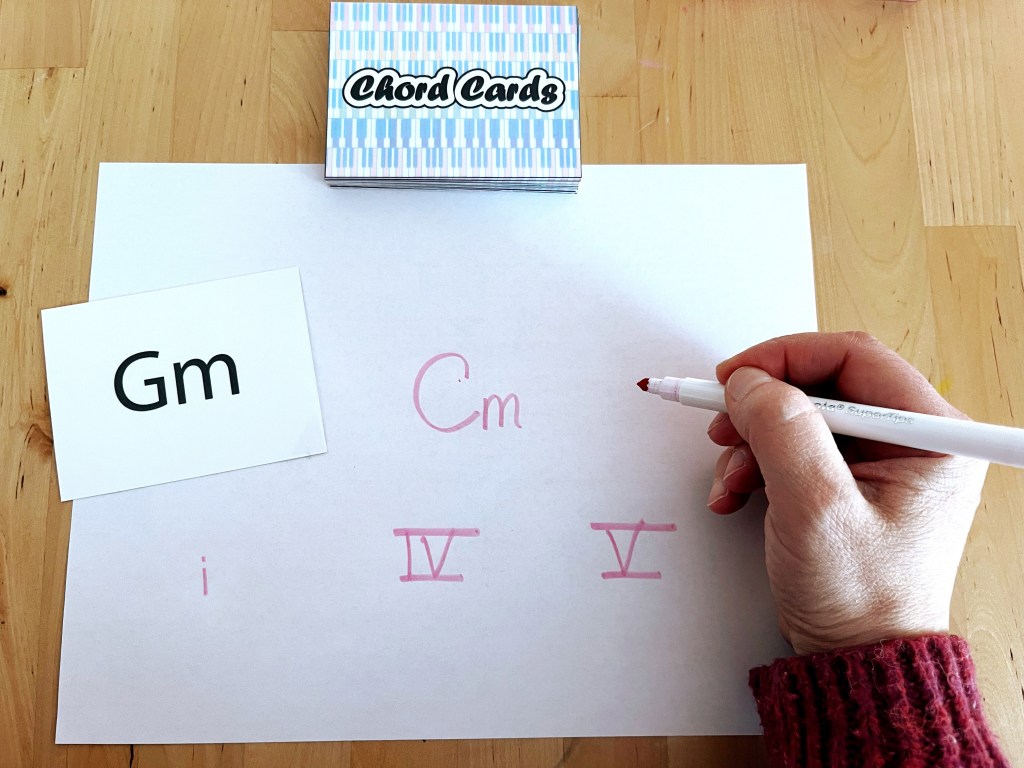
Using the chord symbol cards, draw a card from the deck. The chord on the card is the “One” chord (I or i in Roman Numerals). Have the student write out the IV and V chords of the key.

A piano student writes out the four and five chords in the key of G minor. A deck of chord cards sits on the table above the paper.

Progressions

Once students have a solid understanding of key families, they can experiment with building different chord progressions.

For added fun, have them also experiment with chords outside the key. Ask the student how that chord affects the progression? What sort of emotion or mood does it introduce? If you were to continue the chord progression from the new chord, which chord would make sense to use next?

Chord cards are placed on the piano. They outline a chord progression. The piano student is playing the progression, starting with the D major chord.

Inversions

Moving between chords is another essential skill for playing chords smoothly and with ease. Jumping from a root position chord to another can result in a large leap on the piano, which can be technically challenging for a student to manage. Additionally, these large jumps can create abrupt shifts in the sounds which, depending on the music, can negatively affect the overall mood.

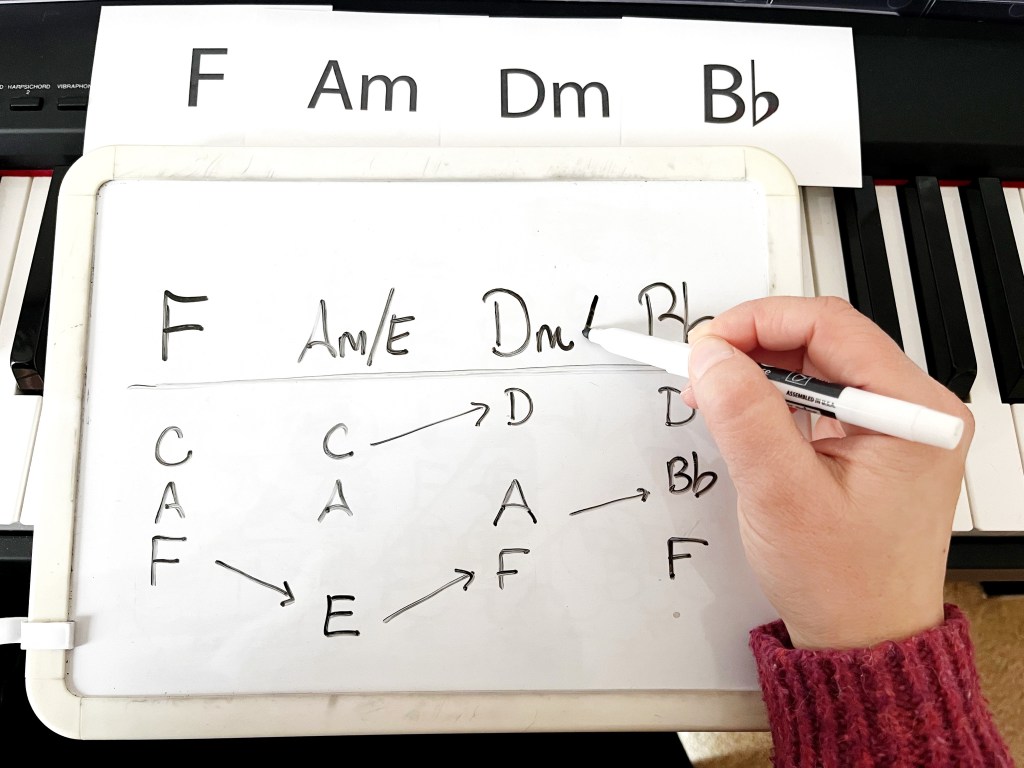
Pick a chord progression. Have the student write out the chords. The student should then analyze the chords (what pitches do they have in common? Are any of the pitches neighbors?, etc.). From their observations, rewrite the chords in different inversions and play the chord progression. Experiment with different inversions. Which was easier to play? How did the inversions sound with the melody (if using a chord progression from a lead sheet)?

Thinking about inversions in this sense, turns the activity into a puzzle with multiple solutions!

A chord progression is laid out on the piano. A piano student uses a whiteboard and dry erase marker to write out the chords and identify the best inversions to use for the chords.

Chord Games

Kids love games and they are a great way to test their knowledge! Here a few games that can be played with things you probably already have in your studion!

Chord Match/Memory

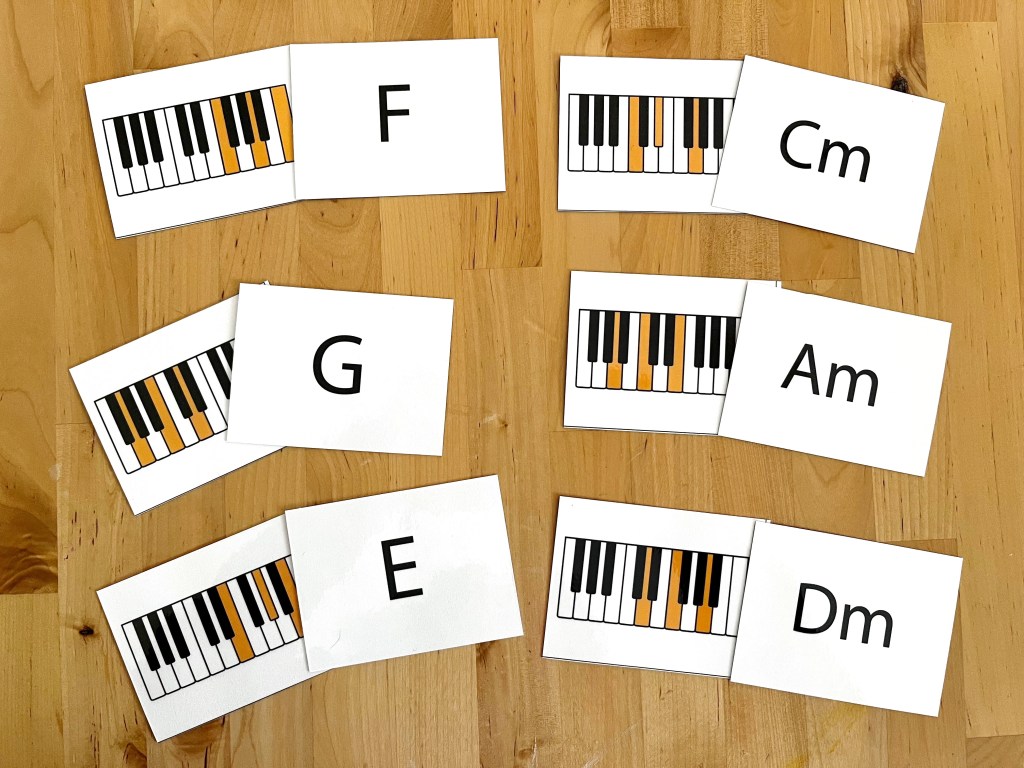
Using the keyboard chord cards and the chord symbols cards, select matching chords from each deck that the student is working on (for example, the C minor keyboard card and the C minor symbol card).

Chord flashcards are paired up on a table. The chord symbol matching the highlighted keys on the keyboard cards.

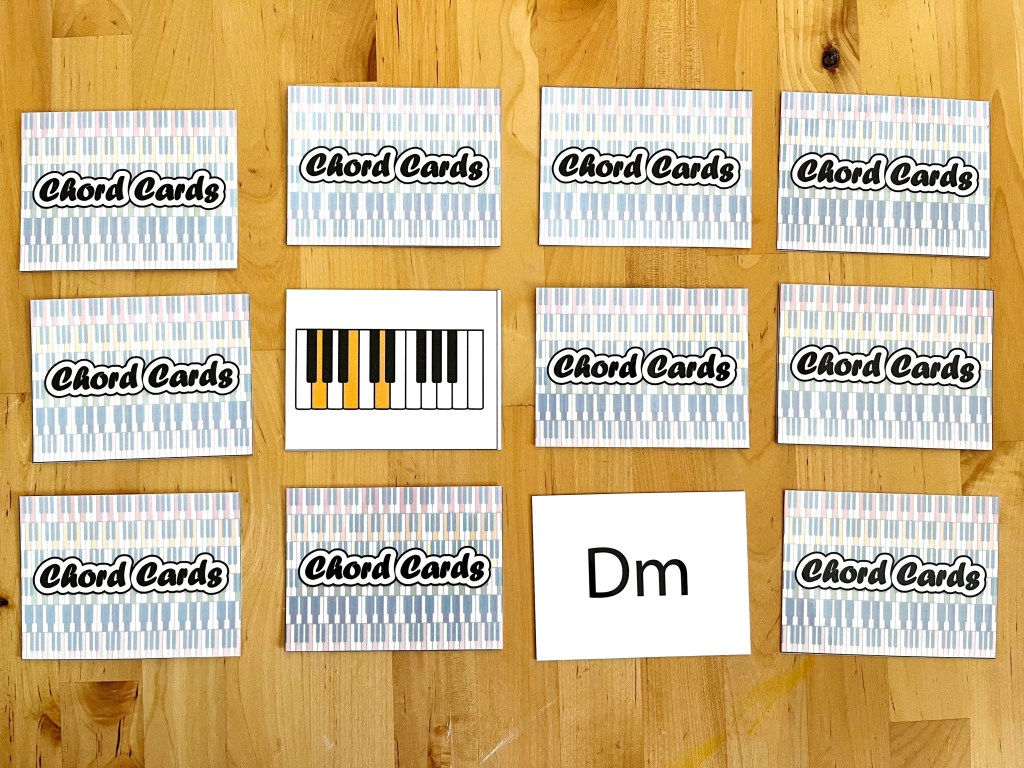
Lay them face down on a table. Play a game of Memory, where players take turns flipping over two cards, trying to make a match.

Two cards in a game of Memory are flipped over but do not match.

Whoever has the most matches at the end of the game, wins!

Speed Chords

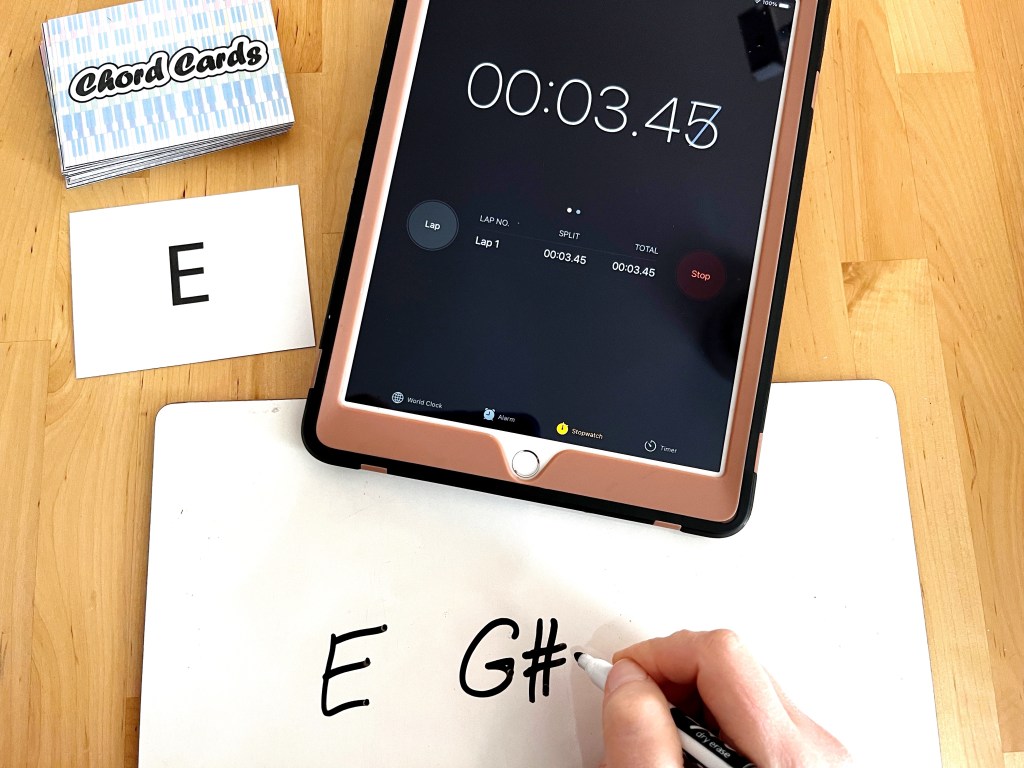
This game uses the chord cards, a stopwatch, dry erase board and marker, and mini-erasers.

Player 1 draws a chord card while Player 2 controls the stopwatch. As soon as the Player 1 flips over the card, Player 2 should start the stopwatch.

A piano student quickly writes down the notes of an E major chord as a stopwatch times them to see how long it takes.

Player 1 must write out the chord on the dry erase board as quickly as possible. When Player 1 says, “Done!” Player 2 should stop the stopwatch. Player 2 checks Player 1’s work. If the chord is correct, Player 2 tells Player 1 how long it took for them to write the chord. The number of seconds is how many mini-erasers Player 1 must stack. For example, if it took Player 1 five seconds to write out the chord, they should stack 5 mini-erasers.

A piano student stacks mini-erasers after completing an E major chord in 6 seconds.

If the chord is incorrect, Player 2 unpauses the stopwatch and Player 1 must try again!

When Player 1 has stacked their mini-erasers it is then Player 2’s turn and the above procedure is repeated for Player 2 (with Player 1 now being in charge of the stopwatch). Play continues back and forth, with players adding more mini-erasers to their towers each round.

Players should work fast because whoever’s tower falls over first loses!

Chord Relay

This is a fun group game! All you need are the chord cards, two dry erase boards, and two dry-erase markers.

Divide the group into two teams and have them sit in two lines. Give each team their own set of dry-erase board and marker.

The first player of each line should have the board and marker. The teacher hands a chord card to the first player of each team and says, “Go!” The two players must write down the pitches that make up their chord as quickly as possible.

When they have finished, they should pass the dry erase board and marker to the next player in line. The teacher should then give the second player a new chord card.

Play continues down the line until all the players from one team have had a turn. The teacher then checks their work. If all their chords are correct, they win the round. If not, the other team has a chance to finish up. When they are done, the teacher will check their work. If all of their chords are correct, they win. If not, the team with the fewest mistakes is the winner.

Explore more creative teaching ideas
  • Three-Chord Dash
    Boost your students’ chord skills with this fun, fast-paced game! In Three Chord Dash, students race to build their chords quickly and accurately. Who will be the fastest?! On your mark, get set, go!
  • Chord Snowblast
    Build chords and collect points while trying to avoid the snow blast! Kids will test their knowledge of building chords AND they will actually be hoping to get all the chords with sharps and flats!!

Let’s stay in touch, join the list!

As a “toucan” of our appreciation download a free set of note flashcards (link in our Welcome email)!

Processing…
Success! You're on the list.

We are a participant in the Amazon Services LLC Associates Program, an affiliate advertising program designed to provide a means for sites to earn advertising fees by advertising and linking to Amazon.com. As an Amazon Associate we earn from qualifying purchases.

Eyes on the Music! Fun and Effective Strategies to Stop Students from Looking at Their Hands

Do your students constantly look down at their hands when their playing?

Beginner students will often look down at their hands because they don’t trust their fingers to navigate the keys soley by touch. In order to avoid mistakes, they look down from their music to visually find the next note they need to play. Their eyes become a crutch which delays the development of the spatial awareness and muscle memory they need to play the piano.

Piano student looks down at her hands while playing the piano.

  1. Why is it important for students to keep their eyes on the music?
  2. Exercises for Keyboard Awareness
  3. Practice Strategies to Keep Eyes on the Music
  4. Can Students EVER look down when playing?
  5. Let’s stay in touch, join the list!

As teachers, we want our students to trust their fingers, develop a deeper connection with the piano, and, ultimately, become confident pianists. To do so, we can use exercises during our lessons to help students build confidence in finding their way around the piano by touch, as well as suggest practice strategies that encourage them to stay focused on the music by blocking their view of the keys (because let’s face it, habits are very hard to break and sometimes we need a little helping hand… or beard! Or even a hoodie!!).

As teachers, we want our students to trust their fingers, develop a deeper connection with the piano, and, ultimately, become confident pianists.

A piano student confidently plays the piano while keeping their eyes on the music.

Why is it important for students to keep their eyes on the music?

In the beginning stages of learning a piece, we are teaching our fingers the movements and distances they need to navigate in order to play that particular piece. By constantly looking and placing our hands and fingers on the right keys we are not allowing our fingers to feel their way around the keyboard and learn how far they need to go to play. Just like a basketball player has to be able to dribble a ball without staring down at it, a pianist must be able to navigate the piano without looking down all the time.

Just like a basketball player has to be able to dribble a ball without staring down at it, a pianist must be able to navigate the piano without looking down all the time.

Another reason we don’t want to look down is because it cuts the flow of the music. The small amount of time it takes to look down at the hands and then look up again to find our place in the music is enough to miss a beat or two… or even more. Looking down becomes a crutch for students and introduces pauses in the music, which can become ingrained and end up compromising the overall flow and structure of the piece.

Exercises for Keyboard Awareness

1) What Key is that?

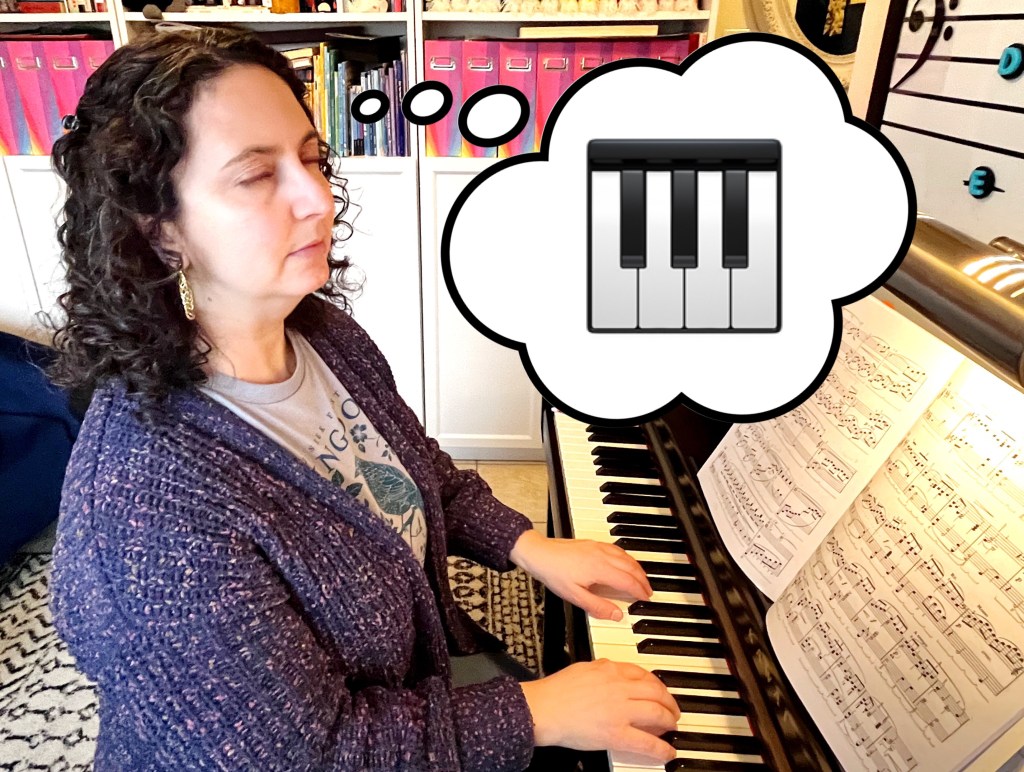
This is a great exercise for students to really think about what key each individual finger is resting on. Have the student find the starting position of their piece. Close their book and have the student close their eyes. Then ask them, “What key is finger 2 of your right hand sitting on?” When the student has answered, ask about a different finger, “What key is finger 4 of your left hand sitting on?” And so forth, alternating hands and scrambling the finger numbers you call on.

I encourage students to visualize the piano in their mind’s eye and tap the finger I’m asking about on the key (without actually playing it).

Piano student keeps eyes closed while visualizing the keys of the piano in her head.

As students become more confident, you can move their hands to random positions on the piano or increase the speed of your questions.

2) Find your Spot

This is a great exercise for students to feel how their arms are also an integral part of placing their hands on the piano (students often become hyperfixated on the fingers and hands and don’t realize how important everything from the wrist up is!). It also helps them to really feel the key patterns on the piano with their fingers.

Cover the piano keys. Open their book to the piece they are working on. Ask the student to place their hands on their head. Have them analyze the starting position of their piece. When they feel they are ready and have a mental image of where their hands should be placed on the piano, have them close their eyes.

Piano student closes her eyes and places her hands on her head while sitting at the piano.

Uncover the piano keys and tell them to find their starting position by just feeling their way around the piano. With their eyes still closed, the student will lower their hands and attempt to place their hands on the correct keys. When they think they have it, they can open their eyes and see if they are right.

3) One Small Leap…

A lot of beginner music has students playing in one position throughout the entire piece. This exercise helps students make small moves around the playing position to build awareness of the keys that are close by.

Have the student place their hands in the starting position of their piece, then ask them to close their eyes.

Give instructions such as:

  • Move your left hand thumb up a step. What key is it on now?
  • Move your right hand pinky up a step. What key is it on now?
  • Move your entire right hand down a step. Play and name all the keys your fingers are touching.
  • Move your entire left hand up a skip. Play and name all the keys your fingers are touching.
  • Cross the second finger of your right hand over your thumb. Play the key and name it. Then return your hand to the starting position.
  • Move finger 3 of your right hand onto the black key a half step below it. Play the key and name it.
  • Any other movement that is in their practice piece or variation you can think of.
A right hand on the piano crosses finger 2 over the thumb to play a B

Practice Strategies to Keep Eyes on the Music

Habits can be hard to break in general and if a student has become reliant on looking at their hands while playing, they may need some extra help to not peek… especially because sometimes they don’t even realize they are doing it!

So, how can we encourage students to keep their eyes on their music?

1) Cover the Student’s Hands with a Book

If a student is constantly looking down at their hands during a lesson, a quick fix is to hold a book over their hands, obstructing their view. Students are usually amazed with themselves that they can in fact play the piece withouth looking down!

Piano teacher holds a book over a piano students hands to obstruct their view of the keyboard.

This practice strategy can be used at home as well if a parent is available to help.

2) Use a “Beard”

The second strategy is both fun and effective. I saw a similar trick years ago online and when I saw this Santa beard at the store over the holidays I knew I had to have it for my studio. I extended the beard with some fleece.

A package containing a Santa beard and glasses disguise sits on a piano bench

The student puts on the glasses. Then the student tucks the end of the beard under their book on the book rack. The beard hides the student’s hands from view.
Piano student wears a beard connected to toy disguise glasses to obstruct her view of her hands while playing the piano.

It’s hilarious and it works! If you’d like to have a one of your own, you can use a pair of toy glasses and connect a piece of cloth to them.

3) Use a Hoodie worn Backwards

But what about home practice? You can’t always lend out your beard and a parent may not be available to sit with a student while they practice. In this case, the student can use something that is ubiquitous with kids nowadays… the hoodie!

A student plays the piano wearing a hoodie that is on backwards. The hood is lifted so the student cannot see their hands.

This trick works like a charm! Have the student turn their hoodie around, so that the hood is in front of them. The student then adjusts the hood so it is propped up. And there you go! They will not be able to see their hands when they play.

Can Students EVER look down when playing?

Yes! There is a time and place for everything. The real question becomes, “Is what I’m doing benefitting the music? Am I achieving the sound I want from the piano when I look down?”

In general, large leaps and difficult passages require more from us and we do look down at our hands to navigate these passages. BUT at this point, the music is usually memorized and/or looking down has become part of the how the pianist plays the piece. Looking down in this case is not a crutch but adds to the accuracy and flow of the music.
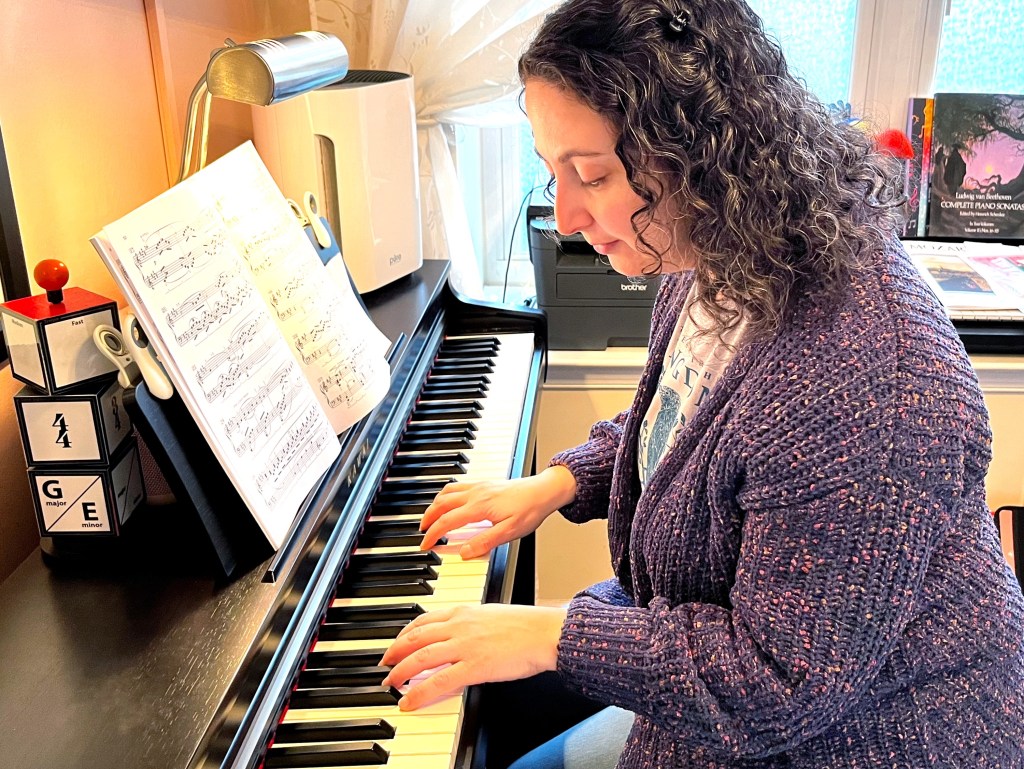
Pianist plays a piece by Beethoven while looking down at the keyboard.

Explore more creative teaching ideas
  • Slurs & Ladders: The Recital Prep Game
    If there is one game my students beg to play year after year (and sometimes when we don’t even have a recital anytime soon!) is this recital prep game. It’s a great de-stressor and it shows students how prepared they are to perform while also injecting some fun and joy back into those recital pieces that may be sounding a little tired.
  • Top Practice Tools Every Piano Student should Have: #4 Recording Device
    When used strategically, a recording device can help students gain valuable insight into their playing and progress faster! I’m sharing my favorite recording equipment and different ways students can use recording themselves as a practice tool to improve their playing.
  • Top Practice Tools Every Piano Student should Have: Curiosity
    Curiosity is the catalyst that gets students to start learning the piano in the first place and can be exactly what’s needed to keep them going for the long haul. Why is it so important and how do we keep it going? What if I don’t play an instrument, but want to encourage my child in their practicing? Check out all the answers plus download a free printable for parents!

Let’s stay in touch, join the list!

As a “toucan” of our appreciation download a free set of note flashcards (link in our Welcome email)!

Processing…
Success! You're on the list.

We are a participant in the Amazon Services LLC Associates Program, an affiliate advertising program designed to provide a means for sites to earn advertising fees by advertising and linking to Amazon.com. As an Amazon Associate we earn from qualifying purchases.