Every fall, when students come back to weekly lessons after summer break, I feel like we spend the first month just reviewing concepts and note-reading. All my students take at least 4 lessons over the summer (July and August) but practice is not as regular as during the school year. The summer slide is a real thing…
Last year I gave each of my students one of my Toucan Piano flashcard decks (you can receive a free printable flashcard deck by signing up for our newsletter! No spam, “tou-can” count on it!).
We spent the first month back drilling flashcards. At the beginning of every lesson, we would do a run-through of their deck and time how long it took them. They were in training mode… because the Zombie Pian-o-pocalypse was upon us!
The week before October started, we recorded their flashcard times. Each student was now in competition with themselves. That number represented the number they needed to beat in order to escape the zombies and survive the Zombie Pian-o-pocalypse.

When they returned to lessons the following week, our poster was up with everyone’s times and the stage was set for their first showdown with the zombie horde.
Their first weekly challenge was a joke with no punchline. They would have to decipher the punchline at home and then deliver the punchline passcode to me (so I knew they were not a zombie trying to get me!). If they were successful, they placed a sticker on the poster in the passcode column.
But the true challenge was still to come… the weekly game would decide if the zombies would catch them or if they would survive another week of the pian-o-pocalypse. A win guaranteed salvation, but a loss would possibly doom them to the mercy of the zombies.
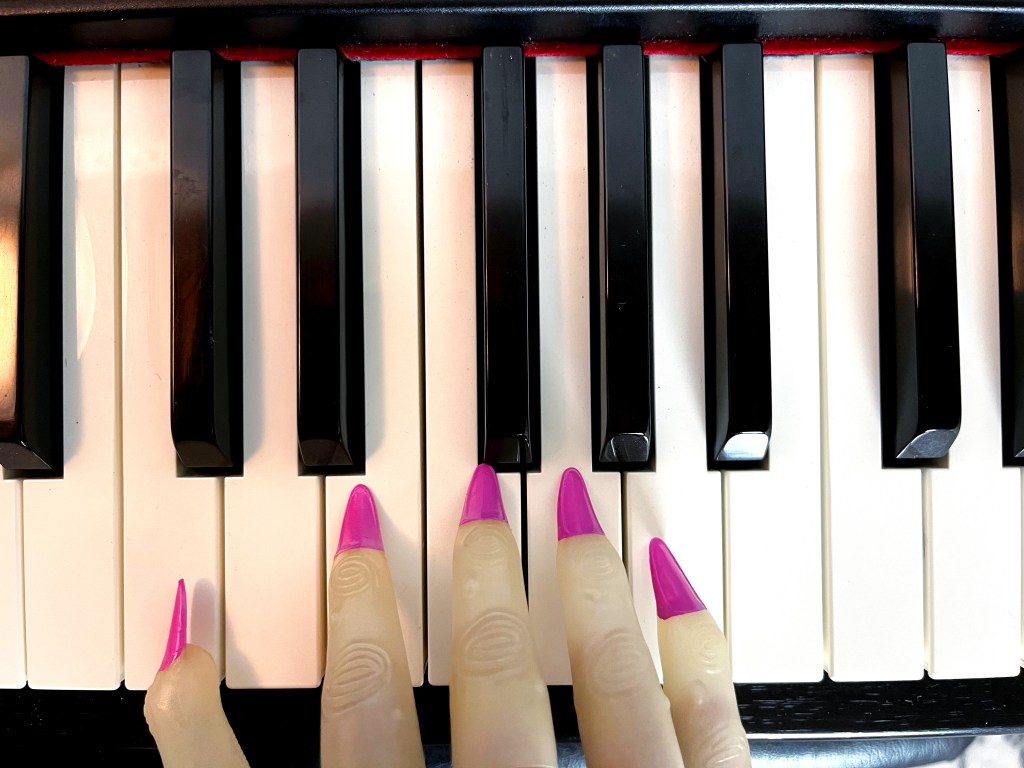
I say “possibly” because there was still an inkling of hope! Their flashcard time. If they lost the game, they still had a chance to survive… IF they beat their flashcard time. We would then bust out their deck and time them as they worked their way through their flashcards.
Every student who beat their time had so much pride in their accomplishment. They smiled so wide as they erased their old time off the poster and recorded their new faster time! It was so exciting to watch the seconds get shaved off their times each week. A few were even able to get a full deck (32 cards) in under 1 minute by the time the pian-o-pocalypse was said and done! The record was 51 seconds.
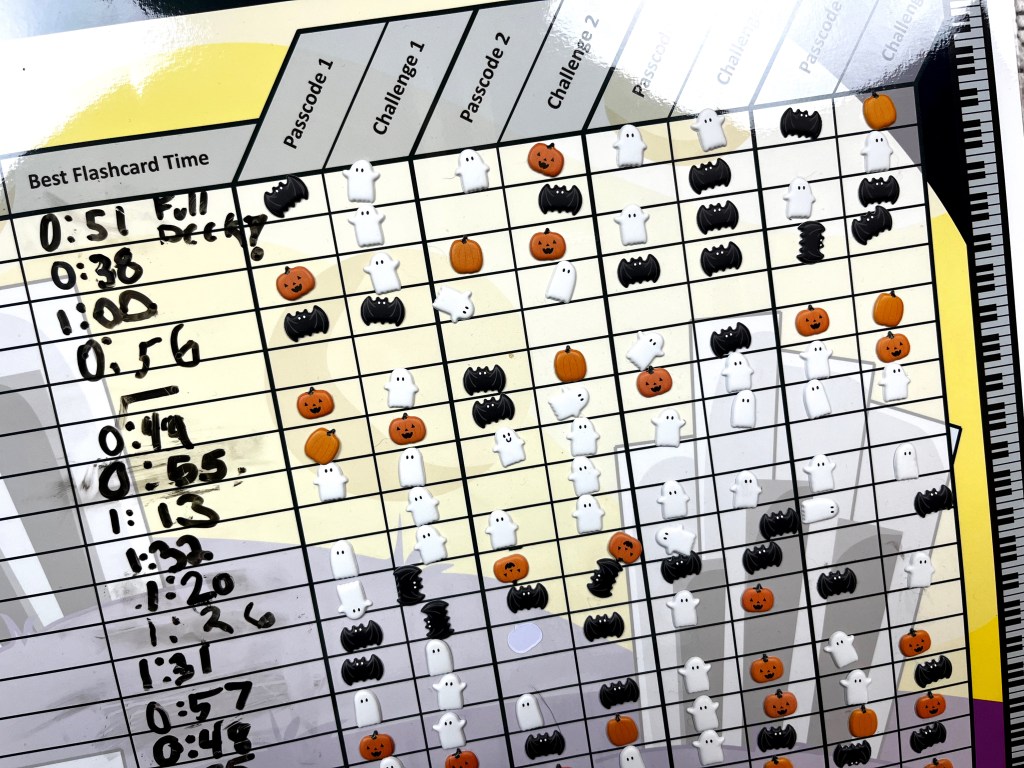
This was one of the most exciting studio-wide challenges I’ve ever done with my students. 4 weeks, 4 joke sets, and 4 zombie-themed games. I saw so much improvement in their note-reading AND we had a blast in the process! All in time to get our Christmas carols ready for our Holiday concert.
This was one of the most exciting studio-wide challenges I’ve ever done with my students: 4 weeks, 4 joke sets, and 4 zombie-themed games.
Another thing I loved about this challenge was that my students weren’t in competition with each other, only themselves (which helped the more non-competitive students I have to stay focused and excited). They didn’t feel like they were losing or getting left behind because even if someone had a better time than themselves, they didn’t all have the same decks (each deck only had the notes that they had already learned), so there was no possibility of comparison. It definitely helped keep everyone motivated.
What’s in the Zombie Pian-o-pocalypse?
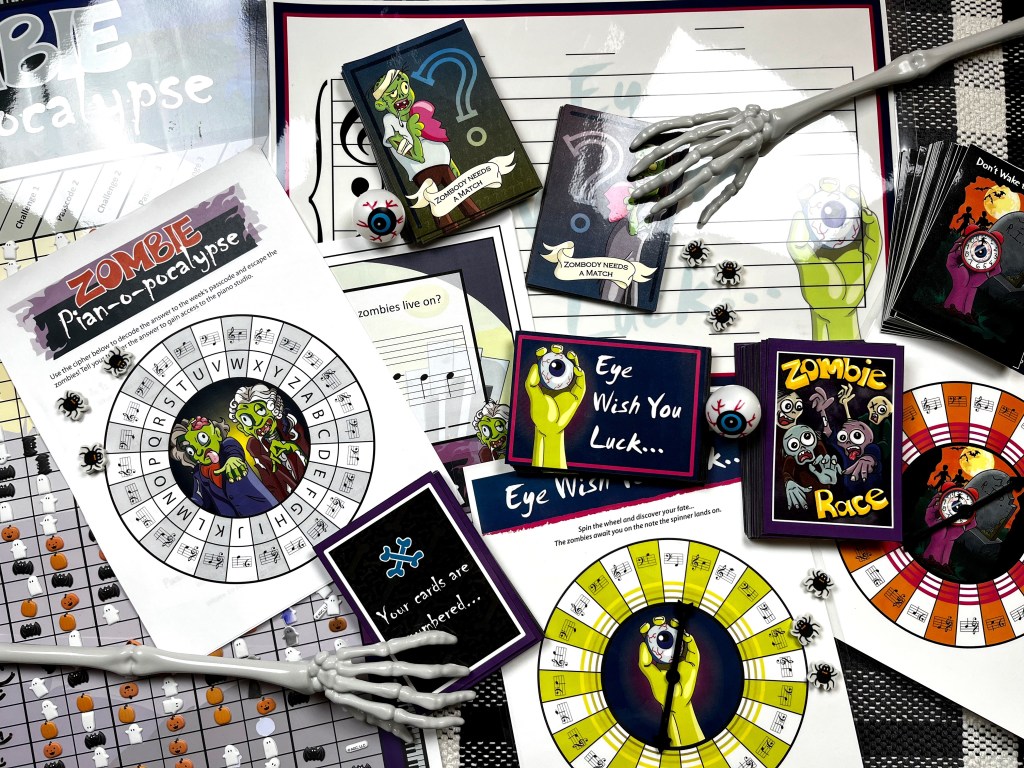
The Zombie Pian-o-pocalypse comes with everything you need to keep the fun and learning going for 4 weeks:
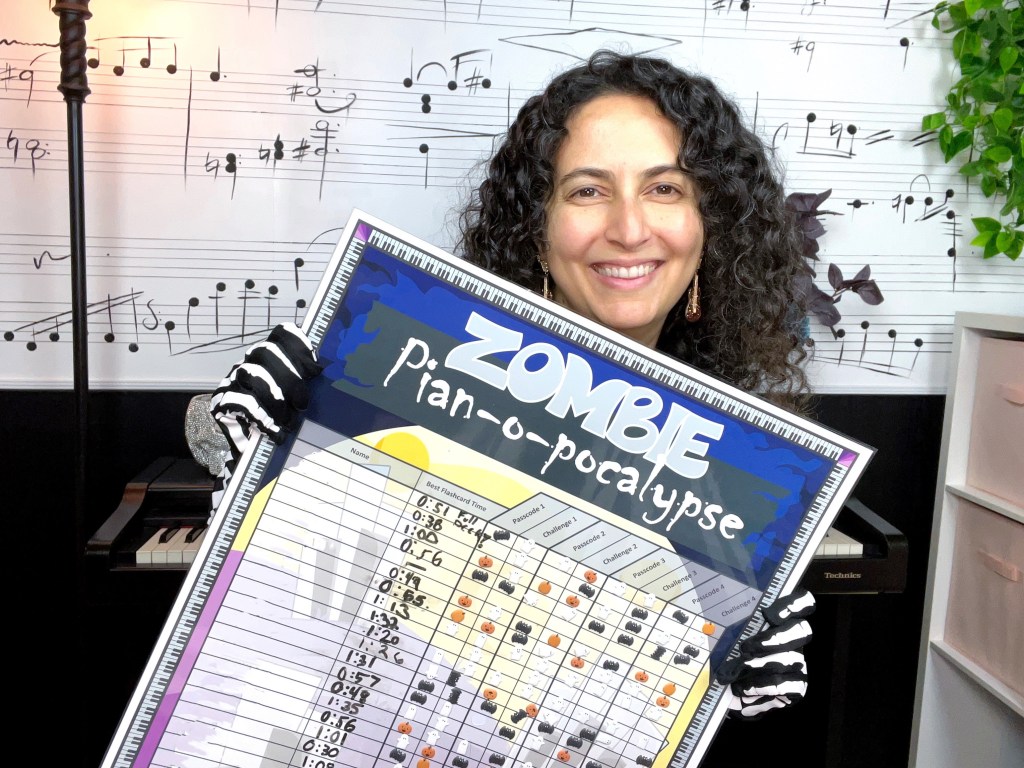
- Zombie Pian-o-pocalypse Poster: Keep track of every student and create a sense of community around the challenge
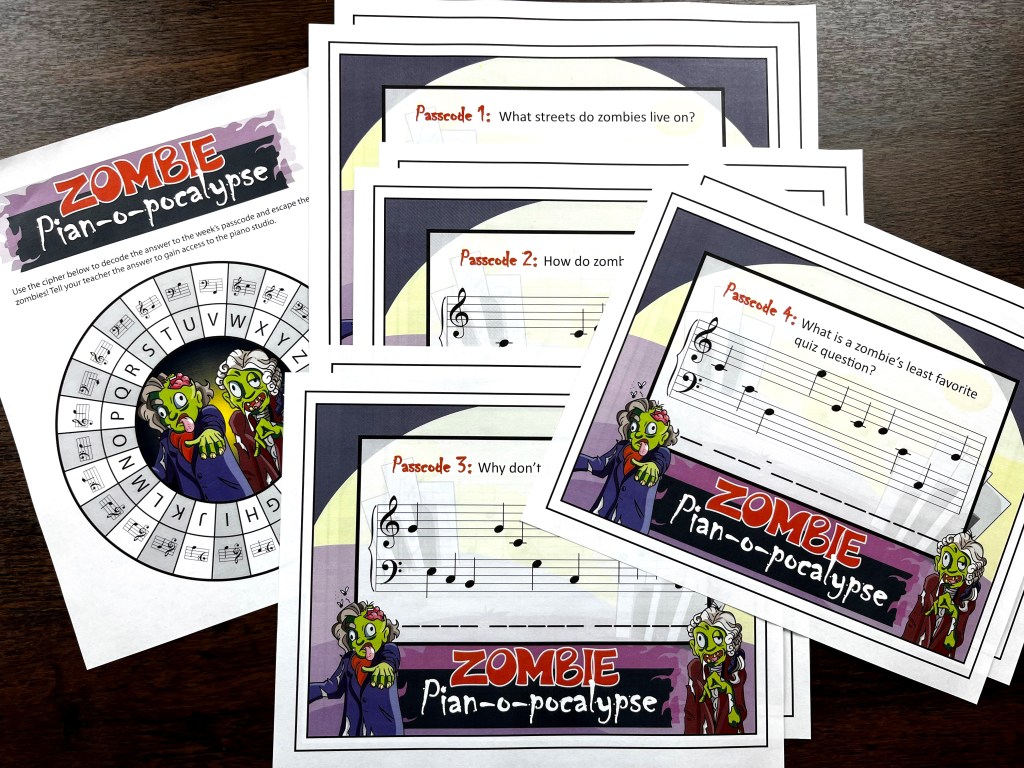
- Weekly Passcode Jokes: In a zombie pian-o-pocalypse anyone could be a zombie! How can you tell who isn’t? By telling a zombie themed joke each week. Students have to decipher the punchline at home and tell their teacher the joke when they arrive for their lesson.
- 4 Zombie-Themed Note-Reading Games:
The Zombie Pian-o-pocalypse Bundle is available as a download here. The games, poster, and jokes are available as individual downloads as well.
The Zombie Pian-o-pocalypse Poster!
The poster allows students to see how their friends are doing and to keep track of everyone’s progress. So many students were motivated to try to beat the times of friends (even though they knew they didn’t have the same flashcard decks).
Zombie Passcode Jokes
The Zombie Pian-o-pocalypse Passcode Jokes are a great way to keep the fun and learning of the pian-o-pocalypse going at home! There are 2 jokes per week, so siblings can have different jokes to work out on their own. At the beginning of the pian-o-pocalype, every student should receive a cipher. The cipher is used each week to decode the passcode. Every week, students receive a new joke to take home to figure out. They have to tell their teacher the joke when they arrive for their lessons. Even though I heard the same jokes over and over, they were still funny at the end!
Games! Games! Games!
Zombie Race
Prepare for a race against the undead in this heart-pounding flashcard game! The zombies are closing in and your survival depends on your quick (and precise!) note-reading skills. Set the timer for one minute and see how many cards you can answer correctly before the zombies catch up.

It’s a precision test like no other because any wrong answer will count against you at the end… not to mention that the zombies have one final card up their sleeve after your minute is up. Remember, in this game, you’re not just using your brain, you are trying to safeguard it from becoming zombie lunch!
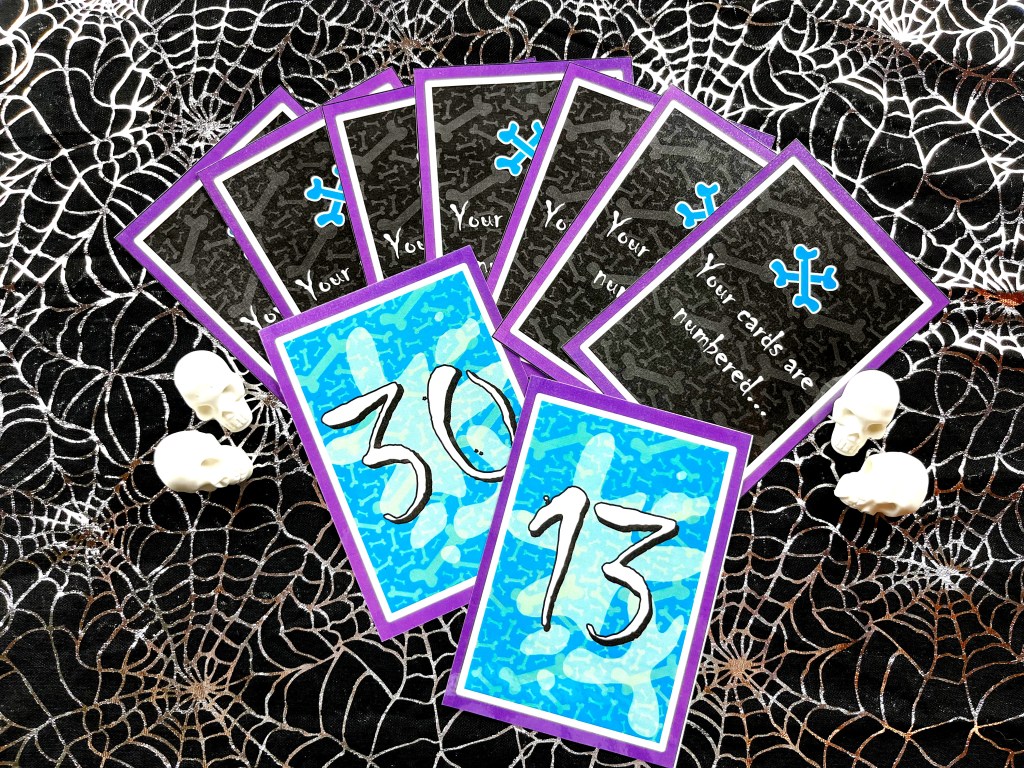
Eye Wish you Luck…
They’ve got their eyes on you. And their eyes are telling them they want you… for dinner (and not as musical entertainment)! You have a mere minute to correctly place as many notes on the grand staff as you can.
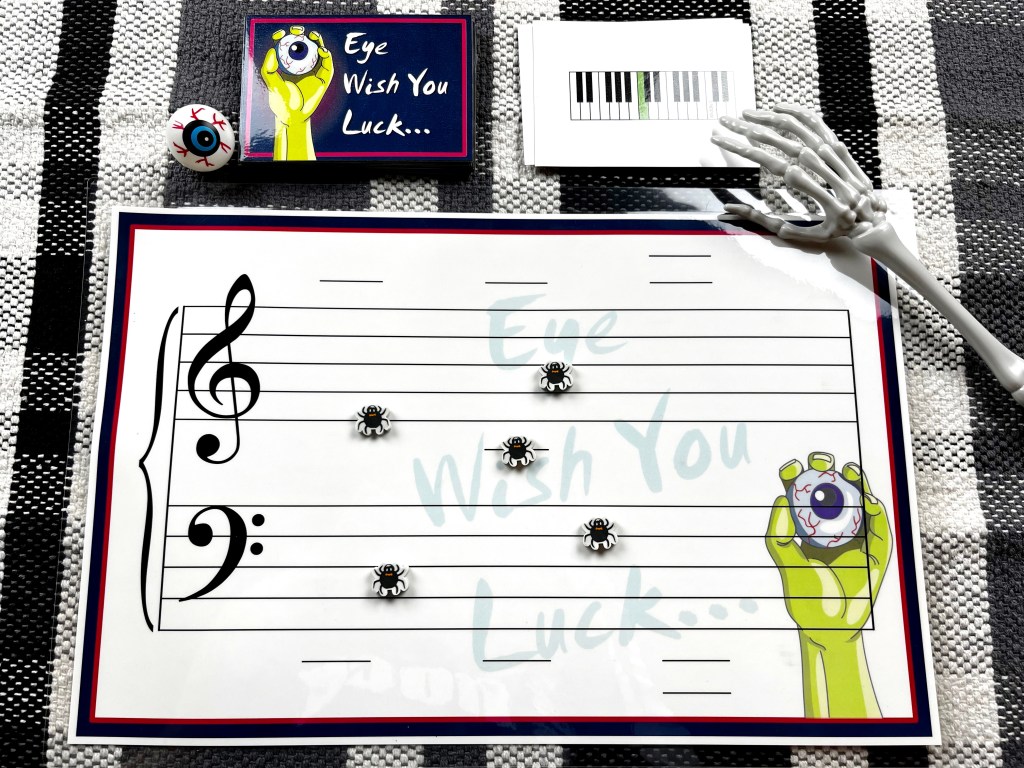
As the seconds tick away, the wheel of misfortune stands poised in the wings, waiting to seal your fate with a single spin… Will it align with one of your notes or will it condemn you to the role of this evening’s featured dish?

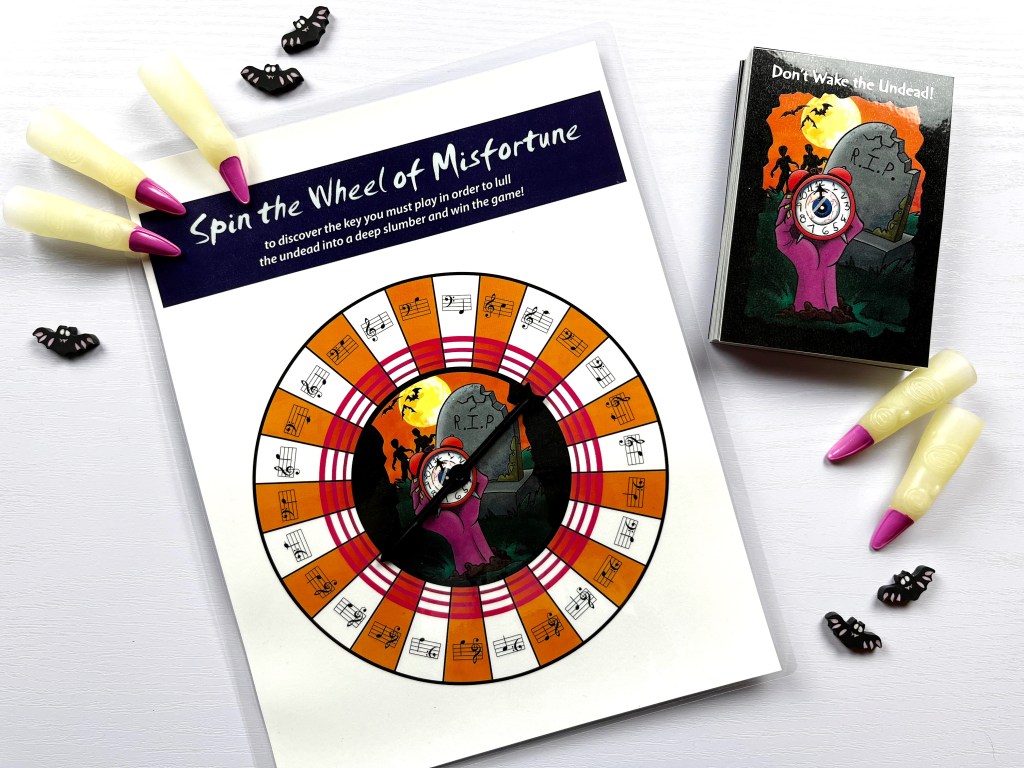
Don’t Wake the Undead
The undead are restless… and the fate of all rests solely in your hand! Students spin the Wheel of Misfortune to discover the mystical note that they must play on the piano to lull the undead back into a peaceful slumber.

The tension mounts as students draw card after card (and play the corresponding keys on the piano), desperately seeking that magical note that will ensure their safety. But beware, the alarm clock card looms somewhere in the deck, and one flip of a card could awaken the undead for eternity!
Zombody needs a Match
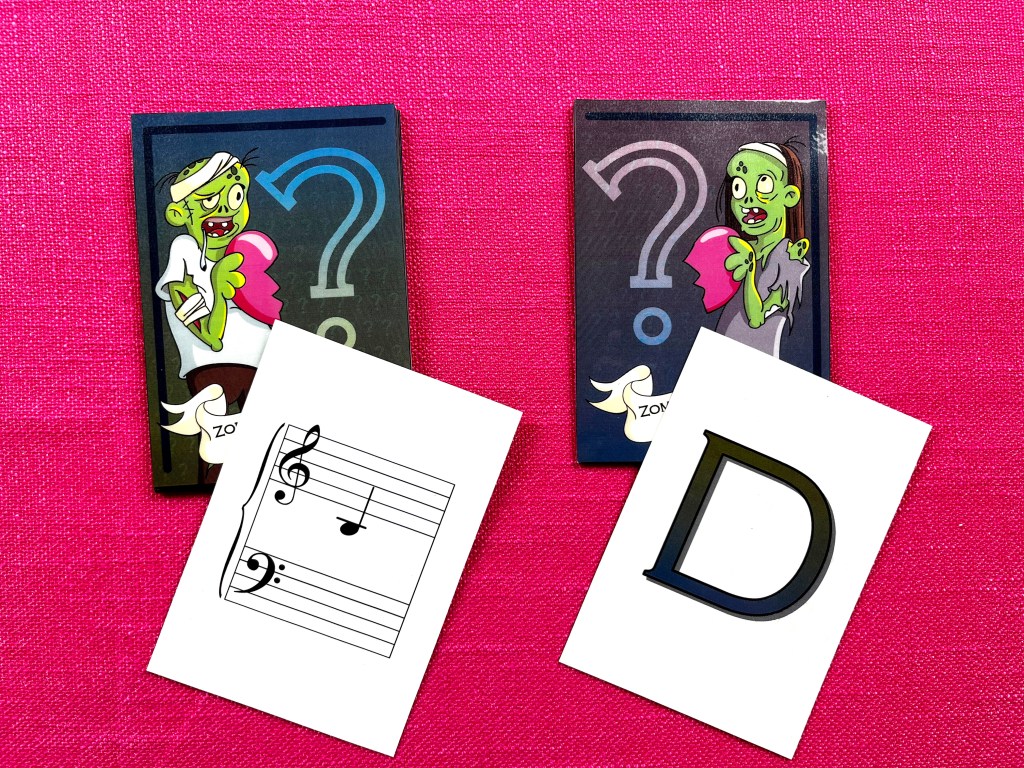
Everybody needs somebody sometime… even zombies! This note-reading matching game will have your students playing matchmaker and seeing hearts fly (literally… because, well, zombies!).

Students will try to match the notes of the Boy Zombie to the letters of the Girl Zombie. Who will make the most love connections and watch the zombies limp off together into the sunrise?

- I Can Heart-ly Wait for the Punchline
A heart themed laugh-out-loud note reading game. I love this game because not only do students have to think about keyboard geography, they also have to be able to associate the notes with their exact location on the piano. - Musical M.A.S.H
This free printable game tests your student’s knowledge of the spaces on the grand staff. It’s a fast, easy game to play, and will predict your student’s musical future with hilarious results! - Chord Snowblast
A real howler in July! Are you longing for cooler temperatures this summer? Bust out Chord Snowblast (and the mini-erasers) for a cool piano game that covers all the major and minor chords! - Top Practice Tools Every Piano Student should Have: #7 Mini-Erasers
Piano students don’t need a lot of accessories to practice, but there are a few tools that make a practice session easier and more effective… and in the case of mini-erasers, so much cuter! Mini-erasers can be used in a wide variety of activities, from warm-ups to practice challenges, improvisation to fixing wrong notes, and so much more!

Let’s stay in touch, join the list!
As a “toucan” of our appreciation download a free set of note flashcards (link in our Welcome email)!
We are a participant in the Amazon Services LLC Associates Program, an affiliate advertising program designed to provide a means for sites to earn advertising fees by advertising and linking to Amazon.com. As an Amazon Associate we earn from qualifying purchases.






 Toucan Piano