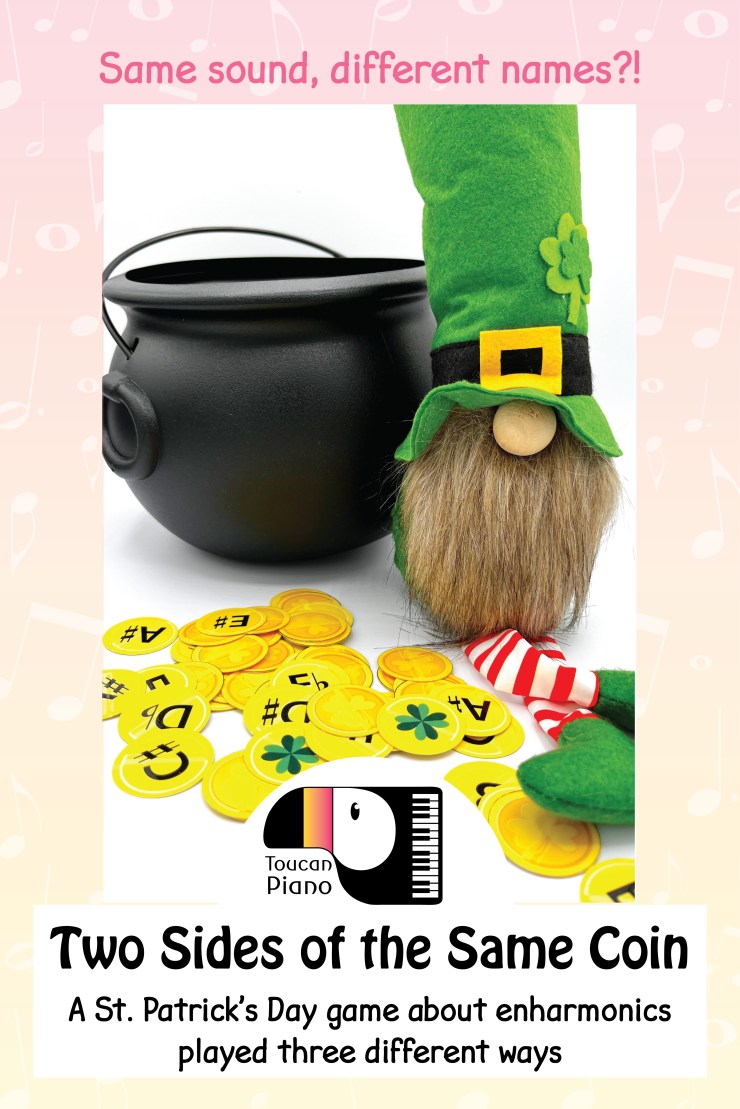
St. Patrick’s Day is just around the corner and although I’m not Irish (but I do wear green on St. Paddy’s), I love the joy surrounding this holiday! Delicious food, great music, rainbows, and little mischief (courtesy of the Leprechaun)! What’s not to love?!
I always play games with my students during St. Patrick’s week and today I wanted to share a versatile game about enharmonics called Two Sides of the Same Coin (available in the Toucan Piano Shop)! It can be played at least three different ways with many different combinations of coins to put your students’ knowledge of sharps and flats to the test!
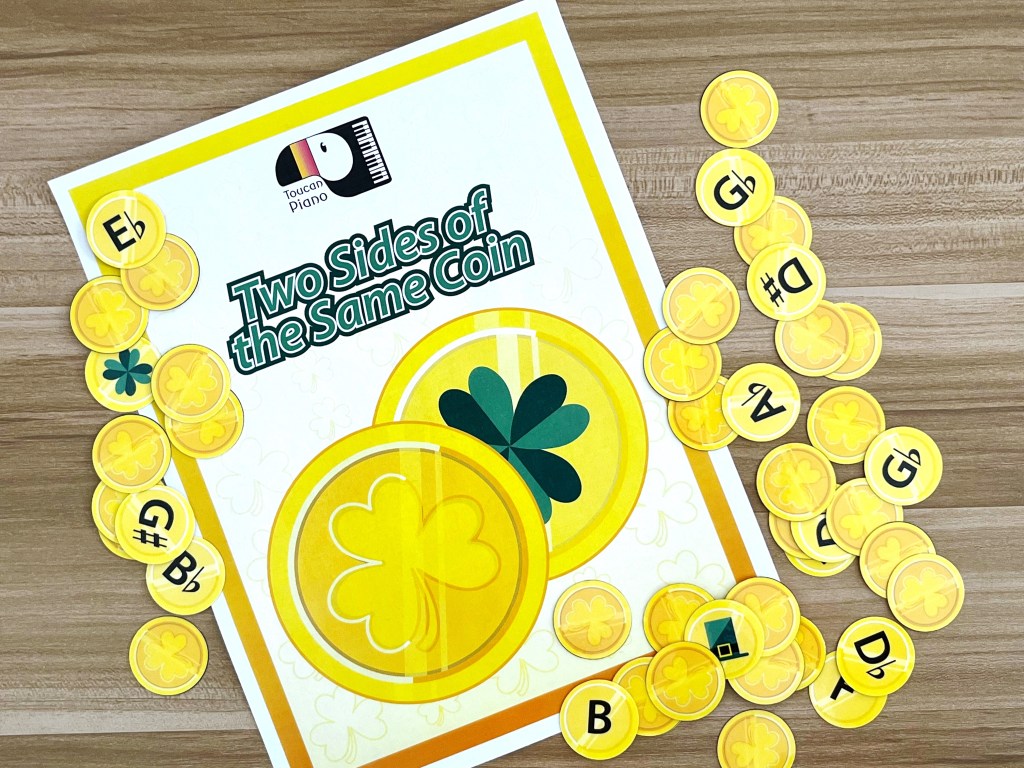
As I mentioned, there are multiple ways to play this game based on your student’s level and what you would like to work on with them. The first is trying to create enharmonic pairs by drawing coins from a container (I used a cauldron/pot because it’s St. Patrick’s Day!). Detailed instructions are included in the game download. Here is a short reel of a student and I playing it:
Another way to play the game is as a Memory game. Place the coins face down with the golden shamrocks facing up. The student flips over two coins to see if they get a match. If they get a match, they keep the coins in their pile and go again. If they don’t get a match, it’s then the teacher’s turn. If the teacher gets a match, the teacher keeps the coins and goes again. If the teacher does not find a match, then it’s the student’s turn. Go back and forth taking turns looking for matching pairs until all the coins have been claimed. The player with the most coins at the end wins!
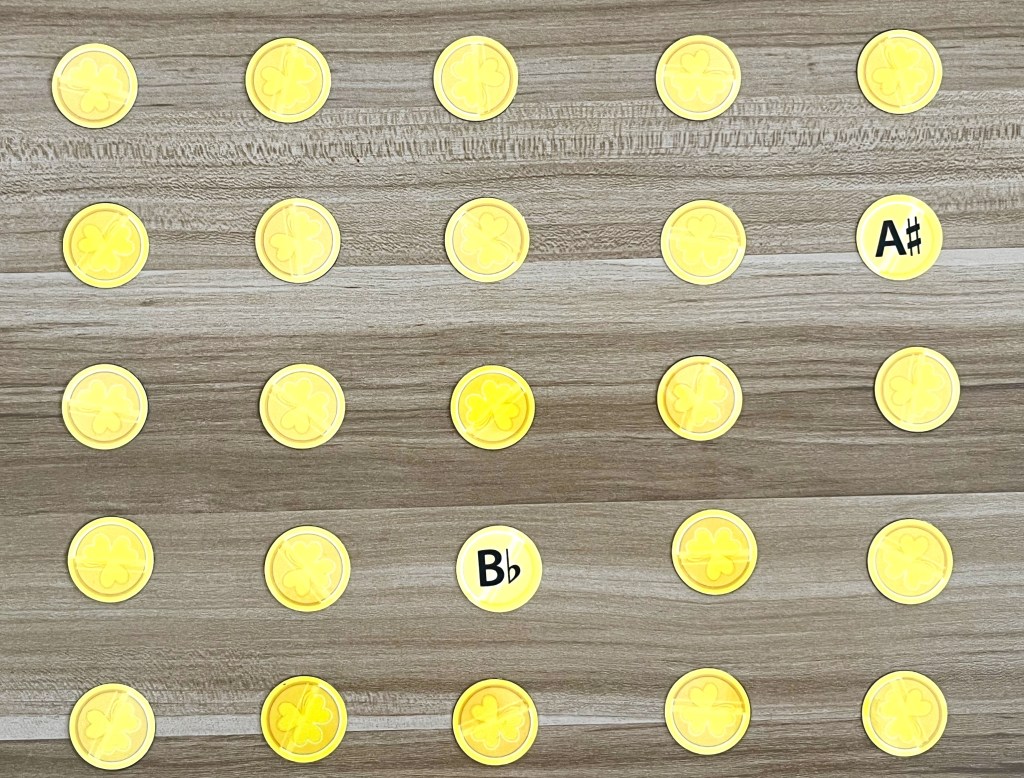
Matches can be any combination of coins you would like to drill:
- Match the enharmonic names
- Match the notes to their names (this version would be for students who are just learning to identify sharps and flats)
- Match the enharmonic notes on the staff
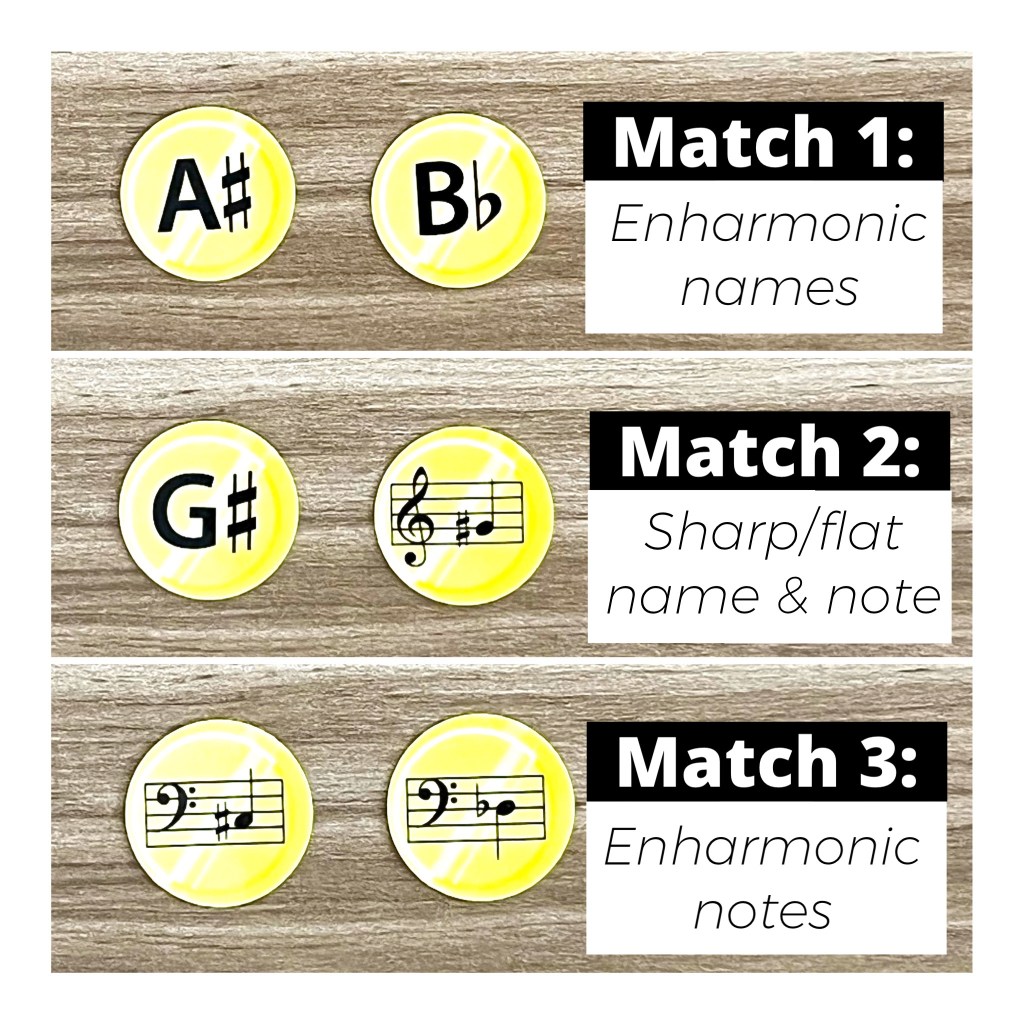
Another game to play is Mystery Note! The teacher chooses a key on the piano but does not tell the student which one it is. The teacher then sets a timer for 1 minute. The student has 1 minute to pull coins out of the container and play the corresponding keys on the piano to try to discover the mystery note. For example, the student pulls out an A-sharp, so the student must play the A-sharp on the piano in order to pull out another coin. If the student finds the mystery key, he/she must then name that key’s enharmonic in order to win! For example, the mystery key was C-sharp. The student pulls a C-sharp coin out of the container and plays the correct key on the piano. The teacher then says, “You’ve found the mystery note, what is the enharmonic of C-sharp?” The student must then say D-flat to win. For this version of the game, I would suggest using a smaller set of note coins depending on the student’s level and ease in naming notes on the staff.
Here is a reel of me challenging myself to find a note I chose at random! It was fun (and intense!… a minute goes by quickly)!! More competitive students will love the rush!
Two Sides of the Same Coin in available in the Toucan Piano Shop. I hope you have fun playing it with your students and may your day be touched by a bit of Irish luck!

Let’s stay in touch, join the list!
As a “toucan” of our appreciation download a free set of note flashcards (link in our Welcome email)!







 Toucan Piano