What music means to us…

I’m sure if you do a quick Google search you will find countless articles, blogposts, books, etc. on this subject by people who are far more qualified than I am to talk about the impact of music on the brain and memory. This post is going to be a bit more personal because we all have certain composers, pieces, artists, songs, lyrics, and albums that have had a great impact on our lives and are intrinsically tied in with ourselves, our hearts, our thoughts, and our memories.

All these “deep thoughts” were triggered on Friday morning (January 21, 2022) when I woke up to find out that my favorite (now I mean favorite favorite) singer had passed away on Thursday night… Meat Loaf. I spent the morning rush telling my daughter about the first Cd of his I got when I was 13 (which was also my first Cd ever) and rocking out to his music on the way to school… only to find myself in tears on the drive home alone. I’m a sentimental person by nature but I never cry when I hear of famous people I like passing on. I say a prayer for their families and friends for comfort and peace and maybe spend a little time thinking about all the good they brought into this world, depending on who it was… but Meat Loaf was different. And as the music played on, I couldn’t sing along anymore because of the tears streaming down my face.

Every album of Meat Loaf’s I can place in a time of my life and he has been the soundtrack to so many moments of my life… The music transports me back so vividly it seems like I’m seeing photographs or videos in my mind. I’ve always felt that he and Beethoven stand side-by-side in my heart… and I laugh to myself at all the similarities they share in their complex, larger-than-life personalities which were always on full display in their music. The passion is always palpable and the musical story is always a ride worth taking.

Which got me thinking about the music I have played throughout the years… music that has ignited my passion for the piano and pushed me forward to continue playing and learning and growing. So I decided to launch a little challenge for myself and anyone who would like to play along.

As piano teachers I feel we get very caught up in our students’ music… researching music for them, staying up-to-date with all the new music being published, composing new music for them, guiding them to play the music they love… It’s easy, for me at least, to lose sight sometimes of the direction of my own practice and the music I want to play.

As I mentioned in my Holiday Gift Guide post, I encourage my students to curate a collection of favorite pieces. Pieces that they have mastered and loved and can easily revisit anytime they feel the urge to just play! For this purpose, I suggested having a special folder to collect them all in so they are all in one place.

I want to spend a little time at the beginning of this year, revisiting pieces that have meant something to me in this long relationship I’ve had with the piano… pieces I’ve discovered and loved from the very beginnings of my studies at age 7 to today. I will post prompts starting on Monday, Feb. 7, 2022 and share them on my Instagram as I go. There will be a total of 7 prompts, one each day leading up to Valentine’s Day (short and sweet!). If you’d like to play along, please tag me and/or use the hashtag #toucanpianomemories so I can find them! I want to see them and maybe we can all discover some new pieces or remember long-forgotten ones.

It’s not meant to be a collection of virtuosic pieces… oftentimes virtuosic pieces don’t touch our hearts the same way “easier” pieces do. As I remind my students, good music is not defined by its level of difficulty but by the feelings it stirs inside. I’m hoping this will give me some added enthusiasm, direction, and focus for 2022 in my own practicing.

And Meat Loaf… thank you for the music, the memories, and everything in-between. Heaven couldn’t wait for you any longer and I hope you and Jim Steinman are rocking out together with the bands of angels. And for anyone curious, my first Cd was “Bat out of Hell II: Back into Hell”. My Dad picked it up for me at Root Records while he was running errands in downtown Florianopolis (Brazil). I remember him picking me up from my friend’s house and handing it to me as I sat in the backseat. I poured over all the lyrics on the drive home and ran to my Mom’s office to listen to it (it was the only room that had a Cd player). I know all the songs by heart and even used a line of “Life is a Lemon” in my essay for the entrance exam for UFSC (Federal University of Santa Catarina). It is my favorite Cd to this day; it is pure perfection in my heart.

Let’s stay in touch, join the list!

As a “toucan” of our appreciation download a free set of note flashcards (link in our Welcome email)!
Processing…
Success! You're on the list.

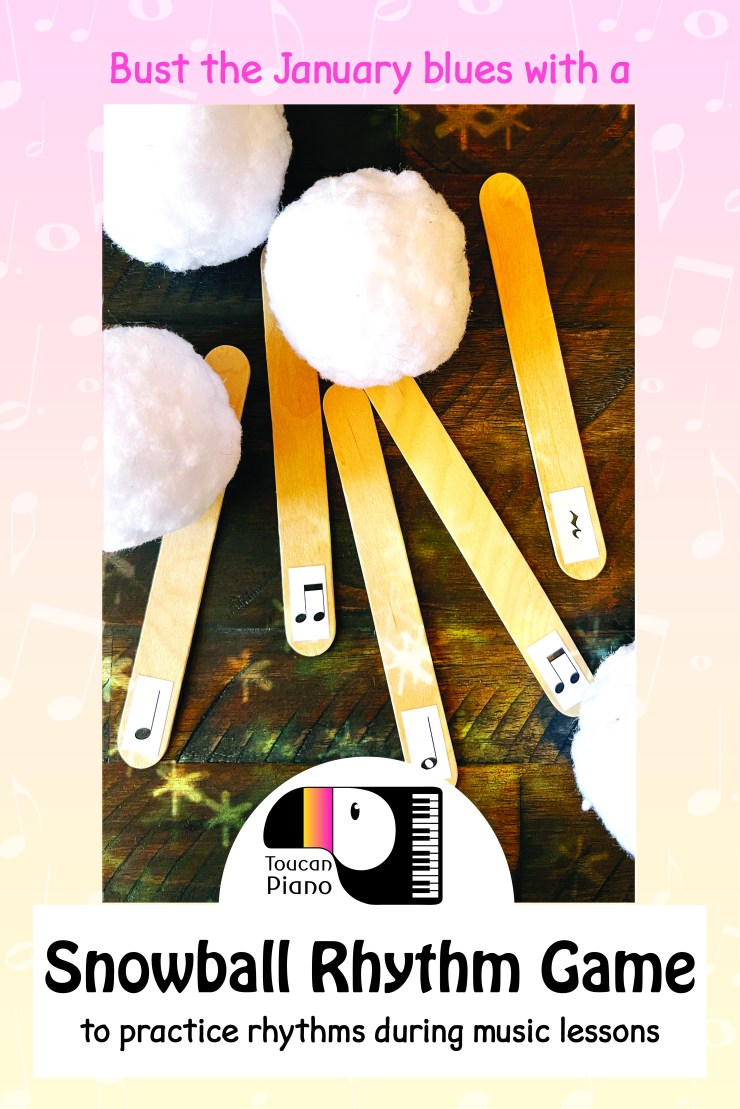
Snowball Rhythm Game

One of my favorite rhythm games to play with my students is Busted! from the Stay Tuned! blog. It’s easy to put together, easy to play, and a lot of fun!

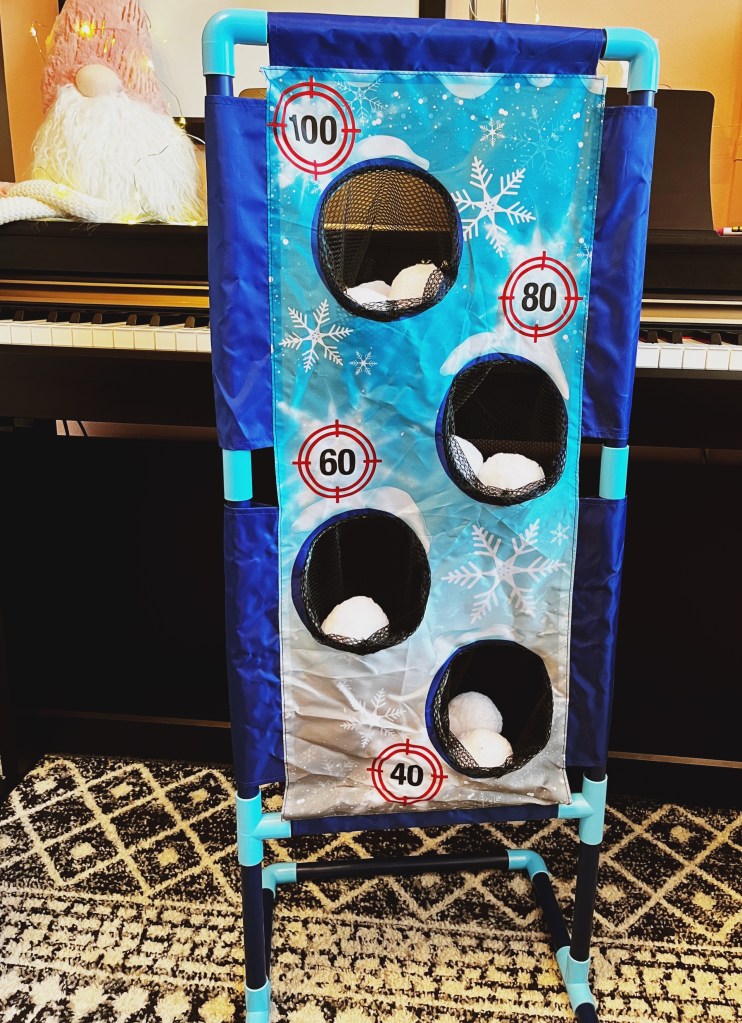
Every now and then I like to change it up a bit to keep it fresh. And that’s where snowballs come into play! I found my snowball toss game at Walmart marked down after the holidays and thought it would be a fun way to kick off my lessons after Winter Break (but any target-type game will work). It was a huge hit!! The kids have been asking to play it for the past couple of weeks and it’s been fun to dust off our rhythm skills after two months of Christmas Carols (we start in November, the day after Halloween!).

Here is a similar game from Amazon that works just as great and can be used for any season of the year!

Here’s how we played it:

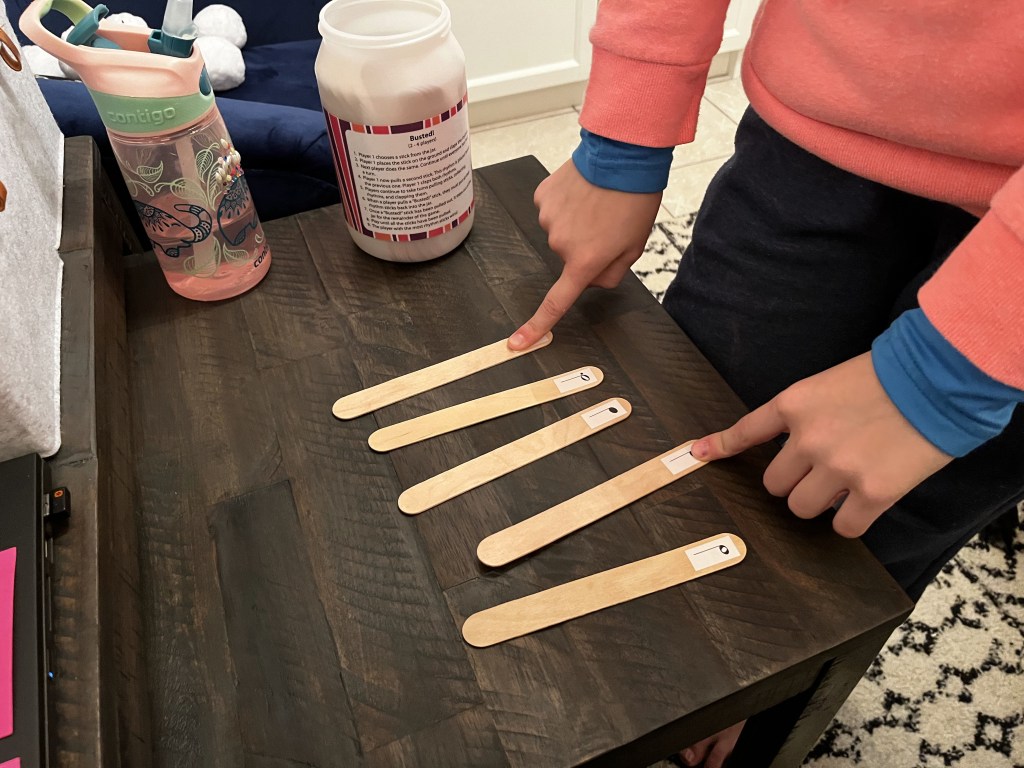
Place all the rhythm sticks inside the container along with only one “Busted!” stick.

Each player gets two chances to land a snowball in a hole before it’s the other person’s turn.

The first player (I always let the student go first), tosses a snowball at the board.

If the snowball lands inside one of the holes, the player removes the number of rhythm sticks corresponding to the hole the snowball landed in (for example, 40 hole = 2 rhythm sticks, 60 hole = 3 rhythm sticks, 80 hole = 4 rhythm sticks, 100 hole = 5 rhythm sticks). The player lays out the sticks to create a rhythm sequence. If the player already has sticks from a previous turn, the new sticks are placed after the last stick of the previous sequence, thus creating a longer rhythm sequence.

In order to earn the points, the player must clap and count the rhythm sequence correctly.

Then it is the next player’s turn. Repeat the same instructions.

Play continues until someone pulls out the “Busted!” stick and the game ends.

The total score of each player is calculated and the player with the highest score wins.

The game is more fast-paced then traditional Busted! (which can take awhile to play depending on how many rhythm sticks you used) and the kids had an absolute blast! It would be a fun game to play at piano party, buddy lesson, or a group lesson.

I plan on using this same game board for other games, I want to get some mileage out of it (and improve my aim!! I learned that my sweet spot is the 80 points hole, but I can’t seem to get the snowballs in any other hole! lol). It will most definitely be back and revamped!

Let’s stay in touch, join the list!

As a “toucan” of our appreciation download a free set of note flashcards (link in our Welcome email)!

Processing…
Success! You're on the list.

We are a participant in the Amazon Services LLC Associates Program, an affiliate advertising program designed to provide a means for sites to earn advertising fees by advertising and linking to Amazon.com. As an Amazon Associate we earn from qualifying purchases.

Music Ornament Craft

Every year I make an ornament for my students as a gift during the Holiday season. I try to make it music-related or a tie-in with a practice challenge we are working on in December. I gift it to them during our last lesson before our winter break. I love to hear how they use the ornaments on their trees every year and how they enjoy watching their collection grow! It always warms my heart!

This year I was inspired by an ornament I found on Pinterest (unfortunately it doesn’t appear to be available for purchase anymore on Etsy). I wanted to put my own twist on it and add a little more color and musical elements. I made a total of 40 ornaments and the final cost was roughly $1/ornament, including the use of coupons and store promotions (plus the time to make them. It did take me several hours, so that’s definitely a consideration to factor in!).

For this craft you will need:
– Vintage sheet music (I found some free vintage sheet music online and printed it out)
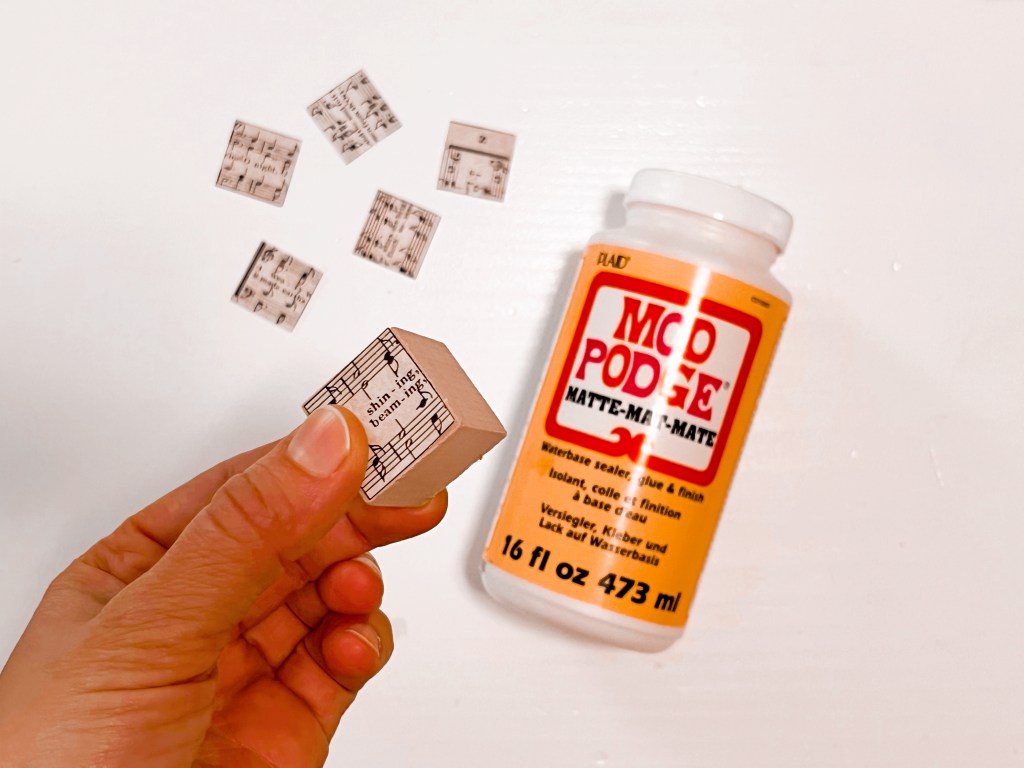
1 inch unfinished wood craft cubes
Mod Podge or white glue
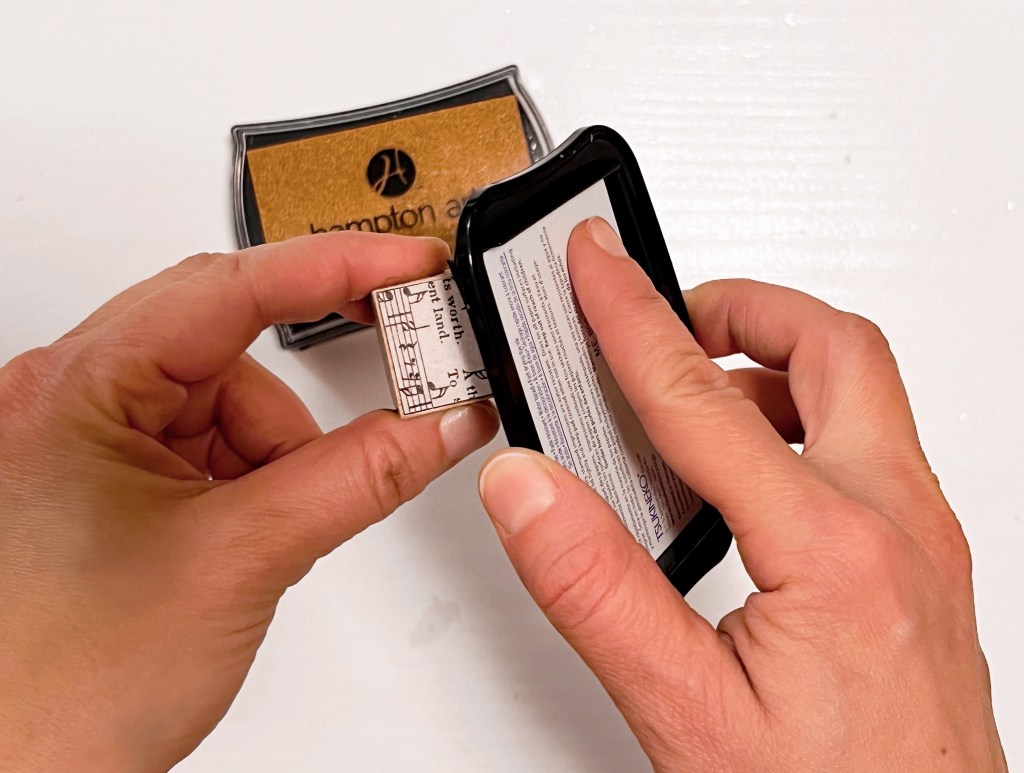
– Stamp pad(s) of your choice (I used rich cocoa and gold)
Thin ribbon
Treble clef charms
Mini jingle bells (10 mm in diameter)
Mini red pom-poms (5 mm in diameter)
– Seasonal greenery (I chose glittery green leaves)
Hot glue gun and glue

Cut the vintage sheet music into 0.95″ (2.40 cm) squares. You will need 6 squares per wood cube.

Use the Mod Podge (or white glue) to adhere the sheet music squares onto the sides of the wood cube.

Once the glue has dried, use the stamp pad(s) to age the paper. I started with the rich cocoa stamp pad, lightly working from the edges inwards. I did all six sides, then went over the cube a second time, this time with the gold stamp pad to give it more depth (and this is the point that my fingers became a rich cocoa in the pictures! lol).

I decided to seal the ink with a layer of Mod Podge for added protection. This step is optional, but it does give the cube a nice shine, so I was happy to put in the extra time.

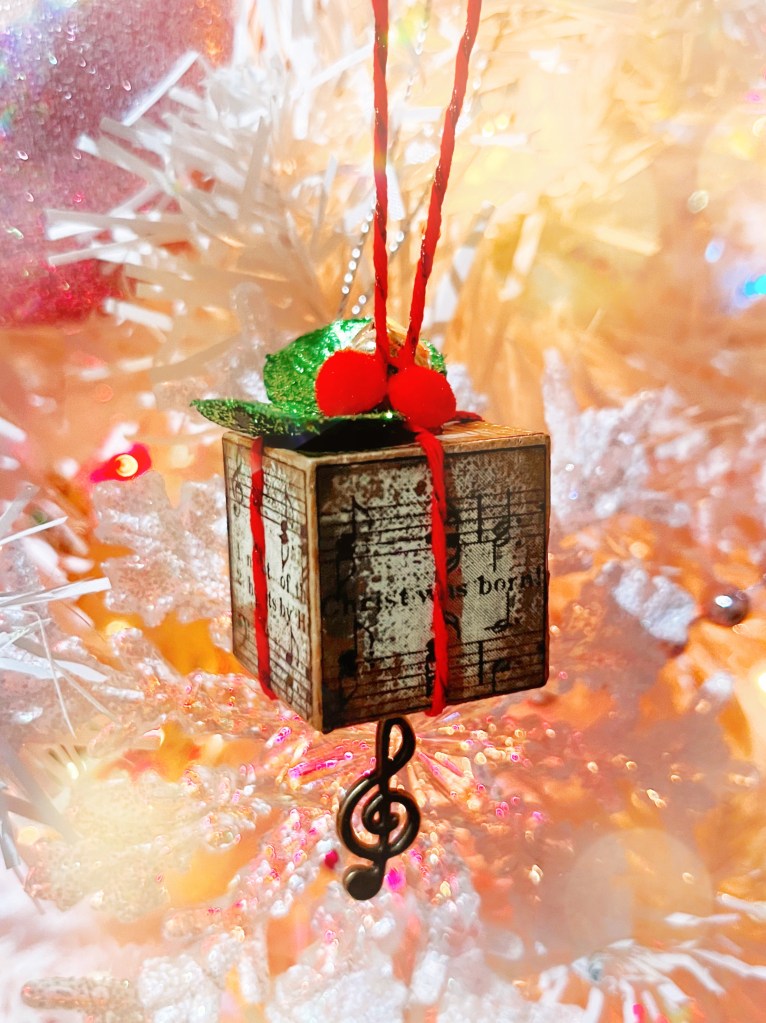
String the treble clef charm through the ribbon and wrap the ribbon around the cube like you would wrap a ribbon around a present. Make sure that the charm stays on the side that you want to be the bottom. I added a dot of hot glue to secure the charm to the bottom of the cube. Tie a knot at the top of the cube, making sure that the ribbon is taut against all the sides of the cube.

Then tie a knot with the ends of the ribbon to create a large loop with which to hang the ornament to the tree.

Add embellishments, such as greenery, pom-poms, and a mini jingle bell, to the top of the cube using hot glue. Try to distribute the embellishments in a way to hide the knot on the top of the cube.

The music ornament is all done! I made mine in three different colors: green, red, and blue. I was so happy with the way they turned out. I can’t wait to give them to my students!

Let’s stay in touch, join the list!

As a “toucan” of our appreciation download a free set of note flashcards (link in our Welcome email)!
Processing…
Success! You're on the list.

We are a participant in the Amazon Services LLC Associates Program, an affiliate advertising program designed to provide a means for sites to earn advertising fees by advertising and linking to Amazon.com. As an Amazon Associate we earn from qualifying purchases.

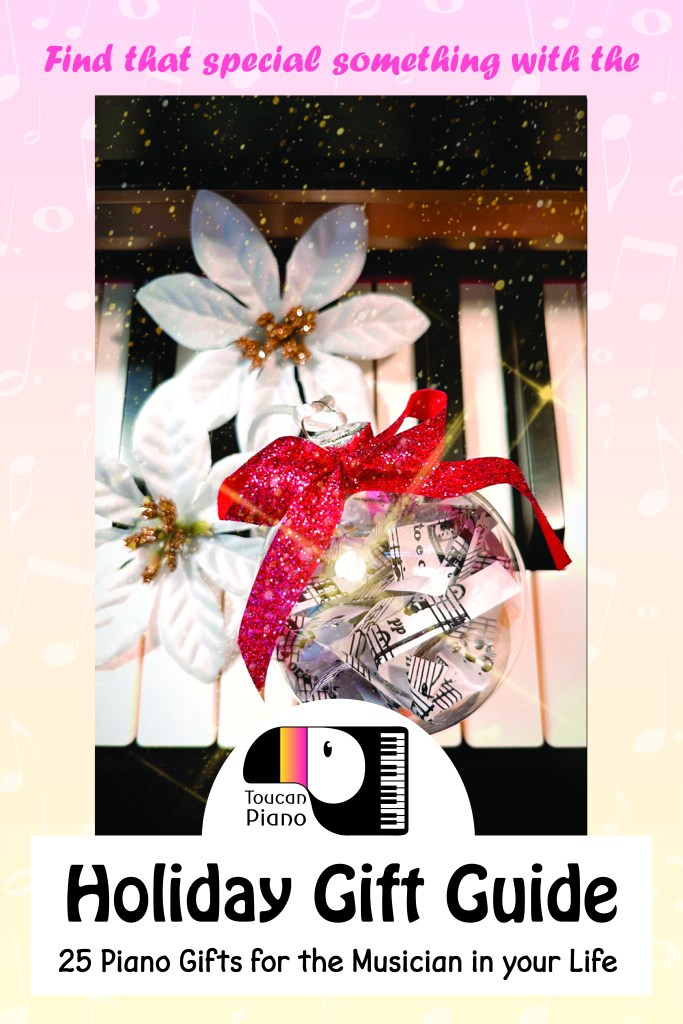
25 Piano Gifts for the Musician in your Life

Is it just me or does the Holiday season speed up every year?! Somehow Christmas is just two weeks away and many people are trying to find last minute gifts that are both meaningful and useful.

Toucan piano holiday gift guide

Every year I send out piano-related gift suggestions to my piano families. It’s a nice way for parents to encourage and recognize all the hard work their kids put into practicing (because, unfortunately, the piano doesn’t always get the same sort of fanfare as sports and other extra-curricular activities). The list is always a mixture of useful and fun stuff and the kids always enjoy showing me the piano gifts they received when they come back from our Holiday break.

Everything on this list I’ve either purchased for myself, have had students purchase, or is currently on my wish list (in case anyone’s looking for a last minute gift for me! lol).

Here are my top picks for this year!

CDs

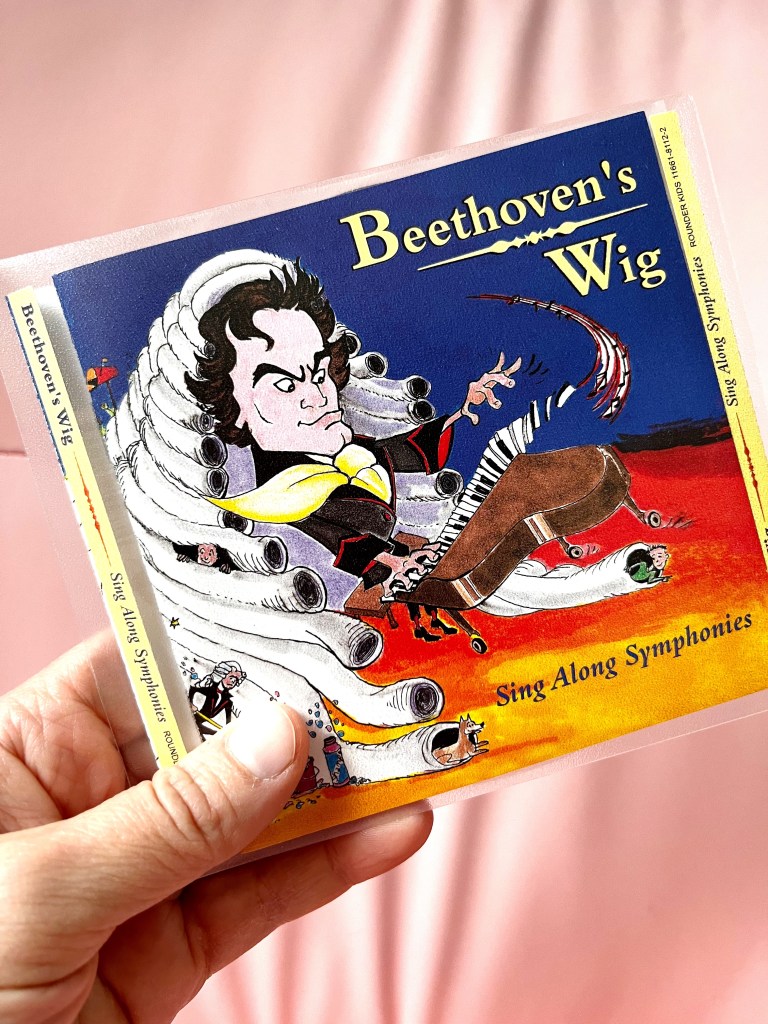
Beethoven’s Wig – The title song of this Cd has always been a favorite among my students (we watch the video every year at our annual Beethoven’s Birthday Bash! You can watch is here.). The other songs on the Cd are equally as fun and is an entertaining (and hilariously silly) first exposure to some of the great masterworks of classical music. The Cd also includes the original version (without the lyrics) of each piece.

Carnival of the Animals – The Kanneh-Masons – The incredibly talented Kanneh-Mason family comes together for a beautiful performance of Camille Saint-Saens “Carnival of the Animals” as well as a selection of several other favorites.

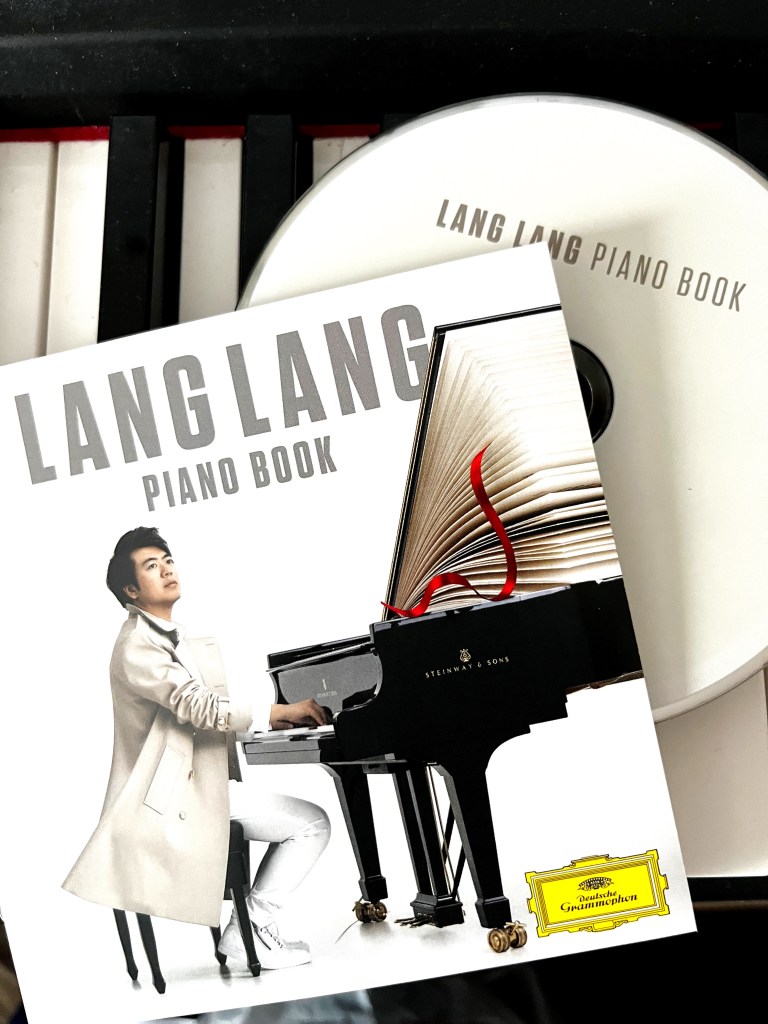
Lang Lang “Piano Book” – Lang Lang recorded his favorite piano pieces from his childhood. These short masterworks for the piano are some of the most popular ever composed for the piano and most students run into them at one point or another. It’s a great selection of music to inspire students to keep practicing!

Helen Marlais’ Real Music for Kids – A beautiful compilation of short solo piano pieces. Many of these pieces are a student’s first dive into the rich world of classical music.

Practice/Lesson Helpers

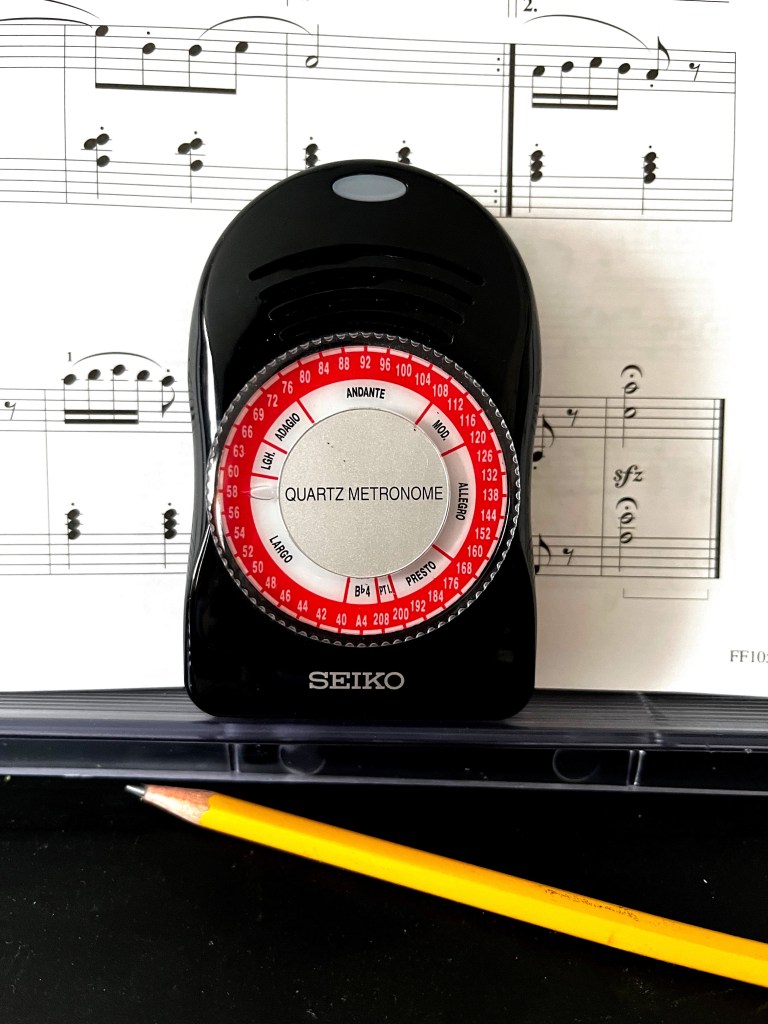
Metronome – The friend and nemesis of all musicians! It is always a useful tool to have at the piano. This metronome is a great size and has volume control (my mom for one could not stand the ticking sound of the metronome!). I loved it so much that I bought several to use with the children’s band at my church.
Metronomes are essential for practice and came in at no. 3 on my list of the Top 7 Practice Tools Every Piano Student Should Have.

Music Book Clip – There’s nothing worse than being in the middle of playing a piece and watching the book slowly shutting! This book holder will help keep those books laying flat on the book rack.

Manuscript Paper – A perfect sized notebook for writing down compositions. It has a nice wide staff (easier for kids to write music on), 100 pages, and is 8.5 x 11 inches.
Manuscript paper is incredibly versatile and important for any piano student which is why it took the No. 2 spot on my list of Top 7 Practice Tools Every Piano Student Should Have.

Sheet Music Folder – I love the idea of students curating a folder of their favorite pieces. Pieces that they have mastered and loved and can easily revisit anytime they feel the urge to just play! This folder is a perfect place to put these pieces. The plastic sheet protectors keep those precious favorites safe as they are played over and over again!

Treble Clef Photo Holder – I usually send my students home with a sticky note listing their practice pieces of the week. This sticky note lives on the cover of their method book or binder. But this little photo holder would be a perfect place to put the sticky note at home! If placed on the piano, it would be a quick and easy way for students to reference what they need to practice each week.

Books

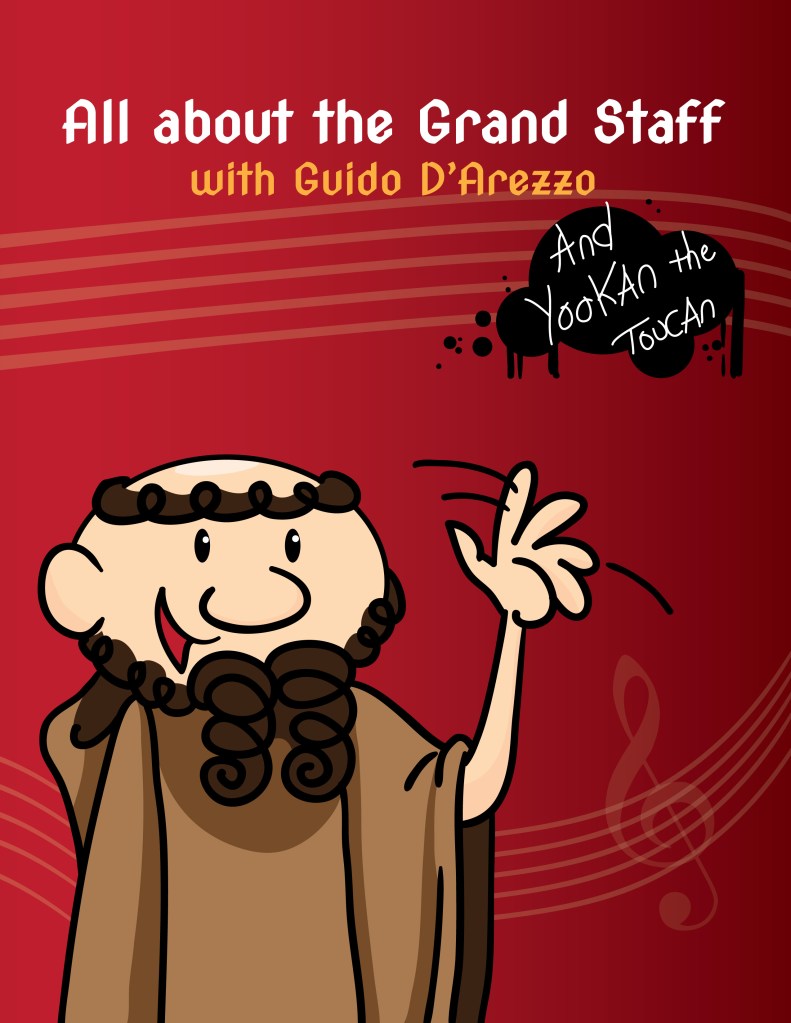
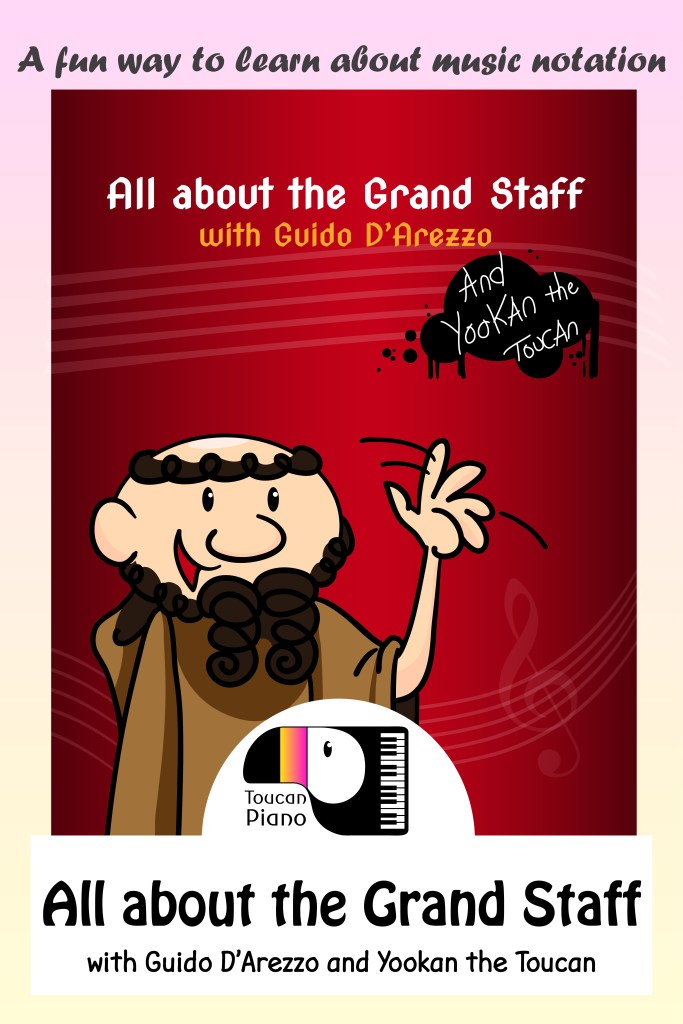
All About the Grand Staff with Guido D’Arezzo and Yookan the Toucan – Shameless plug of my book! It is a great choice for students who are just starting to learn to read music on the grand staff. My daughter has been playing for years and she picks up this book at least once a month to read for fun! She’s my biggest and best cheerleader! For more on my book, visit my blogpost about it.

When Step met Skip – An adorable adventure of steps and skips on the staff sure to entertain beginning music readers.

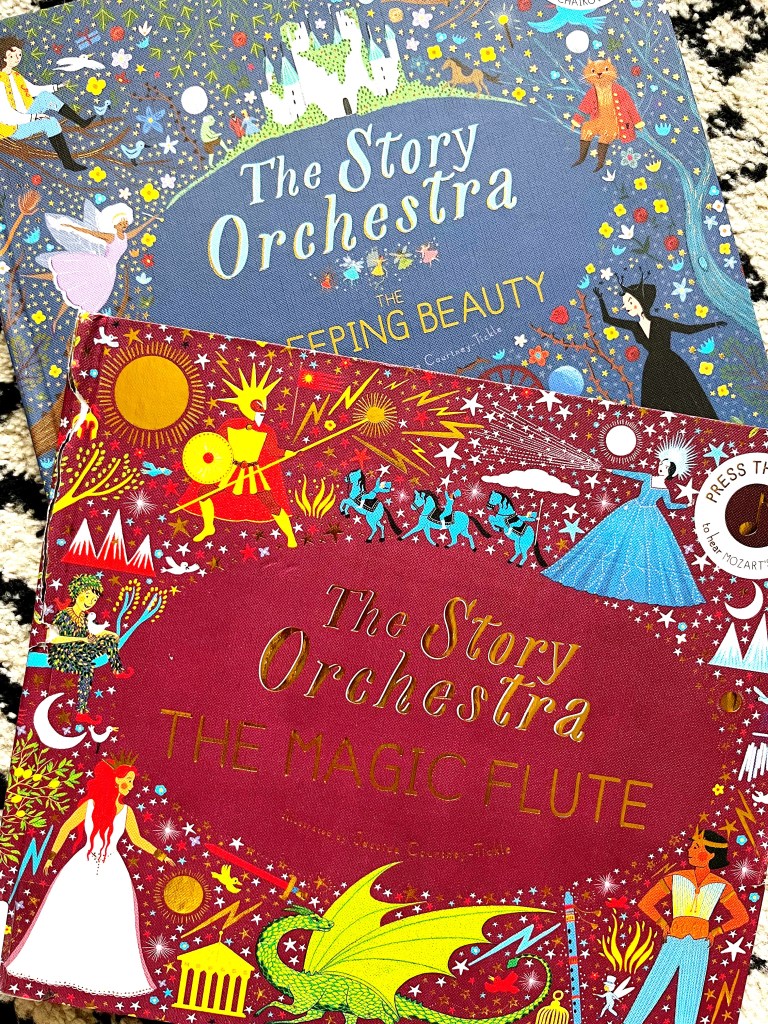
The Story of the Orchestra: The Nutcracker – I love “The Nutcracker” (our ever growing collection of nutcrackers can attest to that! We are getting close to 20!!) and this gorgeously illustrated telling of “The Nutcracker” is a beautiful way to share Tchaikovsky’s music with kids! Children can press the buttons on the side of the books to hear Tchaikovsky’s music played on each page of the story. I currently have “Sleeping Beauty” and “The Magic Flute” from this collection and plan on adding “The Nutcracker” very soon!

Clara Schumann, Pianist and Composer – Clara Schumann deserves all the attention and recognition she has been receiving in recent years. In the heavily male-dominated world of classical music, she is an inspiration to young girls. This chapter book dives into her life and long career dazzling audiences all across Europe with her music.

T-Shirts

A little humor, a lot of keys, and mega dose of style!

Piano Necktie T-shirt

88 Keys, 10 Fingers, No problem! 

Piano Girl

Retro Piano heart

Rock Paper Scissors Piano

My Piano is Calling

Fun Stuff

Nanoblock Grand Piano – For the lego enthusiast! The bricks (as small a 4 mm x 5 mm!!) require some precise construction skills. You can purchase it as part of an instrument set or individually.

Composer Socks – Keep your toes warm (and inspired) while you play the pedal! Two composers are available:
Beethoven
Mozart

Make your Own Music Box – For the composer! They can immortalize their music (and practice writing notes on the treble staff!) with this very cool little kit. Once they are done punching out their piece on the paper strip, they can play it on the music box. Extra paper strip refills are sold separately.

Piano Purse  – Seriously, how cute is this?!!

Piano Earrings

Music Pasta – I thought this was hilarious! It’s quite pricey for pasta, but you could make a whole music-themed family dinner out it.

Let’s stay in touch, join the list!

As a “toucan” of our appreciation download a free set of note flashcards (link in our Welcome email)!

Processing…
Success! You're on the list.

We are a participant in the Amazon Services LLC Associates Program, an affiliate advertising program designed to provide a means for sites to earn advertising fees by advertising and linking to Amazon.com. As an Amazon Associate we earn from qualifying purchases.

I wrote a Book!

I’ve always loved to draw. Growing up, piano and art were my two favorite things to do. Come to think of it, not much has changed since then! I can’t watch TV without a sketchbook in my lap (one, because I love to draw and, two, because if I’m not actively doing something I will usually fall asleep while watching TV! lol). My dream was to write and illustrate my own graphic novel.

I finally did it!!!

I usually teach the basics of the grand staff over the course of a few weeks to beginner students once they can identify all the keys on the piano and are playing off-staff pieces with ease. I break it up into bite size bits so we can play games to reinforce each new concept. This graphic novel follows the same progression I use to teach my students but with some history (hello, Guido D’Arezzo!), short exercises to reinforce concepts, and a little silliness tossed it (courtesy of Yookan the Toucan).

The story begins when Guido D’Arezzo (pronounced Gwee-doh Dah-ret-so), the medieval Italian monk who invented a system for writing down music, meets Yookan the Toucan. Guido helps Yookan learn about lines and spaces and how the grand staff is actually a map of the piano. Yookan, always the enthusiastic helper, uses Guido’s piano to demonstrate his understanding of each concept (let’s just say, that piano will never be quite the same!). The treble clef and bass clef are introduced along with anchor notes (bass F, middle C, and treble G) and the concept of stepping on the staff.

Interspersed throughout the book at a few key moments are short exercises for students to test their understanding. All answers are provided in the back of the book. These exercises provide natural break points in the story which makes it easy for teachers to assign pages for students to read at home.

It is also a great option for homeschoolers or anyone with an interest in learning the basics of musical notation. The story is presented in a sequential manner, each concept building upon the previous one, so that the reader can learn independently.

To say I’m feeling like a proud mama is an understatement! I loved writing this book and I truly hope that it will help piano students or anyone curious about how musical notation works for the piano. I’m already itching to write another one!

It is available on Amazon in both paperback and Kindle format (if you have Kindle Unlimited, you can read it for free!). Check it out here.

Let’s stay in touch, join the list!

As a “toucan” of our appreciation download a free set of note flashcards (link in our Welcome email)!

Processing…
Success! You're on the list.

The Die of Destiny!

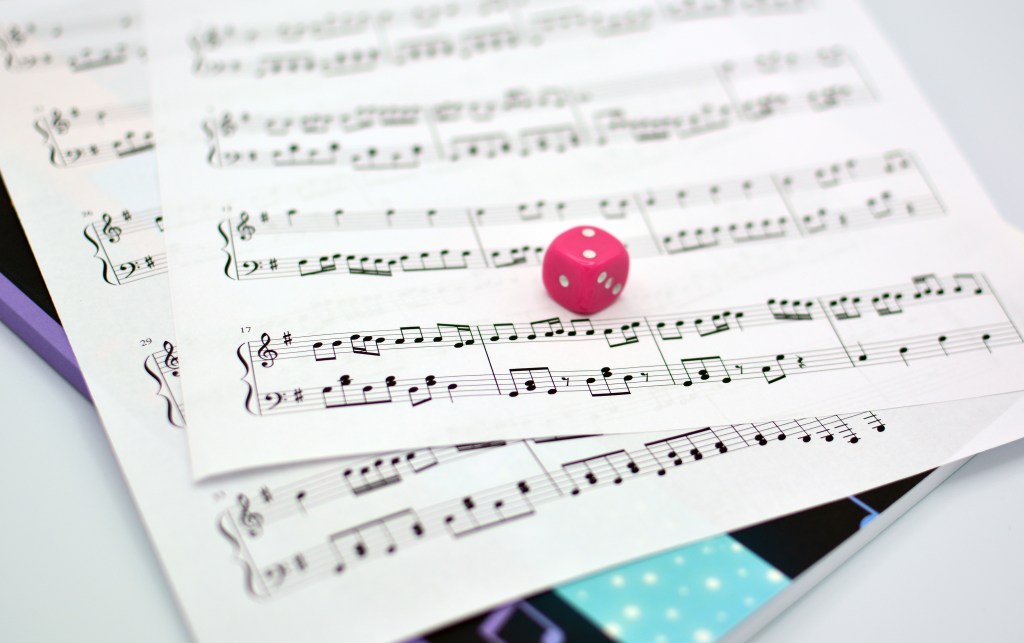
Sometimes, when the weather is miserable or after a tiring day at school, a student will walk into my studio without their usual bounce in their step. I’ve found that a little silliness and a dash of chance gets them in the mood to pull out their piano books and play music. And best of all, it only takes a minute!

When this is the case, I look at our list of assignments from the previous week and ask, “Should the Die of Destiny decide what we should look at first?” You’d be surprised at how the idea of a simple roll of a die perks them up! It removes any pressure of trying to make a decision (even one as simple as picking a piece to play first) in a fun way.

The Die of Destiny can be any die you have on hand (this one is like mine), an app (I use Dice Dice), or a die you have specifically for this purpose. Next assign each piece they were working on a number. For example, if a student was working on two pieces, Piece A and Piece B, we could say that if we roll an even number (2, 4, or 6) the student will play Piece A and if we roll an odd number (1, 3, or 5) the student will play Piece B. You can distribute the numbers of the die however you wish!

After the Die of Destiny chooses a piece, the student is always happy to play the piece determined by the die! And usually their mood is better and the lesson just flows from there.

Even on days when they are feeling great, I have students walk into my studio and request that the Die of Destiny choose our piece! It’s super simple and the kids love it.

Let’s stay in touch, join the list!

As a “toucan” of our appreciation download a free set of note flashcards (link in our Welcome email)!

Processing…
Success! You're on the list.

We are a participant in the Amazon Services LLC Associates Program, an affiliate advertising program designed to provide a means for sites to earn advertising fees by advertising and linking to Amazon.com. As an Amazon Associate we earn from qualifying purchases.