
How can we make music history engaging to kids nowadays? By making it relatable and interesting! Who doesn’t love to hear a good story about something fascinating (and a little creepy) that happened to someone else?
Is learning about the great composers even that important?! A resounding YES!!! We gain a deeper understanding of music by knowing who the composers were as people, how they viewed their art, and the culture and times they lived in. This knowledge affects the way we play and interpret their music. Context is very important!
It can be hard, though, to carve out time during already jam-packed piano lessons to add in some music history… But what if music history was combined with music theory?
That’s where Composer Mysteries comes in! Composer Mysteries is a spooky and fun music theory game for piano students that brings classical composers to life through strange but true stories. By solving creepy tales and piecing together music theory clues, students uncover the identity of the mystery composers while reinforcing their knowledge of music theory in an exciting, memorable way.
And they also have a creepy host… Meet Domenico Skullatti!

- What is Composer Mysteries?
- Who’s it For and What your Students will Learn
- What you Need to Play
- How to Use it Your Studio
- What My Students Said
- Let’s stay in touch, join the list!
What is Composer Mysteries?
Dissecting hearts… gangrenous toes… a visit from Death… and a kiss on Beethoven’s skull! These are the mysteries students will dive into. Their mission: reveal the identity of the composer who is telling the story.
Composer Mysteries is an elementary level game that uses true stories from the world of classical music to test your students’ knowledge of music theory concepts. It is one of my favorite Halloween piano games for students because it doubles as a fun theory activity and a music history lesson in disguise!

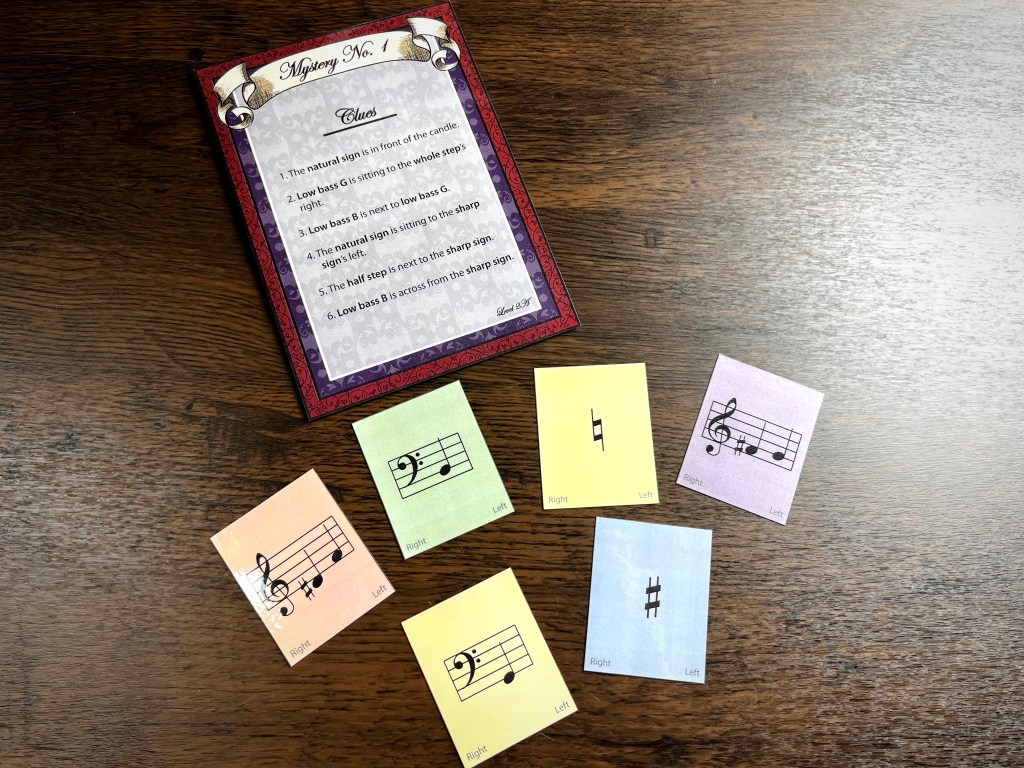
Using the clues, students arrange the theory cards around the piano game board. When all the cards are in place, they flip over the card indicated on the mystery sheet to reveal the composer’s identity.

Who’s it For and What your Students will Learn
Composer Mysteries is designed for elementary-aged students (ages 6 – 11). Each story is told in the first person, with the composer narrating what happened, using simple, kid-friendly language.
The game comes with four different stories and each story has four levels of play (16 variations in total): pre-reader, primer, level 1, and level 2A. This allows the game to be used with students at different levels and it can grow with your students.
The four levels of play cover the following concepts:
- Rhythm symbols (quarter notes, half notes, dotted half notes, whole notes, and rests)
- Dynamic markings
- Finger numbers
- Keyboard awareness (identify the names of the keys)
- Music symbols (treble clef, bass clef, repeat sign, time signatures, legato, staccato, sharp, flat, natural sign, fermata, tie)
- Intervals (repeated notes, steps, skips, half steps, whole steps, seconds, thirds, fourths, fifths, sixths)
- Note reading
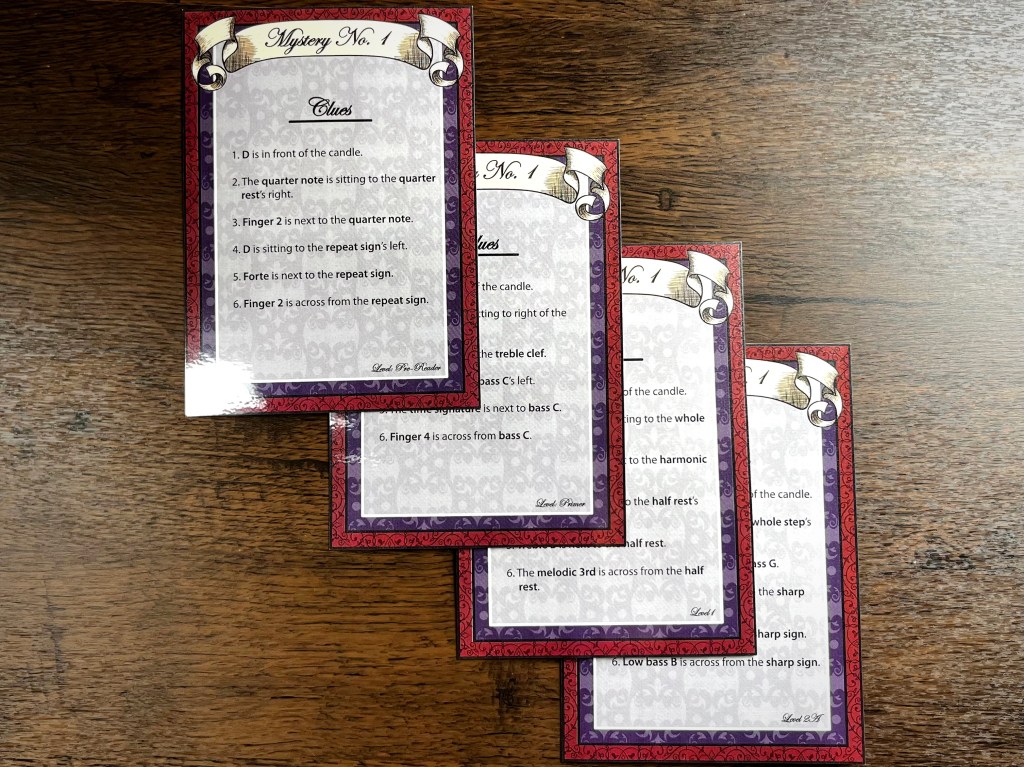
Each level has its own Clue card and set of music theory concept cards.
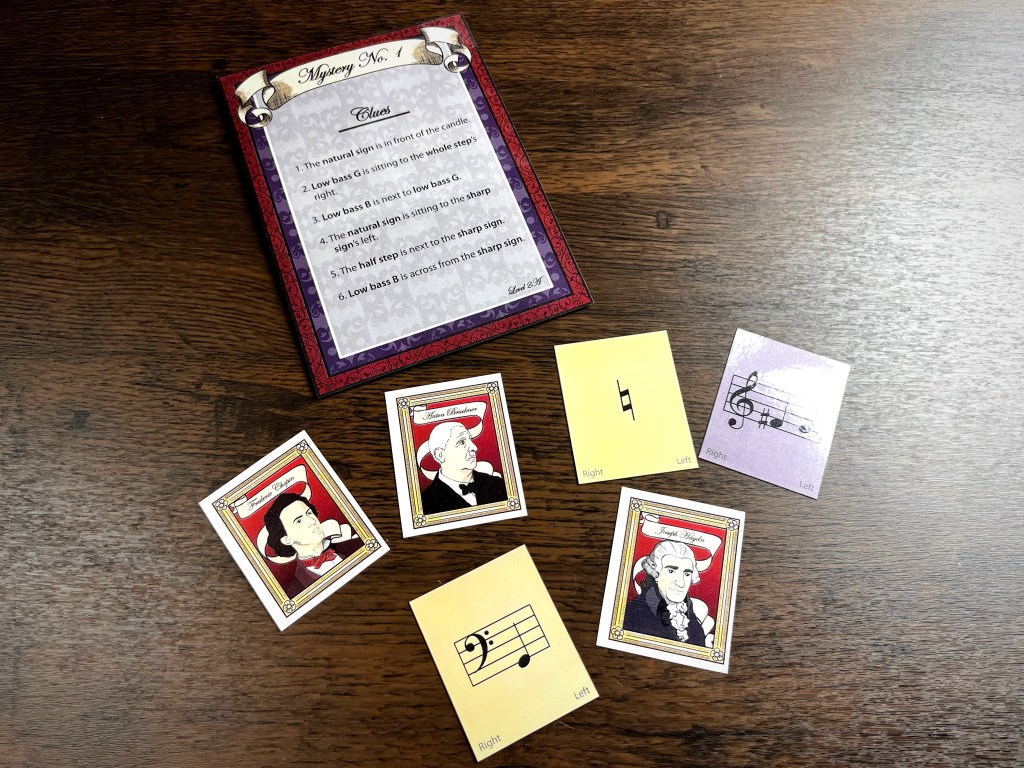
The backs of the music theory concept cards have the portraits of 6 different composers. Students will not know which composer is the Mystery Composer until all the cards have been placed in their correct spots around the game board piano.
What you Need to Play
Everything is included in the digital download! Prep is minimal: just print, laminate (optional), cut out the cards, and you’re ready to go!
How to Use it Your Studio
There are several ways you can use Composer Mysteries in your studio:
- Do a whole month of spooky classical stories and play one mystery every week in October (this is what I did when I played it for the first time with my students. I promoted it with my families and on my studio Facebook page!)
- Print multiple copies of the gameboard and use it in group lessons (give each student their level-appropriate music theory cards and clue sheet and their own gameboard). Read the story together then see who can finish their game first and reveal the identity of the mystery composer.
- Use it in the month of October as an end of lesson closer
- Use it as a practice incentive: practice a certain number of days in a week and unlock the next mystery. A practice log is included in the digital download.
What My Students Said
The power of stories is a truly amazing thing! Years after telling them a story they will, out of blue, ask me things like, “What was the name of that composer who had his heart cut out?” The stories stick even if the oftentimes complicated composer names don’t.
My students loved this game! They were grossed out by Bruckner’s tale, couldn’t believe Lully’s priorities in life, were mystified by what happened to Mozart, and Chopin… well, Chopin tends to be the one they remember best!
I can’t wait to play it with some of my beginner students this October! With Composer Mysteries, they are in for a fun and spooky musical adventure!

- Halloween Note-Reading Challenge
Every fall, when students return to lessons after summer break, I feel like we spend the first month just reviewing concepts and note-reading. The summer slide is a real thing… This studio-wide Halloween note-reading challenge gets things back on track. Only the best note-readers will survive the Zombie Pian-o-pocalypse! - Top Practice Tools Every Piano Student should Have: Curiosity
Curiosity is the catalyst that gets students to start learning the piano in the first place and can be exactly what’s needed to keep them going for the long haul. Why is it so important and how do we keep it going? What if I don’t play an instrument, but want to encourage my child in their practicing? Check out all the answers plus download a free printable for parents! - Compose a Ringtone
Ringtones are helpful but what if we could make them special too?! This is a fun and quick project that even the most reluctant students can get behind.

Let’s stay in touch, join the list!
As a “toucan” of our appreciation download a free set of note flashcards (link in our Welcome email)!
We are a participant in the Amazon Services LLC Associates Program, an affiliate advertising program designed to provide a means for sites to earn advertising fees by advertising and linking to Amazon.com. As an Amazon Associate we earn from qualifying purchases.

 Toucan Piano
Published by