Piano students don’t need a lot of accessories to practice… a quality instrument and sheet music is enough! But there are a few tools that make a practice session easier and more effective.
I’m counting down my Top 7 Piano Practice Tools I think every student should have when they are on the bench (plus a bonus one at the end that you might not expect!).
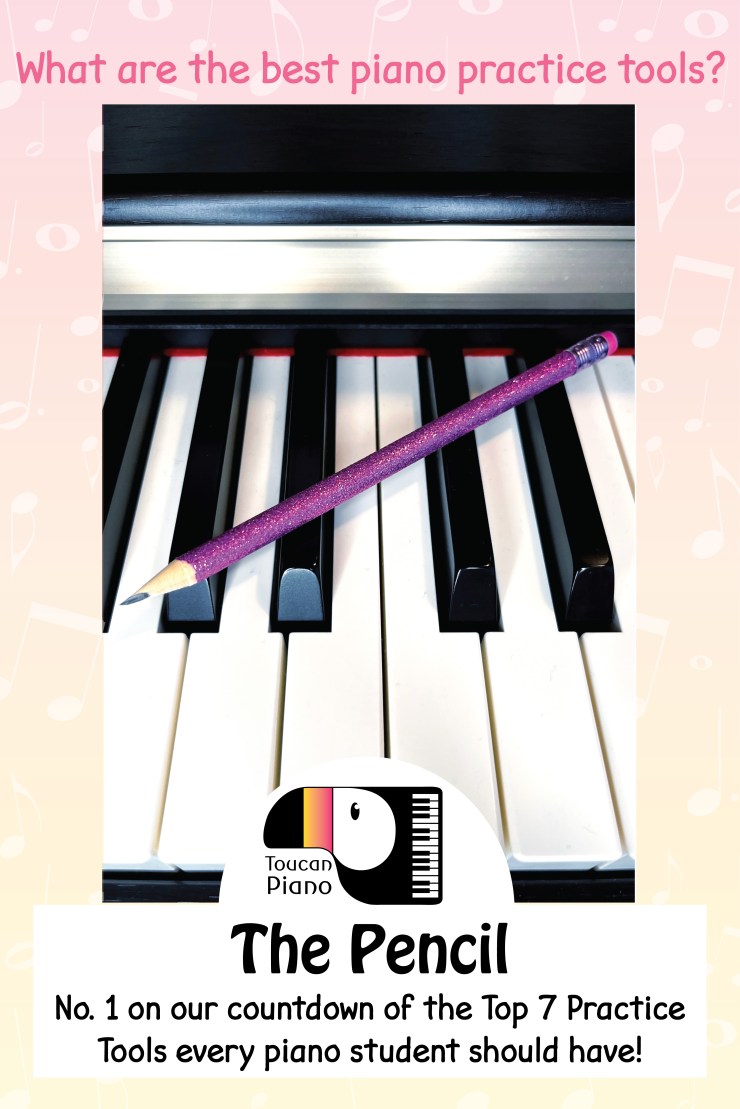
We’ve reached our number 1 position, the top practice tool every piano student should have! Without further a-do, coming in at number 1 is:
The Pencil
Yes, the humble pencil is the number one, absolutely essential, most important practice tool a piano student can have… and that’s true of all instruments actually! No musician or aspiring musician should be without a pencil when practicing. If I had to pick only one tool to use forever when I practice, it would be the pencil.
No musician or aspiring musician should be without a pencil when practicing.
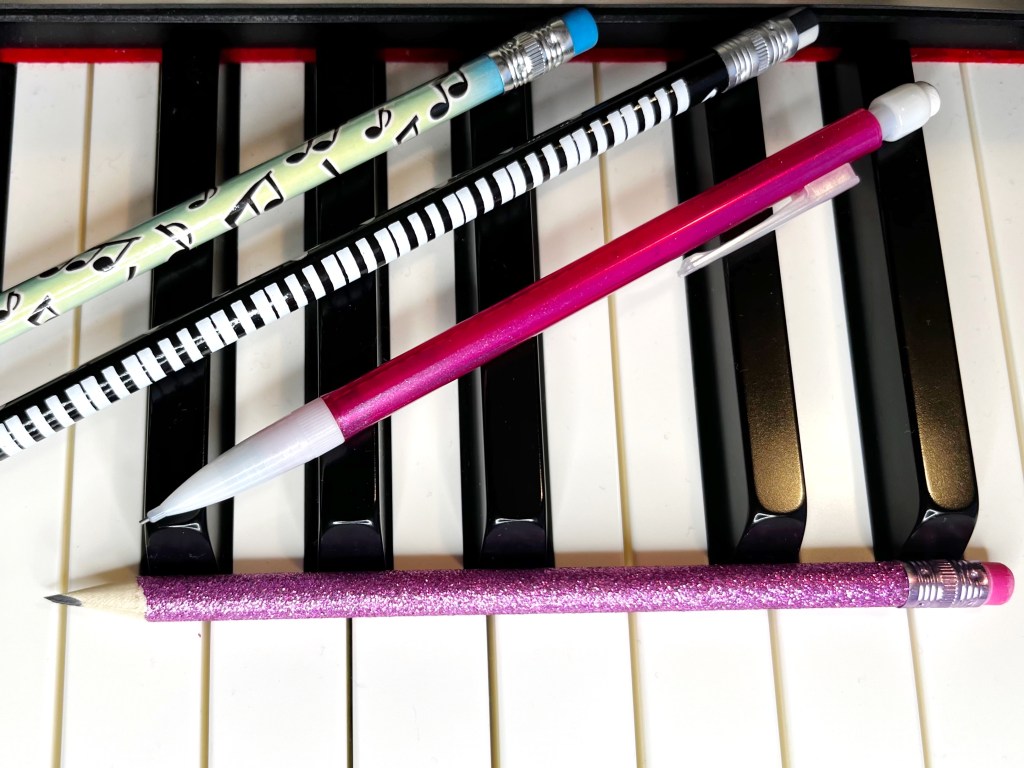
As mundane as it may sound, a pencil should always be available at the piano. It can be used to:
- Write in or circle notes that need fixing
- Write in the proper rhythmic counting
- Section off measures or phrases that need extra practice
- Circle dynamic markings that need to be incorporated
- Refine the pedal markings to get the desired sound for a passage
- Write in performance reminders
- Write in ornamentation
- Keep track of repetitions (especially for younger and beginner students)
- And this list could go on and on!
We like to think that we can keep track of everything… I had a student who HATED seeing any marks on her sheet music. Her music was pristine, but her playing was not. She took a lot longer to learn her pieces because she refused to add in any reminders for herself. She eventually came around and now make her own notations on her score.
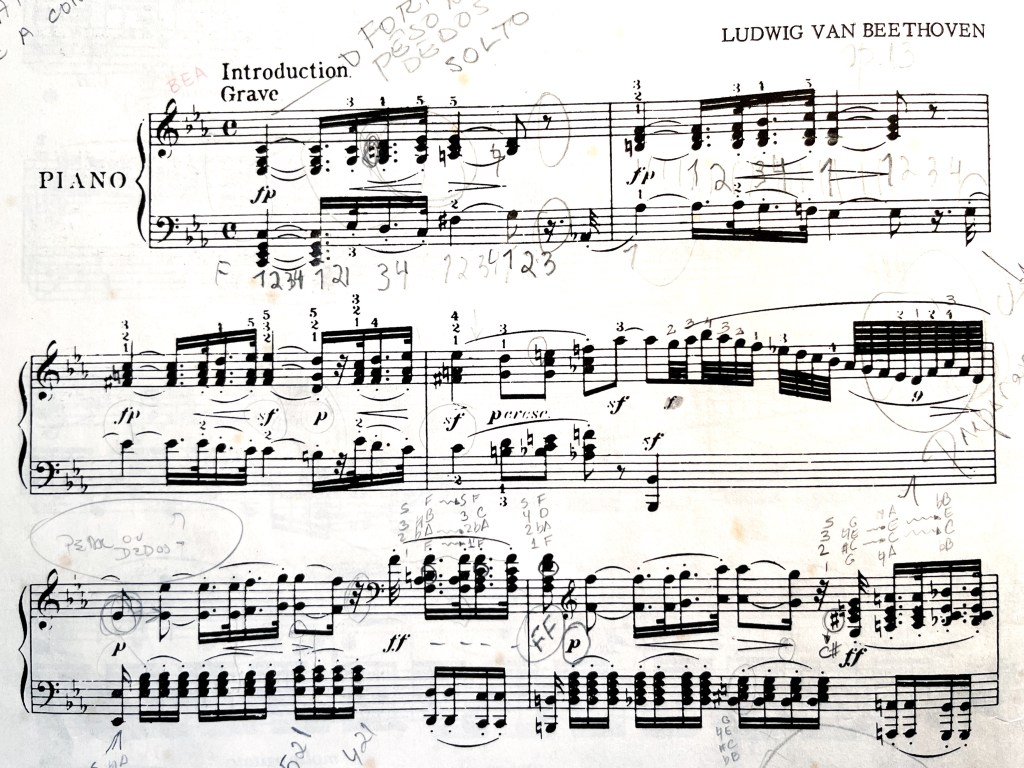
Our brains just don’t work that way when we play… We need visual cues to remember to fix things. The brain tends to cling to what it learned first ALWAYS. I once read a famous piano pedagogue comment that the most important time you play a piece is the first time. It sets the sound image and the mechanics for the piece in your brain and can be a hard thing to change. He would spend a considerable amount of time with the score, studying it thoroughly, before playing a single note on the piano. It’s an extreme case but not without its merits.
The visual cues we give ourselves with our pencil notations in the score help override that initial impression of the music our brain clings to. The pencil notations wake up our brain and remind it that it needs to fix and work on things in the music.
Pencil Exercise for Piano Posture!
An additional use for the pencil for beginner and younger students is when working on proper hand posture. Students starting out playing the piano oftentimes have difficulty keeping the palms of their hands parallel to the keys. When this happens, the hand ends up tilting towards the pinky which makes the pinky play on its side (I call it “Sleeping Pinky Position”) instead of on its tip.
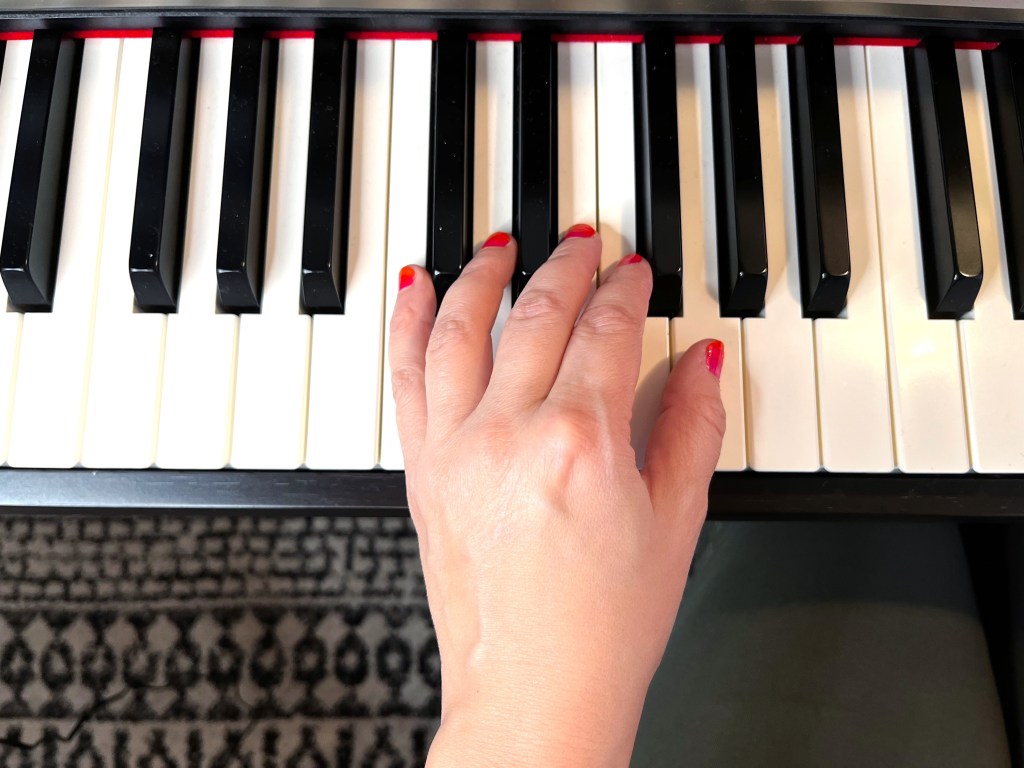
But what’s wrong with a “Sleeping Pinky”?! We all get tired now and again… Good question! A student may not run into much trouble with the Sleeping Pinky Position at the beginner level when the hands stay in one position and the music is pretty slow. As the tempo and complexity of the music increases and the hands are required to move around the piano (thumb tucking, leaps, stretches, etc.) the hand will not be as nimble as it needs to be. It’s like a runner only running with one foot while dragging the other foot. The student will also not have the control required over the hand for more nuanced playing and incorporating the forearm, upper-arm, shoulders, and wrist properly when playing.
Sleeping Pinky Position also brings along its boisterous cousin, Pinky Karate Chop. Students who play in a Sleeping Pinky Position will tend to play the 5th finger as a Karate Chop, especially when playing forte. It makes every piano teacher squirm when they see a Pinky Karate Chop on their piano.

But don’t worry, our main practice squeeze, the pencil is here to save the day!
A great exercise when working on hands separately is to place and hold the pencil under the knuckle bridge of the hand. By doing this, the hand will not be able to tilt towards the pinky and the pinky will play on its tip. A student should do a few repetitions of their piece or sections each day with the pencil and then a few repetitions without the pencil to see if they can keep their hand in the proper position. Over time, the hands will learn the proper posture when playing and the pencil can go back to its main job of writing!
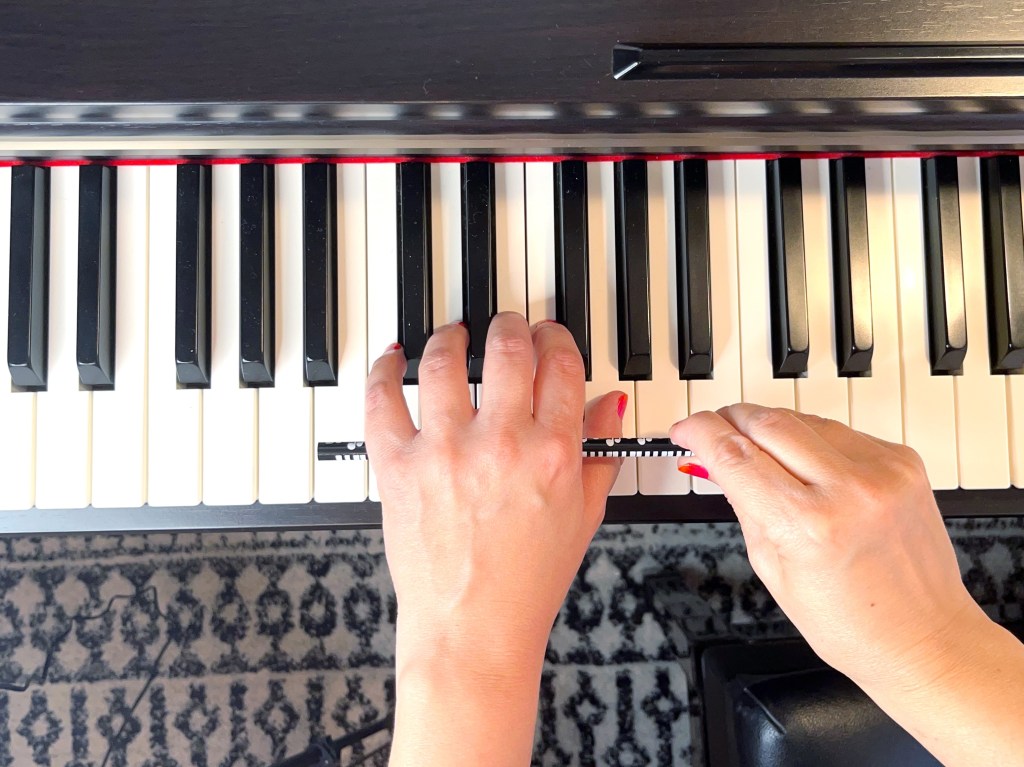
Pencil Exercise for Rhythm!
If the student gives themselves the small luxury of having more than one pencil at the piano when practicing, then they can also work on rhythm!
The pencils make great drumsticks and a student can tap out the rhythms of the right hand, the rhythms of the left hand, and the rhythms of both hands with the eraser side of the pencil on the fall board of the piano. It’s a fantastic exercise to work out tricky rhythms in the music, to work on coordination problems between the hands, and fix any rhythms that are being played incorrectly..

Tapping out the rhythms with the pencils, allows the students to focus on one single aspect of the music: rhythm! It removes the layers of pitch, individual finger movements, technique, dynamics and phrasing and allows the brain to work out the foundation of the piece or passage.
I often tell my students that learning a piece is like building a house. There are certain aspects of construction that give the house its shape and other things that make it look like a house. The foundation of our musical house is rhythm. If the foundation is not solid, the house will not stand. If the rhythm is off, the piece will not sounds right, no matter if you play all the correct pitches with the proper phrasing, dynamics, pedaling, and all the bells and whistles. Rhythm is key.
Taking time to work out the rhythms of a piece is of fundamental importance and using the pencils and drumsticks makes rhythm practice a little more appealing especially to younger students (who am I kidding?! Everyone gets a kick out playing the drums!).
Pencil Exercise for Expressive Playing!
Most students, when starting out on their piano journey, think that playing the piano is purely an exercise for the fingers. In reality the fingers are the final conduit of a joint effort by the entire body. The shoulders, arms, and wrist are just as important as the fingers in achieving a beautiful sound from the piano.
A great way to work on arm and wrist technique is to use a pencil. Instead of using their fingers, a student can practice playing the melody of their piece with the eraser end of the pencil. In order to make the melody sing, the student will quickly realize that they are going to have to do a lot more with their arm and wrist than they expected!
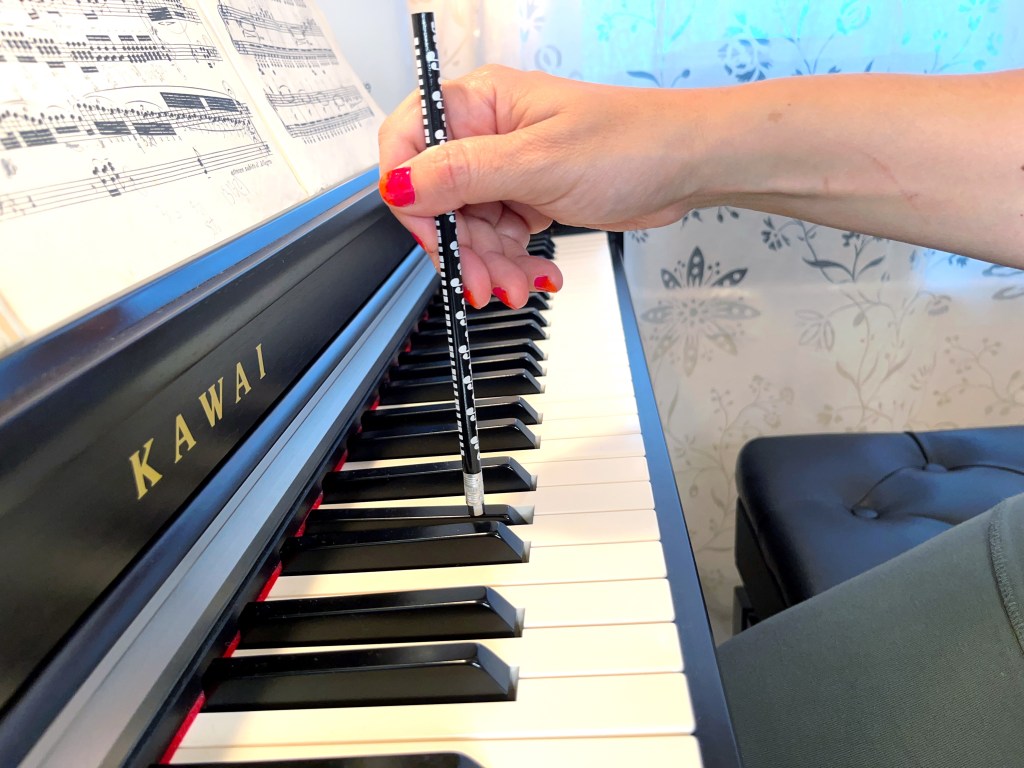
By shaping the melody of the piece with the pencil, the student can focus on the movements the arms and wrist need to perform in order to achieve the desired sound. Removing the “distraction” of having to play the melody with the individual fingers, allows the brain to focus on the larger movements the body needs to make to shape the melody.
Once the student is consistently achieving a good sound with the pencil, they can try to reproduce that same sound with their fingers, now equipped with a stronger sense of the roles the arms and wrist will need to play.
And there we have it!
The top 7 practice tools every piano student should have. Be sure to check out the blogposts for the other six practice tools that made my list:
- #7 Mini-erasers
- #6 Music Clips
- #5 Cube Timer
- #4 Recording Device
- #3 Metronome
- #2 Manuscript Notebook
Next up is a bonus tool that is essential for effective practicing!

- Don’t Miss a Beat!
This fun, multi-level game grows with your students as they learn more and more rhythms. Students will have to use their knowledge of rhythm note and rest values as well as time signatures to fill in the missing rhythms on each card. It can be played in private or group lesson settings! - Sweet Words
Students will have fun reading the notes on the staff (or naming the white keys on the piano) to try to fill in the missing letters of their sweet word(s) first. - Two Sides of the Same Coin
A game about enharmonics that can be played in several different ways! Students will try to collect the most enharmonic pairs and hope that their coins don’t get stolen by another player.

Let’s stay in touch, join the list!
As a “toucan” of our appreciation download a free set of note flashcards (link in our Welcome email)!
We are a participant in the Amazon Services LLC Associates Program, an affiliate advertising program designed to provide a means for sites to earn advertising fees by advertising and linking to Amazon.com. As an Amazon Associate we earn from qualifying purchases.

 Toucan Piano
[…] #1 Pencil […]
LikeLike
[…] tell my students that if they only have one tool at their piano, it must be a pencil! I have a whole blogpost about why I think the humble pencil is the most important practice tool for […]
LikeLike